
Why an air conditioner that runs can still trip the power
An RV air conditioner can appear perfectly matched to a campsite outlet, inverter, or generator and still shut the system down the moment its compressor starts. The reason is that three different ratings are being mixed together. BTU describes cooling capacity. Running watts describe the electrical power used after operation settles. Starting current describes a brief demand that can be much higher than the steady draw.
A unit may therefore have enough cooling capacity for the cabin and an acceptable running load, yet exceed the source's short duration capability during startup. The reverse can also happen. A small electrical draw may look attractive, but the cooling system may be too weak for a poorly insulated RV in direct summer sun. Neither BTU nor watts answers the entire question by itself.
This article explains the air conditioner as a power consuming appliance. It does not build a complete solar array or battery bank. Once the real cooling load is understood, the daily energy calculation belongs in the RV sizing and boondocking budget articles.
BTU is cooling capacity, not electricity
BTU stands for British thermal unit. In air conditioning, the familiar rating is normally BTU per hour, even when the shortened label shows only BTU. It represents the rate at which the equipment can remove heat under defined conditions. It is a cooling capacity rating rather than an electrical input rating.
That distinction matters because two air conditioners with similar cooling capacity can have different electrical demands. Compressor type, heat exchanger size, fan design, controls, refrigerant circuit, test conditions, and efficiency all affect the input needed to produce the rated cooling. A variable speed DC unit and a fixed speed AC rooftop unit should not be compared by BTU alone.
Cooling capacity must also match the space. RV length offers a rough starting point, but it is not a heat load calculation. Window area, insulation, roof color, slide outs, ceiling height, occupancy, cooking, electronics, air leakage, humidity, sun exposure, and parking orientation change the load. A compact trailer with large windows in full sun can challenge a unit that feels generous in mild weather.
More capacity is not automatically better. An oversized fixed speed unit may cool the air quickly and cycle off before removing enough moisture. Repeated short cycling can reduce comfort and add mechanical stress. A severely undersized unit may run continuously without reaching the thermostat setting. The correct target is adequate capacity for expected conditions with reasonable operating cycles and airflow.
The four ratings to read on the label
| Rating | What it describes | Why it matters |
|---|---|---|
| Cooling capacity | Heat removal rate, usually stated in BTU per hour | Indicates whether the unit can address the cabin heat load |
| Rated voltage | The electrical system the unit is designed to use | Determines source compatibility and current calculations |
| Running input or current | Steady electrical demand under stated rating conditions | Sets the continuous requirement for wiring and the power source |
| Starting or locked rotor current | Brief compressor demand during startup where supplied | Tests breaker, inverter, generator, and connection headroom |
The equipment label and manual are more useful than a generic chart. Look for rated current, input power, compressor current, fan current, minimum circuit ampacity, and maximum overcurrent protection. These terms are not interchangeable. Minimum circuit ampacity helps determine the branch circuit conductor requirement, while maximum overcurrent protection limits the breaker or fuse rating permitted for the appliance.
If the manual states several operating modes, record the figures for the actual configuration. Cooling, heat pump operation, resistance heat, fan only mode, and different fan speeds can create different loads. Accessories may also consume power. Use the model number on the installed unit rather than assuming every product in a series shares the same electrical values.
Running watts come after the compressor settles
Running watts describe the approximate rate of electrical consumption while the air conditioner is operating steadily. If input power is not listed, watts can be estimated from voltage and current, but AC systems also involve power factor. Simply multiplying nominal voltage by amps gives apparent power in volt amperes, which may not equal real watts. The manufacturer input rating is preferable.
Running draw is not perfectly fixed. Outdoor temperature, indoor temperature, fan setting, supply voltage, coil cleanliness, airflow, compressor speed, and refrigerant system condition all influence operation. A variable speed unit intentionally changes its input as cooling demand changes. A fixed speed compressor generally alternates between on and off while the fan may follow a different schedule.
Voltage matters because the same power delivered at lower voltage requires more current. This is one reason low voltage DC air conditioners can need substantial conductors. A 12 volt system carries roughly four times the current of a 48 volt system delivering the same power before accounting for losses. Conductor size and voltage drop therefore become central at high DC loads.
For shoppers specifically committed to a low voltage installation, the best 12V RV air conditioners guide narrows the product comparison. Larger battery systems may instead suit models in the best 48V RV air conditioners category. Voltage alone does not establish efficiency, so compare cooling output, input range, controls, and installation requirements.
Startup is a different electrical event
A fixed speed compressor can draw a short burst of current as its motor begins turning and builds refrigerant pressure. The event may last only a fraction of a second, but a breaker, inverter, generator, extension connection, or protective circuit can react faster than that. A source that supports the running watts may still report an overload at startup.
The label may provide locked rotor amps, abbreviated LRA, rather than a starting watt value. LRA is not intended to be multiplied into an assumption that the unit consumes that level continuously. It identifies a severe motor condition and helps describe the starting challenge. The actual starting waveform depends on the compressor, supply voltage, system pressure, controls, and any approved start assistance.
Soft start equipment can reduce the abrupt peak by controlling how the compressor motor accelerates. An inverter driven compressor can ramp speed instead of switching directly to full operation. These features can improve compatibility, but they do not erase the steady energy requirement or guarantee that every source will work. Installation and settings must follow the air conditioner and soft start manufacturer instructions.
Do not use a generic rule that starting watts are always a fixed multiple of running watts. Verify the model data and source capability. The guide to running watts vs starting watts explains how to add an appliance surge to other loads already operating.
DC air conditioners change where conversion happens
A DC air conditioner connects to a compatible battery voltage through the required protection and controls. It avoids converting battery DC into AC through a separate inverter for that appliance. This can remove one conversion stage, but it does not make cooling inexpensive in energy terms. The compressor, fans, and controls still need substantial power.
The wiring challenge moves to the DC side. At 12 volts, high current and voltage drop can require short, heavy conductors. At 48 volts, the same approximate power can travel at lower current, but the entire battery, charging, protection, and disconnect system must be designed for that voltage. A 48 volt appliance cannot simply be attached to a 12 volt house battery.
DC models may use variable speed compressors that operate at reduced input after the cabin approaches the set point. That can improve comfort and part load behavior. Compare published consumption across operating modes, not only a single minimum number. A marketing claim based on a low fan or eco mode does not describe a hot afternoon startup in a heat soaked vehicle.
Separate circuits and approved low voltage disconnect behavior are important. An air conditioner that draws a battery below its safe limit can leave the RV without lighting, water pumping, controls, or communications. The battery management system may shut down the entire bank when a cell reaches its limit, even if a display still suggested remaining capacity.
AC rooftop units depend on the source
A conventional rooftop air conditioner normally uses shore power, a generator, or an inverter connected to a battery bank. Each source creates different constraints. Shore service is limited by the pedestal, RV main service, branch circuit, and other appliances. A generator must support both the continuous load and the compressor start. An inverter must do the same while drawing the required DC current from the battery.
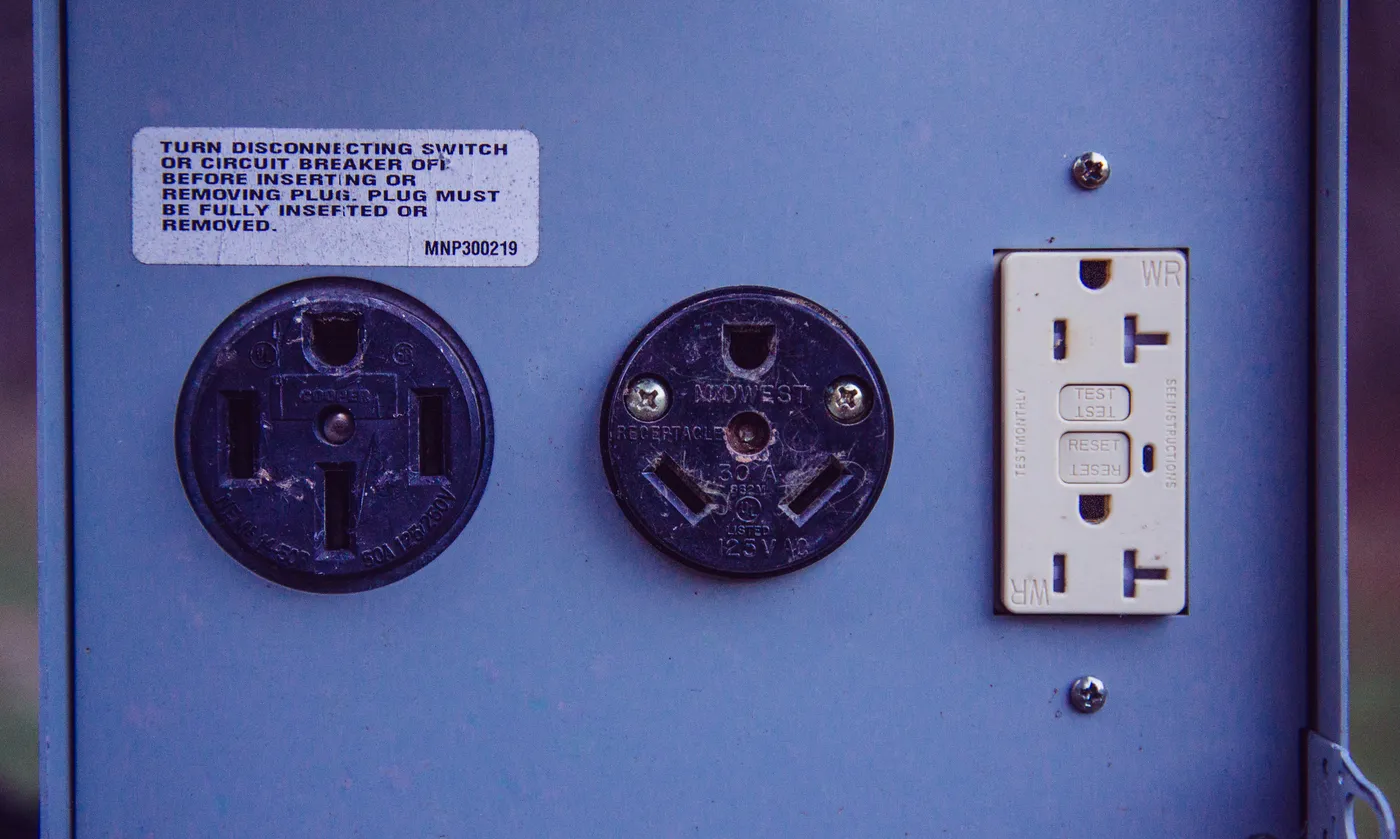
On a 30 amp RV service, the air conditioner shares the available supply with water heating, battery charging, cooking equipment, and receptacle loads. A 50 amp RV connection provides two hot legs and a different total service arrangement, not merely 20 additional amps on one circuit. The article on 30 amp vs 50 amp RV hookups explains that distinction.
Load management matters even when the air conditioner itself fits. An electric water heater or cooking appliance can push the service beyond its limit as the compressor starts. Turning one major load off may restore reliable operation. Automatic energy management systems can shed selected loads, but their priority settings and wiring must be understood.
Battery energy is the long runtime limit
An inverter's surge rating answers whether it can start a compatible AC unit. Battery energy answers how long cooling can continue. These are different tests. A large inverter connected to a small battery can start the compressor and then exhaust the available energy quickly.
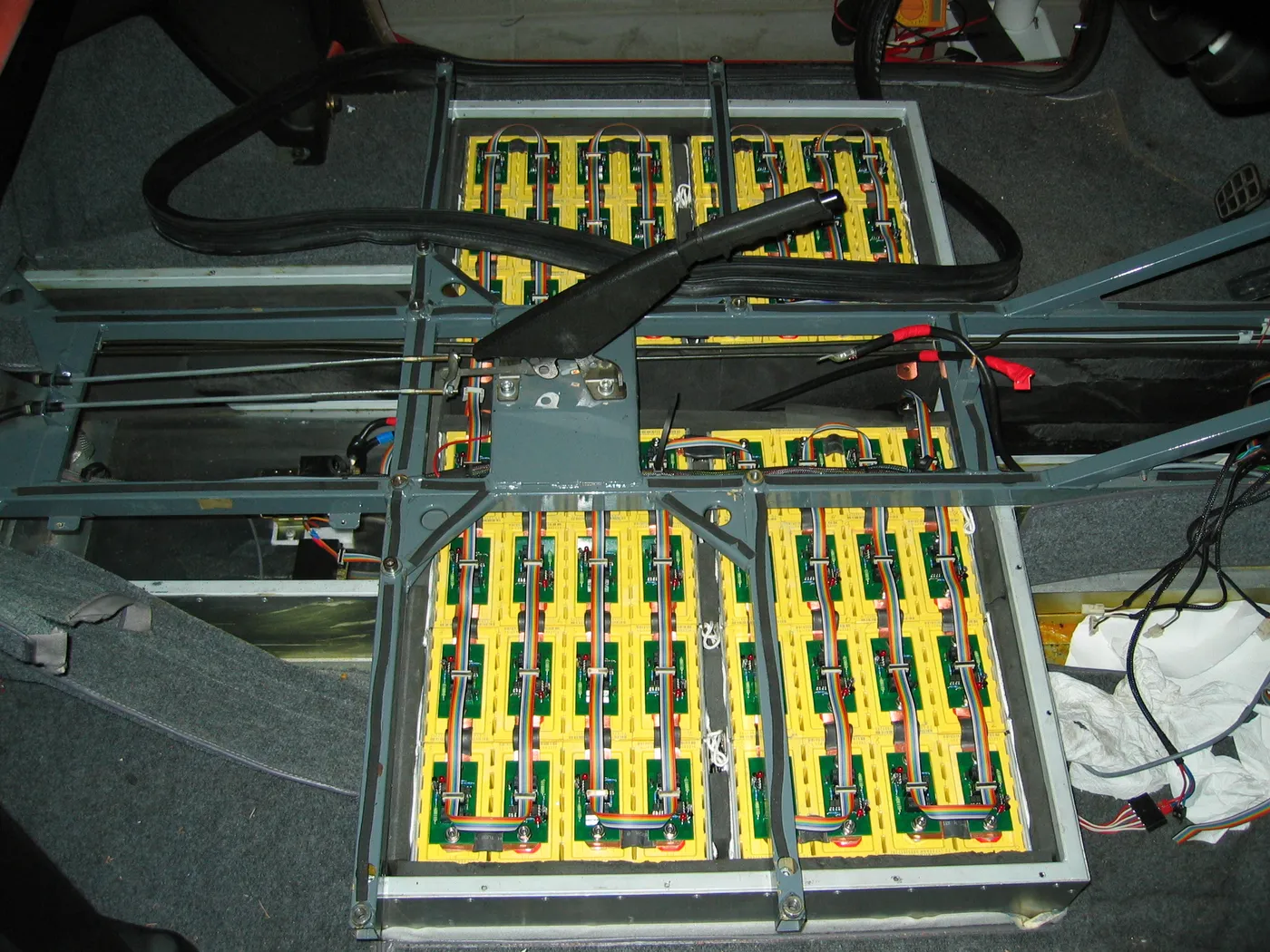
Energy is measured in watt hours. Multiply average electrical power by operating time to estimate consumption. The hard part is finding average power because the compressor may cycle or modulate. In extreme heat, a unit can run near continuously. In mild conditions after the cabin cools, duty cycle may fall. Planning from the lowest advertised input creates an unrealistic runtime estimate.
Battery nameplate energy is not identical to usable delivered AC energy. Depth of discharge limits, battery age, temperature, inverter efficiency, wiring loss, and standby consumption reduce what reaches the appliance. DC air conditioners avoid the separate inverter loss but still face wiring and battery limitations.
Basic watt hour arithmetic provides only the starting point. A complete RV calculation should use the dedicated sizing process rather than copying a runtime claim from another vehicle.
Solar can offset cooling but not promise it
Solar output and cooling demand often rise together on sunny days, which makes solar a useful contributor. However, an RV roof has limited area, panels operate below nameplate output in many real conditions, and shade from roof equipment can reduce production. Clouds can arrive while the air conditioner still needs power.
A solar array should therefore be evaluated in daily watt hours, not only total panel watts. Compare expected energy production with cooling consumption over the same period. Include other RV loads and charging losses. If production is lower than consumption, battery state of charge will decline even while the controller reports charging.
This article does not calculate the array because cooling is only one input to that design. The full worksheet belongs in RV solar system sizing. A high power air conditioner may dominate that calculation, but it should not hide refrigeration, lights, fans, pumps, electronics, and inverter standby use.
Climate and RV construction change runtime
Outdoor temperature is only one part of the heat load. Direct solar radiation can raise roof and wall temperatures well above the surrounding air. Dark exterior surfaces absorb more heat. Large windows admit solar gain, and slide outs add surface area and seals. Opening the door frequently replaces cooled air with hot humid air.

Humidity changes comfort and operation. An air conditioner must remove both sensible heat and moisture. A unit can lower the temperature yet leave the cabin clammy if operation is poorly matched. Conversely, a dry desert environment can create an intense sensible cooling load even when humidity removal is modest.
Simple measures reduce the demand before electrical equipment is enlarged. Park with the least window exposure where practical, use exterior shade without blocking appliance vents, close insulated window covers, seal unnecessary air leaks, cook outside when safe, and pre cool while connected to shore power. Keep return and supply air paths clear.
Insulation improvements can help, but moisture management and fire safety must be respected. Do not cover emergency exits, combustion appliance openings, electrical equipment, or air conditioner clearances. Any roof coating, shade structure, or added insulation must be compatible with the RV construction.
Efficiency numbers need test context
Air conditioner efficiency may be described with EER, CEER, COP, or another metric depending on product type and test standard. These numbers are useful only when the definitions and conditions are comparable. A higher efficiency metric generally means more cooling per unit of electrical input, but a value from one product class may not be directly comparable with another.
Part load behavior matters in an RV. A variable speed compressor can reduce speed as demand falls, while a fixed speed unit cycles. The best choice depends on the expected climate, cabin heat loss, controls, and power system. Do not compare a minimum modulation input from one unit with the full load input of another.
Published noise and airflow also affect usability. A smaller unit running continuously at high fan speed may be less comfortable than a properly matched unit operating at a quieter level. Duct restriction and dirty filters can reduce performance, so installation and maintenance influence the result after purchase.
Choosing capacity without sizing the power system
Start with the RV manufacturer's approved equipment options and roof structure. Identify the conditioned volume, insulation, windows, expected climate, occupancy, and whether one or several zones need cooling. A compact sleeping area can have different needs from a large motorhome with multiple slide outs.
Smaller cooling categories can suit compact trailers, vans, spot cooling, or mild conditions. The best 5000 BTU RV air conditioners guide is a focused product comparison, not a promise that this capacity fits every small RV. At the other end, the best 10000 BTU RV air conditioners guide covers a larger class without replacing a heat load assessment.
After selecting an appropriate capacity range, compare running input, startup characteristics, voltage, physical dimensions, roof opening requirements, weight, condensate management, controls, service access, and approved installation orientation. Then take the electrical requirements into the source and energy planning process.
Installation and maintenance affect power draw
An air conditioner cannot deliver rated performance if airflow is restricted. Keep filters clean according to the manual, avoid blocking return grilles, and confirm supply outlets are open. Duct leaks or crushed ducts can send cooled air into roof spaces and make the compressor run longer.
Condenser airflow outdoors is equally important. Debris, damaged fins, or an incompatible cover can reduce heat rejection. Never operate a rooftop unit with a storage cover installed unless the manufacturer specifically designed it for operation. Follow safe access procedures before roof inspection.
Low shore voltage, loose plugs, overheated adapters, and undersized cords can create both performance and fire hazards. Stop using a connection that becomes unusually hot, discolored, or damaged. Do not defeat a breaker to keep the unit running. A trip is a warning that the load or circuit needs investigation.
Refrigerant circuit diagnosis and sealed electrical component service belong to qualified technicians. Adding refrigerant without finding a leak or bypassing a protective device can damage the compressor and create hazards. Routine owner care should remain within the manual.
Electrical and combustion safety
Disconnect all required power sources before service. An RV may have shore power, inverter output, batteries, solar charging, and a generator. Turning off one source may leave another energized. Capacitors can retain charge after disconnection, so internal air conditioner service requires appropriate training.
Use only approved branch circuit protection, conductors, connectors, transfer equipment, and adapters. Never feed the RV through an improvised cord or bypass the grounding path. Protect connections from water and inspect the pedestal before use. If polarity, grounding, or voltage is abnormal, do not connect.
When a generator supplies cooling, keep it outdoors and away from openings. Carbon monoxide can enter through windows, roof vents, doors, and damaged seals. Follow the generator manual and the safety practices in generator carbon monoxide safety. Never operate a portable generator in an RV compartment unless the equipment and compartment were specifically designed and listed for that installation.
Frequently asked questions
Does a higher BTU rating always use more electricity?
Not always in direct proportion. A higher capacity unit often has a greater maximum input, but efficiency, compressor type, fan design, and operating conditions affect consumption. Compare the actual input ratings and comparable efficiency metrics rather than deriving watts from BTU alone.
Why does my RV air conditioner trip the inverter only at startup?
The compressor may require a brief current surge above its steady running draw. The inverter, battery, wiring, or protection may support continuous operation but not that peak. Verify manufacturer startup data and every component's short duration rating.
Will a soft start reduce daily energy use?
Its primary purpose is to manage compressor startup. It may improve source compatibility, but it does not eliminate the air conditioner's ongoing cooling energy requirement. Daily consumption still depends mainly on cooling load, efficiency, weather, set point, and runtime.
Is a 12V RV air conditioner more efficient than an AC unit?
Not automatically. A DC unit avoids a separate inverter conversion for that appliance, but complete efficiency depends on compressor technology, wiring loss, controls, and operating conditions. Compare delivered cooling with measured or published electrical input under comparable conditions.
Can rooftop solar run an RV air conditioner all day?
It can contribute, but continuous operation requires daily solar production to cover cooling and other loads with allowance for losses and variable weather. Roof area and shading often limit production. A battery is also needed when demand exceeds momentary solar input.
Should I choose air conditioner capacity from RV length alone?
No. Length is only a rough clue. Insulation, windows, slide outs, roof color, climate, humidity, occupancy, air leakage, and zoning all change the cooling load. Use manufacturer guidance or a qualified assessment for the specific vehicle.
Bottom line
BTU tells you how much cooling an RV air conditioner is intended to provide, while watts, amps, voltage, and startup behavior tell you what the electrical system must support. Choose capacity for the vehicle and climate, then verify continuous input and compressor starting requirements from the exact model documentation. Treat inverter surge and battery energy as separate limits, account for other RV loads, and use realistic hot weather runtime when the air conditioner is carried into a wider solar or boondocking budget.