
The mistake hidden in the names
The labels make a 30 amp vs 50 amp RV comparison sound like subtraction. It is tempting to think that a 50 amp connection offers only 20 more amps than a 30 amp connection. That misses the electrical difference. A 30 amp RV service has one 120 volt hot conductor. A 50 amp RV service has two 120 volt hot conductors, and each can carry up to 50 amps.
That changes the maximum available power dramatically. Multiplying 120 volts by 30 amps gives a theoretical ceiling of 3,600 watts for a 30 amp RV. A 50 amp service provides 120 volts times 50 amps on each of two legs, for a theoretical total of 12,000 watts. The 50 amp service therefore offers more than three times the capacity, not merely a modest increase.
This difference affects how many air conditioners, cooking appliances, water heaters, battery chargers, and convenience loads can operate together. It also affects pedestal plugs, shore cords, adapters, generators, surge protection, and troubleshooting. Understanding the service before connecting prevents nuisance breaker trips and helps avoid overheated cords or damaged equipment.
How the two services are wired
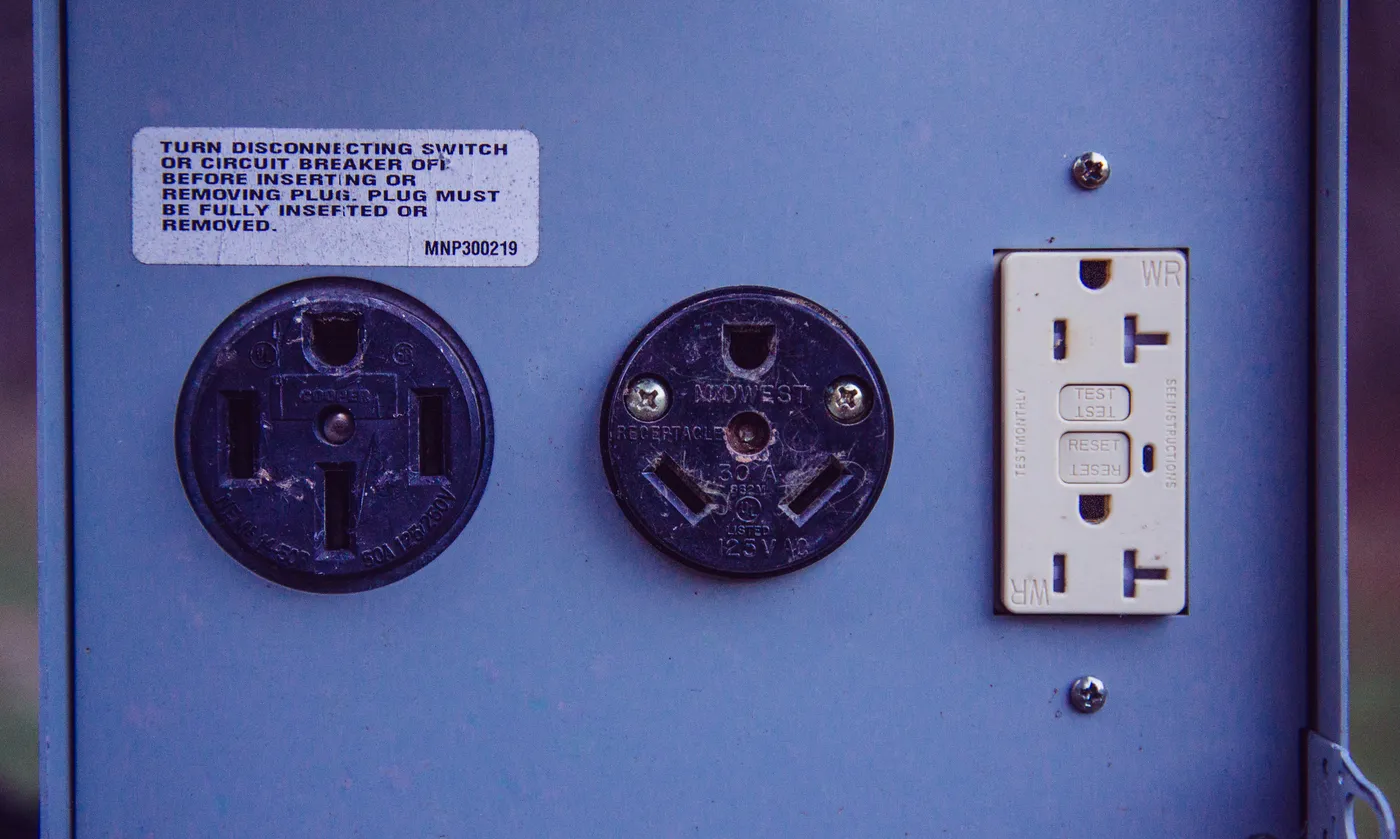
A 30 amp RV shore connection normally uses three conductors: one hot, one neutral, and one equipment grounding conductor. The hot conductor supplies 120 volts relative to neutral. The main breaker limits the RV to 30 amps. All branch circuits inside the RV share that single supply.
A 50 amp RV shore connection normally uses four conductors: two hot legs, one neutral, and one equipment grounding conductor. Each hot leg supplies 120 volts relative to neutral. The two hot conductors are on opposite phases, so there is approximately 240 volts between them at a correctly wired pedestal. Most RV appliances still use 120 volts. The distribution panel assigns different 120 volt branch circuits to one leg or the other.
The presence of 240 volts between the hot legs does not mean every 50 amp RV contains 240 volt appliances. Many use the service only as two large banks of 120 volt power. A few specialized installations may include 240 volt equipment, but that must be confirmed from the RV documentation and distribution panel. Never assume a load accepts 240 volts simply because the shore connection has two hot legs.
| Feature | 30 amp RV service | 50 amp RV service |
|---|---|---|
| Typical nominal voltage | 120 volts | 120/240 volt split phase |
| Hot conductors | One | Two |
| Current rating | 30 amps on one leg | 50 amps on each of two legs |
| Theoretical maximum power | 3,600 watts | 12,000 watts total |
| Shore plug contacts | Three | Four |
| Load distribution | All circuits share one supply | Circuits are divided between two legs |
| Common use | Smaller trailers and motorhomes | Larger RVs with multiple heavy loads |
Why available watts matter more than the label
Amps alone do not describe how much work a connection can support. Power depends on both voltage and current. For a straightforward single phase load, watts are approximately volts multiplied by amps. That is why the number of hot legs matters when comparing RV services.
A 30 amp RV reaches its limit quickly when several heating or cooling loads overlap. An air conditioner may run while the converter charges the battery. If an electric water heater, microwave, hair dryer, or portable heater then turns on, the total can exceed the main breaker rating. The breaker should open before properly sized wiring overheats, but repeated trips are a sign that the load plan needs correction.
A 50 amp RV has substantially more headroom and can distribute loads across two legs. One air conditioner may be assigned to the first leg and another to the second. Kitchen equipment and the water heater can also be divided. Good distribution does not increase the rating of either leg, but it reduces the chance that one side carries most of the demand while the other remains lightly loaded.
The nameplate or documentation for each appliance provides the best starting point for a load list. For motor driven appliances, distinguish running demand from the temporary starting surge. The article on running watts vs starting watts explains why an air conditioner or compressor can trip a source that appears large enough based only on normal running power.
What you can run on a 30 amp RV
A 30 amp hookup can support comfortable RV use, but it rewards deliberate load management. The exact combination depends on appliance ratings, ambient temperature, battery charging state, and whether equipment cycles automatically. There is no universal list that guarantees every device can operate simultaneously.
One roof air conditioner may consume a large share of the available service while running and briefly require more during startup. The converter can also draw significant power when house batteries are deeply discharged. Electric water heating, a microwave, an electric kettle, and a portable heater are individually manageable in many cases, but overlapping them with air conditioning may exceed the main breaker.
The practical strategy is to identify high draw loads and avoid running several at once. Use propane for an absorption refrigerator or water heater when the RV is designed and approved for it. Allow the microwave cycle to finish before using another heating appliance. If the battery charger has an adjustable input limit, select a setting appropriate for the shore connection and remaining loads.
A power management system can shed selected loads automatically, but it does not create additional capacity. It simply decides which device pauses when demand becomes too high. Owners choosing a portable source for this service can compare appropriate outlets and output ranges in the best 30 amp generators guide.
What changes with a 50 amp RV
The larger connection is designed for RVs with more simultaneous electrical demand. Multiple air conditioners, residential refrigerators, induction cooking, electric water heating, laundry equipment, and larger converter chargers become easier to support. The service still has limits, but normal use requires less manual sequencing.
Inside the distribution panel, branch circuits are arranged across two hot legs. If the loads are reasonably balanced, each leg carries part of the total. This is why a diagnostic display may show current on L1 and L2 separately. Adding the two current readings without considering voltage can be confusing. Each reading belongs to its own 120 volt leg.
A 50 amp main breaker is usually a two pole breaker with handles tied together. If either side experiences a qualifying overcurrent condition, the breaker disconnects both hot legs. It should not be replaced with a larger device to stop trips. Breaker size protects the shore cord and RV wiring, and changing it without an engineered electrical redesign can create a fire hazard.
Owners who need generator power close to the full shore capability should examine receptacles, continuous output, surge capacity, and whether both legs are energized correctly. The best 50 amp generators guide focuses on sources intended for higher demand RV connections. Even a generator with a 50 amp receptacle may provide less than the theoretical 12,000 watt campground service, so the output label and manual remain decisive.
Plug shapes prevent a dangerous mismatch
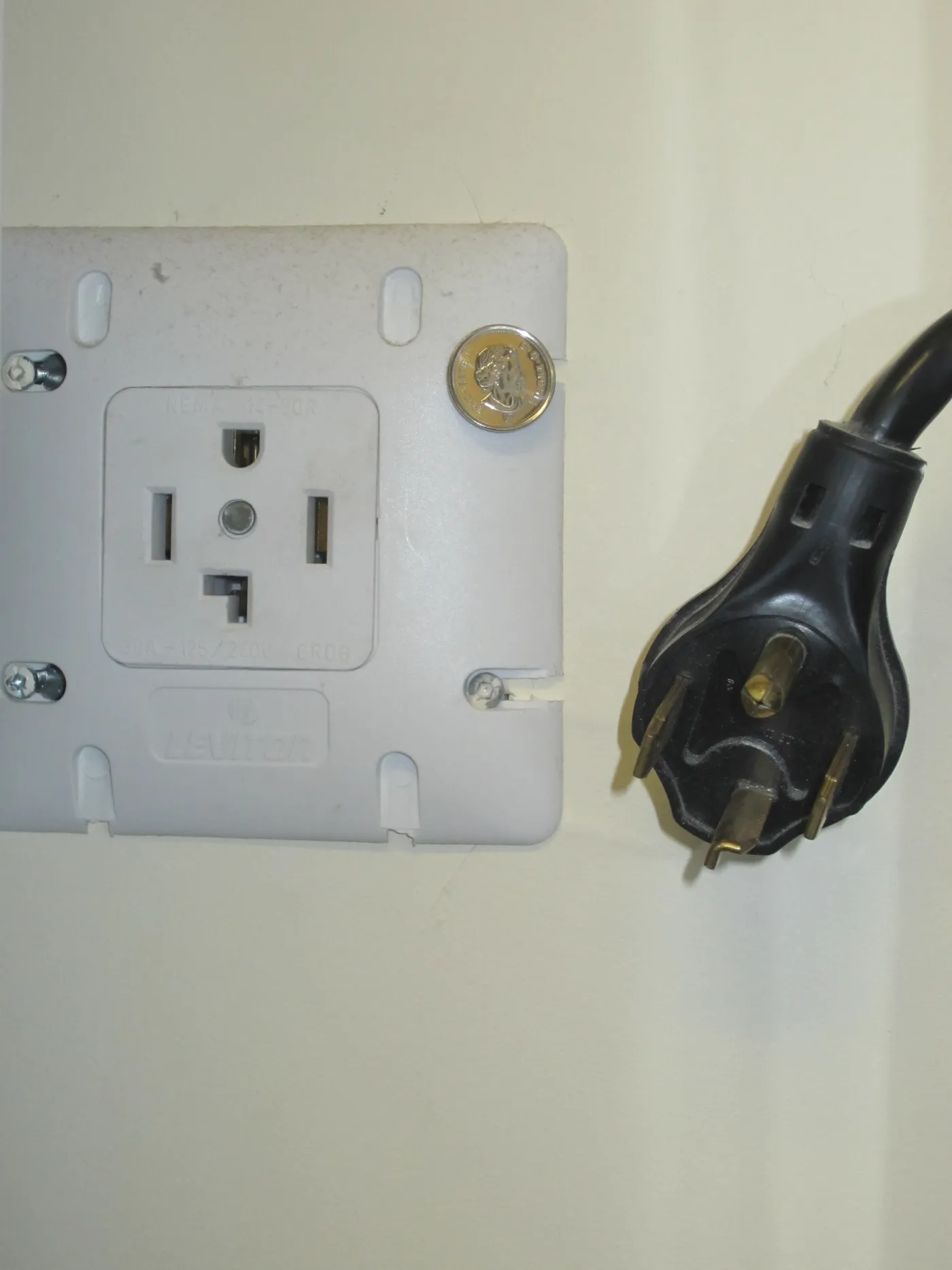
A 30 amp RV commonly uses the TT-30 configuration. Its three contacts serve hot, neutral, and ground. A 50 amp RV commonly uses the 14-50 configuration. Its four contacts serve two hot legs, neutral, and ground. The distinct shapes are intended to prevent a direct mismatch.
Do not confuse the TT-30 receptacle with an older three contact household dryer outlet. Similar visual impressions do not establish voltage or wiring compatibility. A TT-30 is a 120 volt RV receptacle. Connecting an RV to an incorrectly wired receptacle can apply excessive voltage to appliances and cause immediate damage.
Before connecting at an unfamiliar pedestal, inspect the receptacle for heat damage, cracks, looseness, corrosion, or discoloration. A plug that will not remain firmly seated creates resistance, and resistance creates heat. Do not force a damaged plug or hold it in position with tape. Report a questionable pedestal to the campground and use another approved connection.
What an RV adapter can and cannot do
An adapter changes physical compatibility. It does not increase the capacity of the source. When a 50 amp RV connects to a 30 amp pedestal through a listed adapter, the entire RV is still limited by the pedestal's single 30 amp supply. The adapter typically feeds the RV so its 120 volt circuits can receive power, but the source cannot provide normal 50 amp service capacity.
Load management becomes essential. Multiple air conditioners and electric heating appliances may need to remain off. The RV's energy management system may recognize the smaller service and shed loads automatically. If it does not, the owner must manage them manually.
When a 30 amp RV connects to a 50 amp pedestal through a properly designed listed adapter, the RV still has a 30 amp main breaker. The adapter uses one 120 volt hot leg from the pedestal. The RV does not become a 50 amp system, and its wiring should remain protected by its own main breaker.
Household outlet adapters impose an even smaller limit. A common 15 or 20 amp circuit may support battery charging and selected light loads, but air conditioning can be problematic, especially when other devices share the branch circuit. Extension cord length and conductor size affect voltage drop. Low voltage can increase motor heating and cause equipment malfunction.
Generator sizing for each RV service
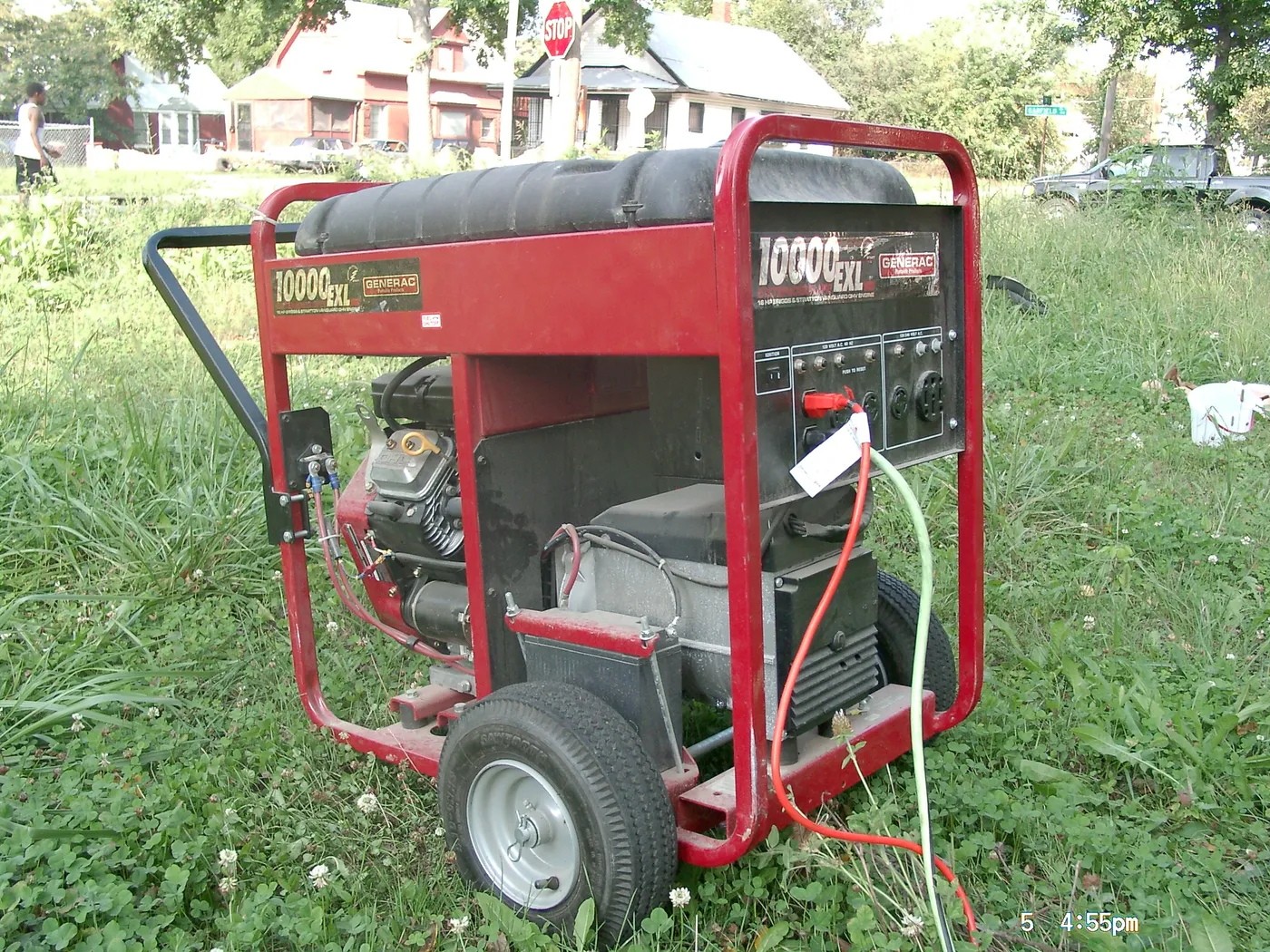
The shore cord rating describes the maximum service the RV can accept, not the minimum generator it needs. A 50 amp RV does not automatically require a generator that reproduces the full 12,000 watt campground connection. The correct generator size depends on the smaller set of loads that must operate away from shore power.
Build a load list that includes continuous demand and the largest starting event. If two air conditioners can start close together, plan for that overlap or use a start sequence that prevents it. Include the converter, refrigerator, water heater, and other automatic loads that may switch on without notice.
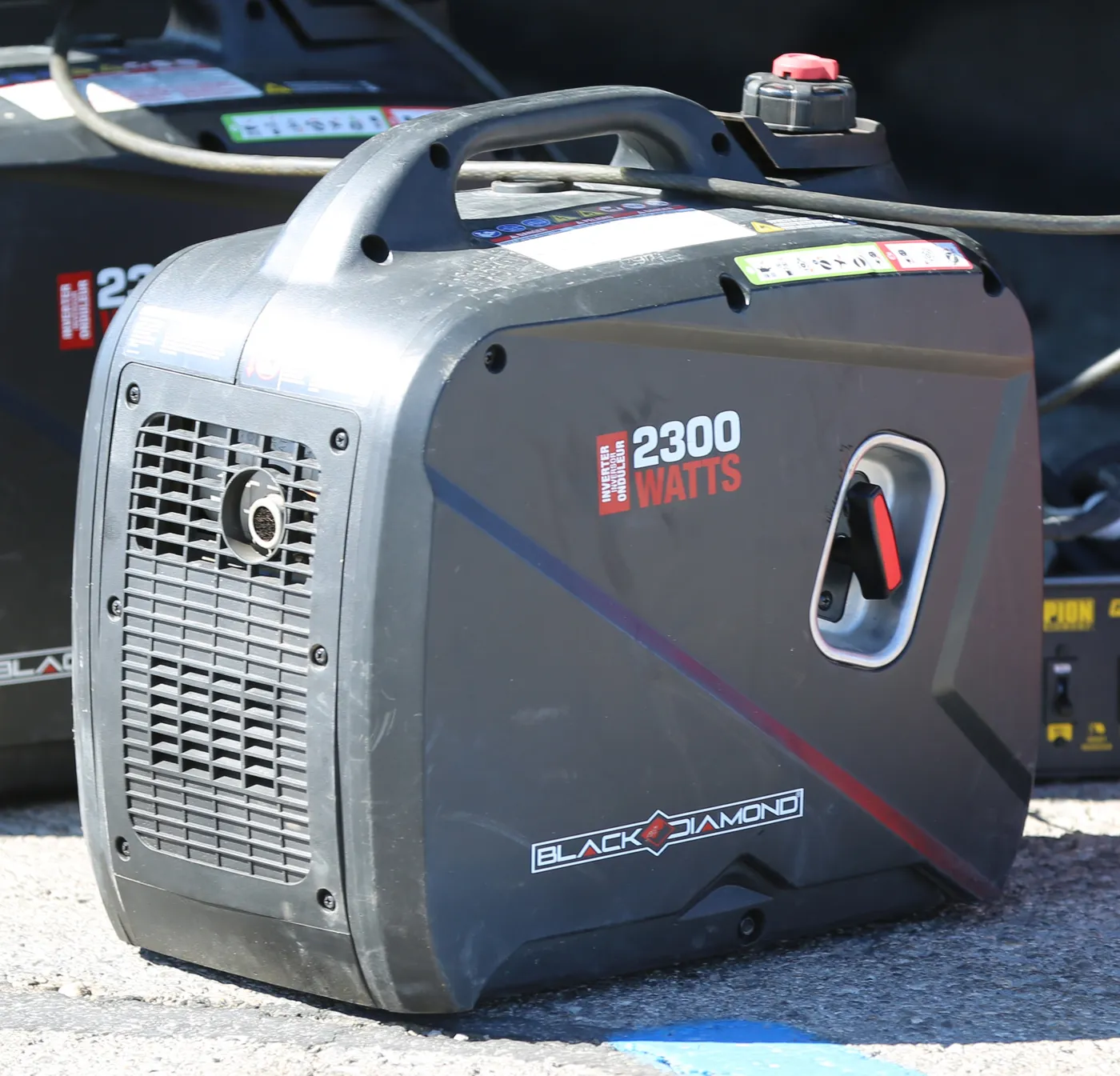
Connection hardware must also match. Confirm that the generator receptacle, cord, adapter, neutral arrangement, and grounding instructions are compatible with the RV. Some generators energize a 50 amp style receptacle while providing a lower total output than the receptacle could carry. The generator's running watt rating is the real limit.
The best RV generators roundup helps compare output class, connection type, portability, and campground use. For a calculation based on a detailed appliance list, use the method in how to size a generator by wattage. Keep reasonable headroom rather than planning to operate continuously at the absolute maximum.
Inverters do not change the shore service
An inverter converts DC battery energy into AC power. It can supply selected RV circuits when shore power and generator power are unavailable. It does not turn a 30 amp RV into a 50 amp RV or increase the shore cord rating.
Inverter output is limited by its continuous watt rating, surge capability, battery voltage, battery capacity, cable size, fusing, and battery management system. A large inverter can draw very high current from a 12 volt battery bank. Correct DC cable sizing and overcurrent protection are critical because a battery can deliver enough current to overheat a poor connection rapidly.
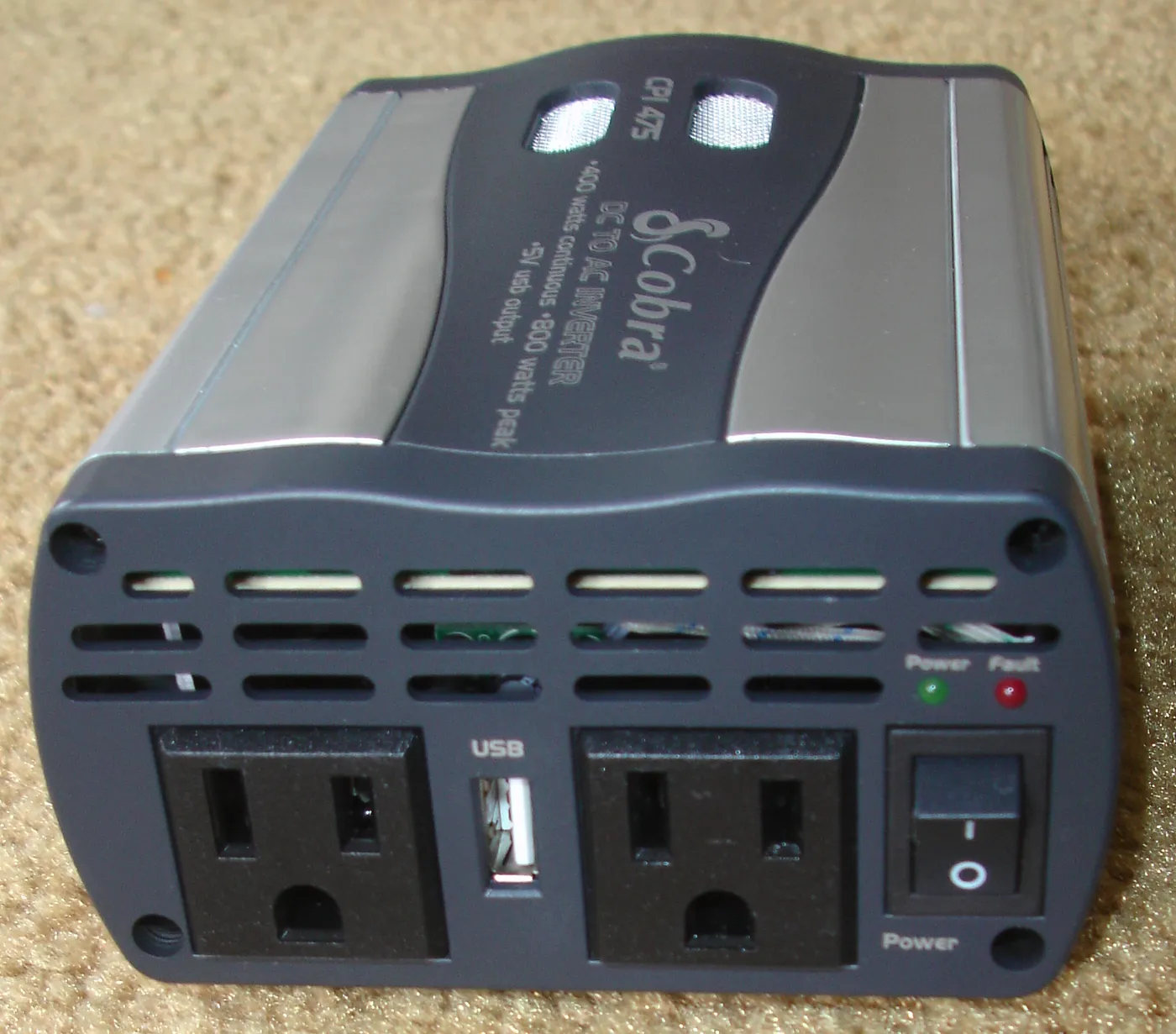
Many installations use a transfer function that prevents shore power and inverter output from energizing the same circuits improperly. Some inverter chargers also pass shore power through and limit charging current based on the available connection. Configuration must match the RV's 30 amp or 50 amp architecture.
Buyers planning battery based camping can review the best RV inverters for output classes and installation features. A qualified RV electrician should design any panel modification, especially in a 50 amp system where both hot legs and transfer behavior must be handled correctly.
Surge protection and pedestal testing
An RV electrical management system can evaluate more than a momentary voltage spike. Depending on the device, it may detect high voltage, low voltage, open neutral, reversed polarity, missing ground, or a wiring fault before connecting the RV. Choose a unit that matches the shore service. A 30 amp protector and a 50 amp protector are not interchangeable simply through a plug adapter.
An open neutral is particularly concerning on a 50 amp split phase service. With balanced 120 volt loads, neutral current may be modest. If the neutral connection opens while the two legs carry unequal loads, voltage can shift between the legs. Some circuits can receive excessive voltage while others receive too little, damaging appliances.
Testing and protection devices must be used according to their instructions. A handheld tester that is suitable for one receptacle type may not fully diagnose another. Never open a campground pedestal or attempt repairs without authorization, training, and appropriate de-energization procedures.
Safe connection and disconnection
Turn off the pedestal breaker before inserting or removing the shore plug. Switch off major RV loads first, then inspect the plug and receptacle. Insert the connector fully without touching conductive contacts. After the connection is secure, turn on the pedestal breaker and verify that the RV monitoring system reports acceptable voltage and wiring.
Keeping the breaker off during connection reduces arcing at the contacts. Arcing damages the plug surface and can create resistance that worsens with repeated use. If the plug, receptacle, or cord becomes unusually warm, disconnect safely and investigate. A warm cable exposed to sun is not the same as a hot connector, but any localized heating deserves attention.
Keep connections dry and supported. Do not leave an adapter hanging in a way that pulls contacts partly out of the receptacle. Use only listed outdoor equipment with intact insulation and strain relief. Do not route cords where vehicles can crush them or where sharp edges can cut the jacket.
For disconnection, turn off heavy loads, switch off the pedestal breaker, then remove the plug by its body rather than pulling the cable. Replace protective covers and store the cord dry. If a breaker trips repeatedly, reduce the load and identify the cause. Do not reset it over and over or hold it on.
Troubleshooting common RV power problems
If a 30 amp RV main breaker trips, list what was operating at that moment. Air conditioning, electric water heating, a microwave, and battery charging are common overlapping loads. Turn off high draw devices, allow compressor pressures to equalize if the appliance manual requires it, then restore loads one at a time.
If only half of a 50 amp RV appears powered, one hot leg may be missing. The cause could be the pedestal, shore cord, connector, transfer equipment, main breaker, or distribution system. Turn off the source and seek qualified help. Do not bridge the two legs or improvise a jumper.
Low voltage under load can result from a weak pedestal connection, undersized extension cord, excessive cord length, damaged contact, or overloaded campground distribution. Disconnect sensitive loads if voltage falls outside their permitted range. A voltage reading with no load may look normal even when the connection collapses under demand.
If a generator powers some equipment but an RV protection system refuses the input, consult both manuals. Possible causes include voltage, frequency, neutral configuration, grounding expectations, or waveform quality. Do not bypass a safety device merely to make the connection work.
Choosing between 30 amp and 50 amp RVs
Electrical service should be considered alongside floor plan, weight, climate, and travel style. A 30 amp RV may be entirely adequate for travelers who use one air conditioner, cook with propane, and manage high draw appliances. Its shore cord is usually lighter and easier to handle.
A 50 amp RV is better suited to multiple air conditioners and heavier simultaneous electrical use. The additional capacity reduces load juggling, especially in hot weather or for full time occupancy. The shore cord and related equipment are heavier, and not every campground site provides 50 amp service.
Either RV can camp at a site with the other service when a correct adapter and realistic load plan are used. The adapter does not erase the upstream limit. Before booking, confirm the service available at the specific site rather than assuming every pedestal in a campground is identical.
Frequently asked questions
Is a 50 amp RV hookup actually 100 amps?
It has two hot legs rated for 50 amps each, but calling it a 100 amp hookup can cause confusion. Each leg supplies 120 volts, and together they provide up to 12,000 watts. Neither individual leg can carry 100 amps.
Can I plug a 30 amp RV into a 50 amp pedestal?
Yes, with a listed adapter designed for that direction. The adapter uses one 120 volt hot leg. The RV remains limited by its 30 amp main breaker and does not gain 50 amp capacity.
Can I plug a 50 amp RV into a 30 amp pedestal?
Yes, with a suitable listed adapter, but the whole RV is then limited to the pedestal's 30 amp, 120 volt supply. Heavy loads must be managed, and multiple air conditioners may not operate together.
Does a 50 amp RV use 240 volt appliances?
Most RV branch circuits and appliances use 120 volts, with loads divided between two legs. Some specialized RVs may contain 240 volt equipment. Confirm the distribution panel and manufacturer documentation rather than assuming.
Why does my RV breaker trip when the watt total seems low?
A motor starting surge, an automatic load, low voltage, or a current calculation error may be responsible. Air conditioners, converters, water heaters, and refrigerators can switch on without being noticed. Check current on each leg for a 50 amp service.
Do I need a 12,000 watt generator for a 50 amp RV?
No. You need a generator sized for the loads you intend to run, including motor startup. A smaller source can serve a 50 amp RV through an appropriate connection as long as total demand is managed within the generator rating.
Bottom line
A 30 amp RV service supplies one 120 volt leg with up to 3,600 watts. A 50 amp RV service supplies two 120 volt legs with up to 12,000 watts total. That second leg is the key difference and explains why 50 amp RVs can support far more simultaneous equipment.
Match every cord, adapter, surge protector, generator, and inverter arrangement to the actual service. Treat an adapter as a connector, not a way to create capacity. Manage heavy loads when using a smaller source, inspect shore equipment before every connection, and turn the pedestal breaker off while plugging or unplugging. When panel wiring, transfer equipment, or a missing leg is involved, use a qualified RV electrician rather than improvising.