

Amazon affiliate links - we earn a commission.Affiliate disclosure

Buying guide · 12 min read · Updated 2026-11-07

Best 50 Amp Generators (2026)

Five 50 amp capable portable generators compared on running watts, fuel options, engine design and ownership, so a big RV or a transfer switch gets real power.

James MillerBy James MillerLead Machine Editor5 machines comparedSpec-sheet verified
Best 50 Amp Generators

At a glance

Our top picks

Side by side

Spec comparison

MachineEngineFuelStart
Westinghouse 13500 Peak Watt Dual Fuel 500cc GeneratorBest OverallWestinghouse 13500 Peak Watt Dual Fuel 500cc Generator500cc, pressure lubricationGasoline or propaneRemote and push button
Westinghouse 12500 Watt Dual Fuel Generator, 457ccBest Value WestinghouseWestinghouse 12500 Watt Dual Fuel Generator, 457cc457cc OHV, cast iron sleeven/aRemote key fob
Westinghouse 14500 Peak Watt Tri-Fuel 550cc GeneratorBest Tri-FuelWestinghouse 14500 Peak Watt Tri-Fuel 550cc Generator550cc, pressure lubricationn/an/a
DuroStar DS13000MX 13000 Watt Dual Fuel GeneratorBest Value Big UnitDuroStar DS13000MX 13000 Watt Dual Fuel Generator500ccGasoline or propaneRemote electric
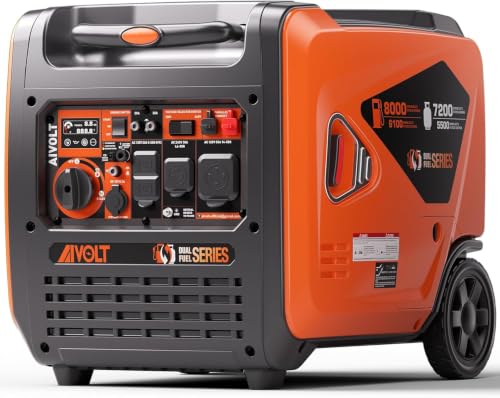
AIVOLT 8000W Dual Fuel Inverter Generator, 322ccBest Quiet 50 Amp OptionAIVOLT 8000W Dual Fuel Inverter Generator, 322cc322cc OHVDual fuel, auto switchingn/a

Heavy-duty RV service is not one big circuit. It is two separate household-voltage legs sharing a neutral, which is why a generator sold for it has to supply a split-phase outlet and enough running watts to keep both legs from sagging when the roof air conditioners kick in together.

Most buyers shop this size for a large fifth wheel or Class A coach, then discover the same machine can back up a house through a transfer switch. That dual use is the reason the category leans toward big open-frame engines rather than quiet inverter boxes, and it is the trade this guide weighs.

Before you buy

6 Criteria to Look For Before Buying a 50 Amp Generator

  1. 01

    What 50 amp really means

    A 50 amp RV circuit is two 50 amp 120 volt legs, which means a coach can draw up to about 12,000 watts if everything runs at once. Most real coaches settle at 6,000 to 9,000 watts, which is why the 9,500 running watt Westinghouse 12500 is a comfortable fit and the 8,000 watt AIVOLT needs load management. Buyers confuse a 50 amp plug with 50 amps of generator capacity and end up with a unit that trips under a second air conditioner.

  2. 02

    Running watts versus peak watts

    Peak watts is a few seconds of motor starting capacity, while running watts is what the machine holds for hours. The 12500 model lists 9,500 running against 12,500 peak, a gap of 3,000 watts, and the 14500 tri-fuel headline hides a similar spread. Size on the running figure, and ask for it in writing when a listing, like the DuroStar, only shows one big number.

  3. 03

    Fuel type and output loss

    Propane stores indefinitely and burns clean, but it gives up output: the 12500 drops from 9,500 to 8,500 running watts. Natural gas on the 14500 removes refueling altogether for home backup. A dual fuel unit is a better insurance policy than a gasoline-only one, because stale ethanol gasoline is the top cause of failed starts in an unused generator.

  4. 04

    Engine lubrication and cooling

    Big air-cooled engines run hot at sustained loads. The Westinghouse 13500 and 14500 use pressure lubrication, where a pump feeds oil to the bearings, instead of splash lubrication used on simpler units. For a machine you will run for eight hours at a time, that design is worth paying for, and it is the main reason to step above the DuroStar.

  5. 05

    Noise and campground rules

    Many campgrounds enforce a quiet hours rule and some cap generators at about 60 to 65 dBA at a set distance. The AIVOLT 8000 lists 62 dBA at 23 feet, while a 500cc open frame commonly runs well above that at load. If you camp in developed parks, noise decides the purchase as much as watts do.

  6. 06

    Transfer switch and home use

    A 30 amp transfer-switch ready outlet is what lets you run furnace blowers, a fridge and lights during an outage. The 13500 and 14500 pair with an automatic transfer switch, and the 14500 can pull natural gas from the house line. Never back-feed a house through a dryer outlet; use a proper inlet box and interlock or a transfer switch installed by an electrician.

Detailed reviews

The 5 best 50 amp generators, explained

01
Westinghouse 13500 Peak Watt Dual Fuel 500cc Generator
13500 peak watts500cc dual fuel9.5 gal tankRemote start
Check price on Amazon
Best for: Large RVs and home backup from one machine that needs real tank capacity.

What separates this one from the other big open-frame units is the 500cc engine with pressure lubrication. Instead of relying on a splash dipper to throw oil around, a pump pushes it to the bearings, which matters when a machine of this size sits at 60 to 70 percent load for six hours running two roof units and a water heater. The 9.5 gallon tank is enough for a claimed 19 hours at a quarter load, so a boondocking weekend can pass without a single fuel run.

The trade is bulk. A 500cc engine on a wheeled steel frame is not something you lift into a pickup bed alone, and at full load it is a loud machine with the usual open-frame bark. Compared with the 12500 model in this lineup it adds a larger tank and the same remote start convenience, so the 13500 is the one to buy if you actually plan to camp on it rather than only keep it for outages.

Ownership is mostly about the carburetor and the oil. This design is built to pair with an automatic transfer switch, so it will sit idle for long stretches in a garage, and a fuel stabilizer or a run-dry shutdown on propane is what keeps the jets clean. Check the oil on every cold start; a pressure-fed engine tolerates low oil even less than a splash design.

What works

  • Pressure lubrication suits long, heavy-load running
  • Big 9.5 gallon tank cuts refueling trips
  • Dual fuel gives a storable propane option
  • Remote start from inside the coach

Watch out for

  • Heavy and loud compared with any inverter unit
  • Large fuel tank makes long storage a stabilizer chore

Spec sheet

Peak output
13,500 watts
Engine
500cc, pressure lubrication
Fuel
Gasoline or propane
Tank
9.5 gallons gasoline
Start
Remote and push button
02
Westinghouse 12500 Watt Dual Fuel Generator, 457cc
9500 running watts457cc OHVRemote startDual fuel
Check price on Amazon
Best for: RV owners who want a big capacity machine without the top-end price.

This is the only machine here whose listing states running watts for both fuels, and the gap is the useful part: 9,500 on gasoline drops to 8,500 on propane, roughly a tenth. A 50 amp rig tops out near 12,000 watts if every appliance runs, so on propane you are leaning on the fact that two air conditioners and a microwave rarely overlap with an electric water heater.

The 457cc engine uses a cast iron sleeve, which is the right material for a motor that may run through a hot August afternoon in a campground. It has a lower displacement than the 13500 but the same family resemblance in controls, with a transfer-switch ready 30 amp outlet and RV outlet beside the standard household receptacles. Pick it over the 13500 if you want the lighter, cheaper option and can live with a smaller fuel reserve.

Watch the neutral bonding and cord choice when you hook it to a 50 amp coach. A 50 amp coach expects a 14-50 style connection, so budget for a correctly gauged cord and an adapter for the outlet you have. Run the engine on propane at least every few months so the regulator diaphragm does not stiffen.

What works

  • Both fuels have published running watts
  • Cast iron cylinder sleeve for hot, long runs
  • Remote start key fob included
  • Transfer switch ready outlet for home use

Watch out for

  • Propane output falls about a tenth from gasoline
  • Smaller tank than the 13500 shortens unattended runs

Spec sheet

Running watts (gas)
9,500
Running watts (propane)
8,500
Peak watts (gas)
12,500
Engine
457cc OHV, cast iron sleeve
Start
Remote key fob
03
Westinghouse 14500 Peak Watt Tri-Fuel 550cc Generator
14500 peak watts550cc engineTri-fuelUnder 5% THD
Check price on Amazon
Best for: Owners who want one machine for a big RV and a gas-fed home backup.

Natural gas is the reason this machine exists. Tri-fuel means a house with a gas line can feed it from the meter, so the same generator that powers an RV at the campground can run a home for days without anyone carrying fuel. That makes it the largest and most flexible machine in this lineup, and the only one with a pressure-lubricated 550cc engine.

The power quality is a notch better than a typical open frame. Under 5 percent total harmonic distortion is acceptable for TVs, phones and computers, but it is looser than the under 3 percent you get from true inverter units like the AIVOLT 8000 below. Copper windings help the alternator carry big motor loads without running as hot as an aluminum wound set.

Expect to spend time on the setup. The fuel selector, the regulator and a natural gas hookup are not casual accessories, and the 550cc engine is a serious maintenance commitment compared with a small camping unit. Change the oil more often under heavy duty and run it under load every month so the carburetor stays clean on all three fuels.

What works

  • Natural gas option removes refueling on long outages
  • Largest engine in the lineup at 550cc
  • Pressure lubrication helps under sustained load
  • Copper windings carry motor starts well

Watch out for

  • Distortion is looser than a true inverter generator
  • Fuel plumbing and size make it overkill for camping alone

Spec sheet

Peak output
14,500 watts
Engine
550cc, pressure lubrication
Fuels
Gasoline, propane, natural gas
Power quality
Under 5% THD
Windings
Copper
04
DuroStar DS13000MX 13000 Watt Dual Fuel Generator
13000 watts500cc engineCO alertDual fuel
Check price on Amazon
Best for: Budget minded buyers who want 13,000 watts and a CO shutoff.

The DuroStar leads with a number, 13,000 watts, and a safety feature that does not always appear at this price: a carbon monoxide sensor that shuts the engine down. For an RV owner parking a machine near a camper window, that automatic cutoff is a meaningful protection, even though it never replaces keeping the unit well away from any opening.

The 500cc engine matches the Westinghouse 13500 in displacement, so on paper they are close, but the listing is vague about running watts and says nothing about pressure lubrication. That makes it harder to size, and you should assume the usable continuous number is well below the headline. For a 50 amp coach with two air conditioners, treat it as a unit that will run comfortably only if you manage the load.

In ownership, the value pick is a good fit for owners who will mostly keep it for storms. Store it with the carburetor drained or a stabilizer in the tank, replace the starter battery before it fails, and verify the oil level every time it starts. Parts availability is thinner than for the bigger brands, so keep a spare spark plug and air filter on the shelf.

What works

  • CO alert shuts the engine down automatically
  • 13,000 watts at a lower price than the tri-fuel
  • 500cc engine matches the top Westinghouse
  • Dual fuel for stored propane

Watch out for

  • Running watts are not clearly published
  • Spare parts and support are thinner than the larger brands

Spec sheet

Output
13,000 watts
Engine
500cc
Fuel
Gasoline or propane
Safety
CO alert shutdown
Start
Remote electric
05
AIVOLT 8000W Dual Fuel Inverter Generator, 322cc
8000 watts62 dBA at 23 ft322cc OHVAuto fuel switch
Check price on Amazon
Best for: Campers who want a quieter 50 amp class machine and will manage their loads.

This is the oddball of the lineup, and the best answer if a 12,000 watt open-frame machine sounds like too much. It is an inverter generator, so engine speed follows the load, and the 62 dBA rating at 23 feet is a number the open-frame units cannot touch. A campground neighbor will notice that difference immediately.

It also has an automatic fuel switching system that moves between propane and gasoline, which suits a rig that wants stored propane as the first choice. The trade is output: 8,000 watts will not run two roof air conditioners, a water heater and a microwave all at once on a big 50 amp coach, so you will need to manage your loads, and it is a better match for a 50 amp rig whose owner stays under about 6,000 watts.

Inverter machines hide fragile electronics behind their quiet cases, so keep the vents clear and avoid running it in the rain without a cover. Use fresh gasoline with stabilizer, change oil at the break-in point, and plan on propane for storage. Its power is clean enough for a laptop or a CPAP, which none of the open-frame units can claim.

What works

  • 62 dBA at 23 feet is far quieter than open frame
  • Automatic switching between propane and gasoline
  • Inverter output is safe for sensitive electronics
  • Smaller and lighter than the 13,000 watt class

Watch out for

  • 8,000 watts will not run every appliance in a large coach
  • Newer brand with a shorter parts and service record

Spec sheet

Output
8,000 watts
Engine
322cc OHV
Noise
62 dBA at 23 feet
Voltage
120/240 volt
Fuel
Dual fuel, auto switching

Spec sheet decoder

What the numbers on the box really mean

The specs manufacturers lead with, translated into what they tell you about real-world performance.

Peak watts

The brief surge a generator can deliver while a compressor or motor spins up. It does not describe continuous capacity.

Watch forThe 14,500 watt tri-fuel and the 13,500 watt Westinghouse both lead with peak numbers.

Running (rated) watts

The output the machine sustains for hours. This is the figure to compare with your coach load.

Watch forThe Westinghouse 12500 lists 9,500 running watts on gasoline and 8,500 on propane.

Engine displacement (cc)

Bigger displacement generally means more torque and slower, cooler running at a given load. It is not a quality measure by itself.

Watch forThe 550cc in the 14500 beats the 457cc in the 12500, but design details such as lubrication matter more.

Total harmonic distortion

A measure of how clean the power is. Lower is better for electronics with sensitive circuit boards.

Watch forThe 14500 states under 5 percent; the AIVOLT inverter design is built for cleaner output.

Noise (dBA at 23 feet)

Sound pressure at a set distance, usually at part load. Real noise at full load is higher.

Watch forOnly the AIVOLT 8000 gives a clear figure here, at 62 dBA.

Methodology

How We Evaluated These 50 Amp Generators

Real 50 amp capacity

We looked for running watts and a 120/240 volt outlet that could realistically serve a 50 amp coach. Machines that only listed a peak number were marked down. The AIVOLT 8000 was kept as a quieter alternative with a clear caveat on its ceiling.

Engine design

We compared displacement, lubrication type and sleeve material from the spec sheets. Pressure lubrication on the Westinghouse 13500 and 14500 carried weight for long sessions. We did not credit displacement alone.

Fuel flexibility

Each unit was assessed for gasoline, propane and natural gas options and the published output loss between them. The tri-fuel 14500 scored highest for flexibility. Dual fuel was treated as the baseline for ownership.

Safety and noise

We favored carbon monoxide shutdown, such as on the DuroStar, and published noise data. Open-frame units were judged against campground quiet hours, and the 62 dBA AIVOLT stood out as the only clear figure.

Ownership reality

Based on owner feedback patterns, we considered tank size, starting method, parts availability and how stored fuel behaves. The 9.5 gallon tank on the 13500 and the remote start fobs were weighed against the bulk of each frame.

Decision guide

How to Choose the Right 50 Amp Generators

By Coach Size

SituationPickWhy
Large fifth wheel, two or three air conditionersWestinghouse 13500Big tank and pressure lubrication for long heavy runs
Class A with one 15,000 BTU unit plus galley loadsWestinghouse 125009,500 running watts covers a normal load
Mid-size coach, careful load managementAIVOLT 8000WQuiet inverter output near 8,000 watts
Coach plus gas-fed home backupWestinghouse 14500 Tri-FuelNatural gas runs from the house line
Storm backup first, occasional RV useDuroStar DS13000MXLower cost, CO alert shutdown

By Budget

TierPickWhy
Lowest relative costDuroStar DS13000MXBig output at the least spend in the lineup
Mid tierWestinghouse 12500Strong engine and a fair price
Upper midWestinghouse 13500Adds a big tank and pressure lubrication
Highest costWestinghouse 14500 Tri-FuelLargest engine and natural gas capability
Premium for quietAIVOLT 8000WInverter electronics cost more per watt

Open frame vs Inverter

Open frame (Westinghouse, DuroStar)

Cheaper per watt and capable of very high output, but loud and with looser power quality. The 12500, 13500 and 14500 all fall here. They are the right choice for a big coach where you need a lot of watts and do not care about neighbors.

Inverter (AIVOLT 8000)

Quiet, with clean output for electronics and a throttle that follows load. The AIVOLT 8000 runs at 62 dBA at 23 feet but tops out near 8,000 watts, so it will not carry every appliance in a large coach at once.

Choose the open-frame units if you need maximum watts or home backup; choose the AIVOLT for parks with noise limits and moderate loads.

Fuel Strategy

PreferencePickWhy
Gasoline only, simplestDuroStar DS13000MXStraightforward dual fuel, no gas line needed
Propane for storageWestinghouse 12500Published propane running watts of 8,500
Natural gas hookup at homeWestinghouse 14500 Tri-FuelOnly tri-fuel unit here
Automatic switchingAIVOLT 8000WMoves between propane and gasoline on its own
Longest unattended runWestinghouse 135009.5 gallon tank, claimed 19 hours at quarter load

For Home Backup Specifically

Look for

A transfer-switch ready outlet, a large tank or a natural gas option, and enough running watts to cover the furnace blower, fridge and well pump. Confirm the plug type matches your inlet box.

In this comparison

The Westinghouse 14500 Tri-Fuel is the strongest choice because it can pair with an automatic transfer switch and run from a natural gas line. The 13500 is a close second with its 9.5 gallon tank.

When to Spend More

Spend more if

You camp for weeks without hookups, you plan to run three air conditioners, or you want home backup with a gas line. The Westinghouse 13500 and 14500 are worth the step up for their engine design and fuel capability.

Save if

You mainly want storm insurance and an occasional camping weekend. The DuroStar DS13000MX or the Westinghouse 12500 give the watts without paying for a bigger tank or natural gas.

Ownership

Maintenance schedule

The upkeep that decides whether this machine lasts two seasons or ten.

TaskIntervalWhy it matters
Check oil levelEvery startLarge engines hold a few quarts, and low-oil sensors will stop a run mid-job. Pressure-fed designs such as the 550cc Westinghouse depend on correct oil level.
Change engine oilFirst 20 hours, then every 50 to 100 hoursBreak-in metal shavings stay in the sump until you drain them. Heavy summer duty shortens the safe interval.
Run under loadMonthlyExercise keeps the carburetor jets clear and the starter battery charged. Ethanol blends absorb water in a half empty tank.
Stabilize or drain fuelBefore storage over 30 daysStale gasoline is the top cause of a no-start. On a dual fuel unit, run the carburetor dry on propane to leave it clean.
Replace air filter and plugEvery 100 hours or yearlyA clogged filter starves the engine of air and raises fuel use. A fouled plug causes hard starts under load.

FAQ

Frequently Asked Questions

Do I need a 50 amp generator for a 50 amp RV?

Not necessarily. A 50 amp coach only draws what its appliances demand, and many run fine on a 30 amp class generator if you stagger the air conditioners. A 50 amp class machine makes sense when you run two or more roof units or an electric water heater together.

Is propane or gasoline better?

Propane stores for years and burns cleaner, but gives up roughly a tenth of output, such as 9,500 down to 8,500 running watts on the Westinghouse 12500. Gasoline gives maximum power and is easier to find on the road.

Which is the best budget choice?

The DuroStar DS13000MX is the lowest cost big unit here and includes a CO alert. The Westinghouse 12500 costs a little more but has a better published specification.

Does a bigger engine always mean more output?

No. The 550cc in the 14500 is larger than the 457cc in the 12500, but design, lubrication and alternator size all affect real output. Always read the running watts, not just the displacement or the peak figure.

Can I run a house from one of these?

Yes, through a properly installed transfer switch or an inlet box with an interlock. Never plug a generator into a wall outlet, and keep it outdoors and well away from any window or door.

Why is the inverter option rated lower?

The AIVOLT 8000 is an inverter design with electronics that cost more per watt, so it tops out near 8,000 watts instead of 13,000. In exchange it is far quieter and cleaner, which suits parks with noise rules.

Bottom line

The short version

Browse more 50 amp generatorson Amazon →
James Miller, Lead Machine Editor

About the author

James Miller

Lead Machine Editor, MachineFanatic

James Miller leads MachineFanatic's buying guides, turning spec sheets, manuals and owner feedback into clear verdicts on power tools, outdoor power equipment, shop machines and kitchen machines.

More from James →

Keep reading

Related guides