
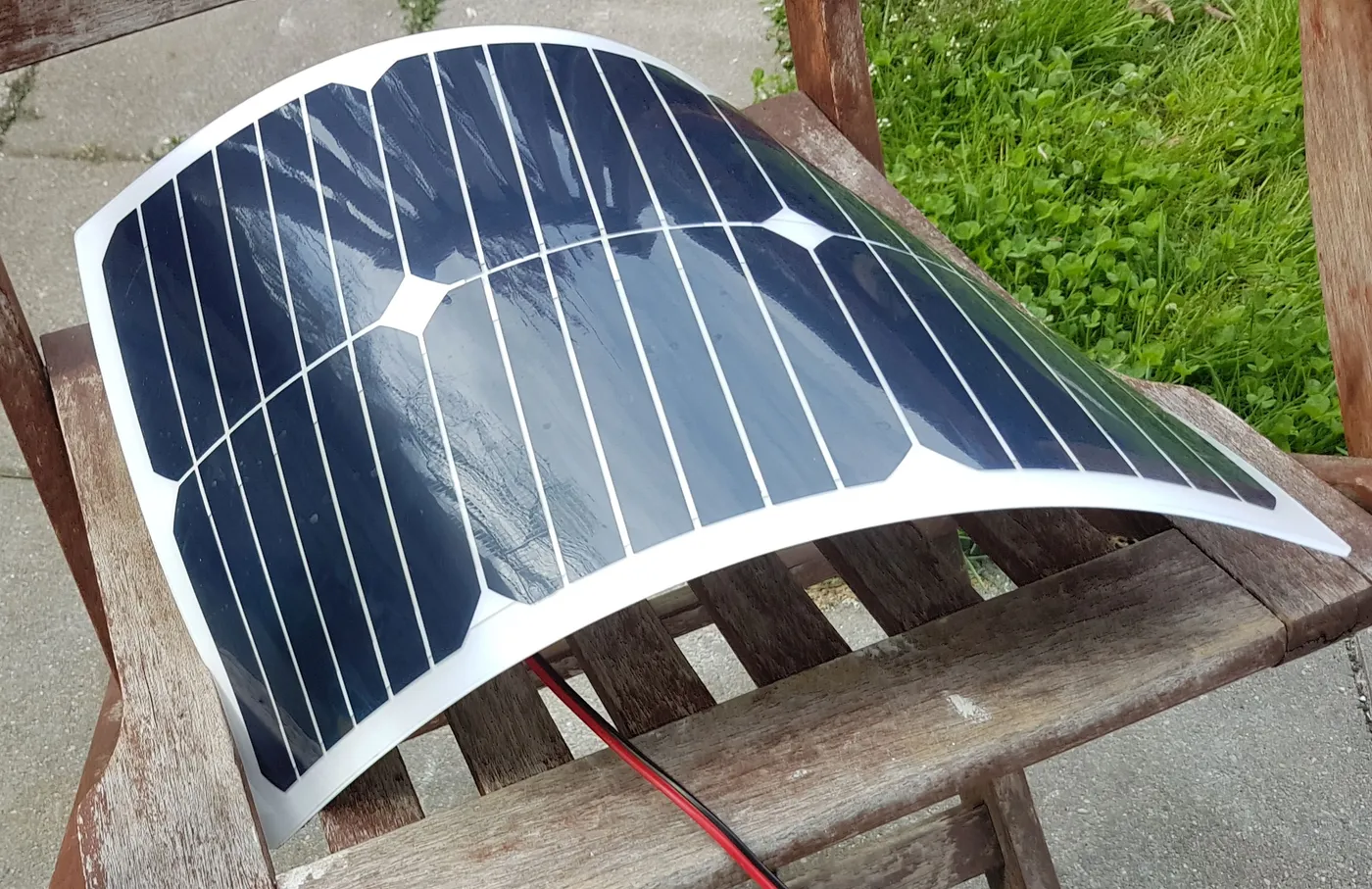
The roof problem that starts the comparison
A solar panel can match the electrical target and still be wrong for the surface beneath it. A rigid panel may be too heavy, too tall, or impossible to place on a gently curved roof. A flexible panel may follow that curve, yet run hot because it was bonded directly to the roof with no air space. The useful flexible vs rigid solar panels comparison therefore begins with construction, not rated watts.
Rigid modules protect their cells behind a hard front surface, commonly tempered glass, and within a structural frame. Flexible modules use thin cells and laminated polymer layers without the same heavy glass and aluminum perimeter. Removing those structural parts reduces weight and thickness, but it also transfers more responsibility to the roof, adhesive, backing surface, and installation method.
Flexible vs rigid at a glance
| Decision factor | Flexible panel | Rigid panel |
|---|---|---|
| Basic structure | Thin laminated module without a heavy perimeter frame | Cells protected by glass and a structural frame |
| Weight | Usually much lighter for a similar panel area | Heavier because of glass, frame, and hardware |
| Surface shape | Can follow a limited gentle curve within its bend specification | Requires a flat mounting plane across its supports |
| Cooling opportunity | Often limited when bonded close to the roof | Can be mounted with an air gap beneath the module |
| Mechanical protection | More dependent on full, smooth backing support | Glass and frame protect the cell laminate |
| Removal | Can be difficult when installed with permanent adhesive | Usually removable from brackets after electrical isolation |
| Common strength | Low weight and low profile on compatible curved surfaces | Durability, ventilation, serviceability, and established mounting methods |
| Common risk | Heat buildup, surface damage, overbending, and adhesive problems | Roof load, wind profile, penetrations, and impact on glass |
These differences describe module format rather than cell chemistry. A flexible panel and a rigid panel may both use monocrystalline cells. Cell type affects conversion behavior, while the front layer, encapsulation, frame, backing, and attachment method determine how the finished module behaves mechanically.
What flexible really means
A flexible solar panel is not designed to be folded sharply, rolled into a tight tube, or repeatedly flexed like fabric unless its manufacturer explicitly describes that use. Most products in this category are better understood as semi flexible modules. They can conform to a specified minimum bend radius during installation, then remain supported in that shape.
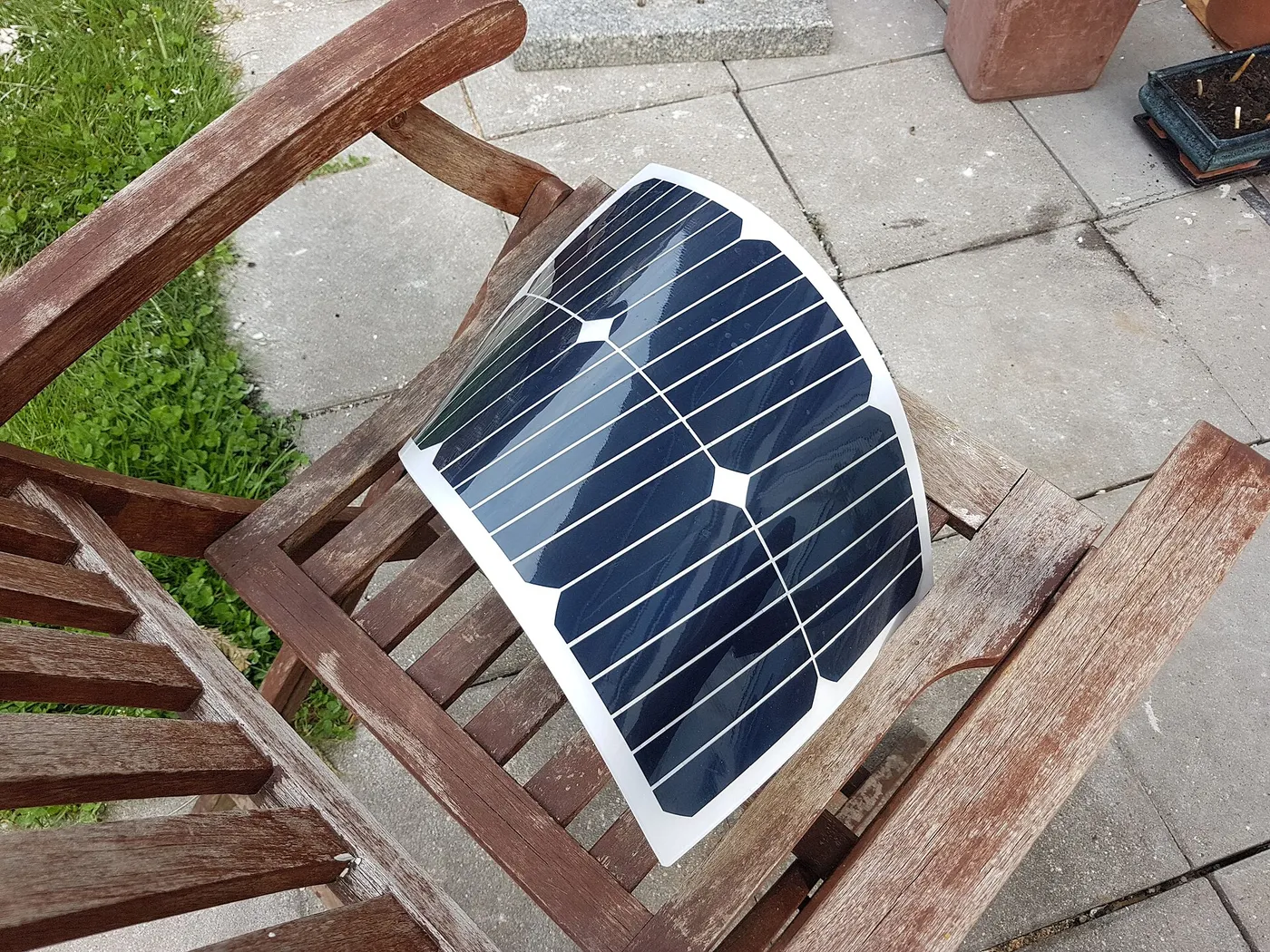
The cells remain fragile. Thin crystalline cells may tolerate a modest curve because of their reduced thickness and the way they are laminated, but excessive bending can create microcracks or damage cell interconnections. That damage may not be visible from the front. Output can decline gradually, or a stressed area can become a localized hot spot.
A bend limit is therefore a real mechanical specification. The roof curve must remain within it across the complete panel, not just at the center. Fasteners or adhesive pressure should not pull one corner into a tighter radius. A roof with compound curves, raised seams, rivets, or abrupt transitions may not provide the continuous support a flexible module needs.
The surface should be clean, smooth, compatible with the chosen mounting material, and capable of carrying heat away without deforming. A thin panel can reproduce imperfections beneath it. A protruding fastener, grit trapped under the laminate, or sharp roof feature can concentrate stress in a small area.
What the rigid frame does
A rigid module's frame is not merely a convenient border. It helps maintain the module shape, protects laminate edges, provides defined clamping or fastening zones, and transfers wind and snow loads to the mounting hardware. The glass spreads many surface loads and protects the cells from routine contact and weather.
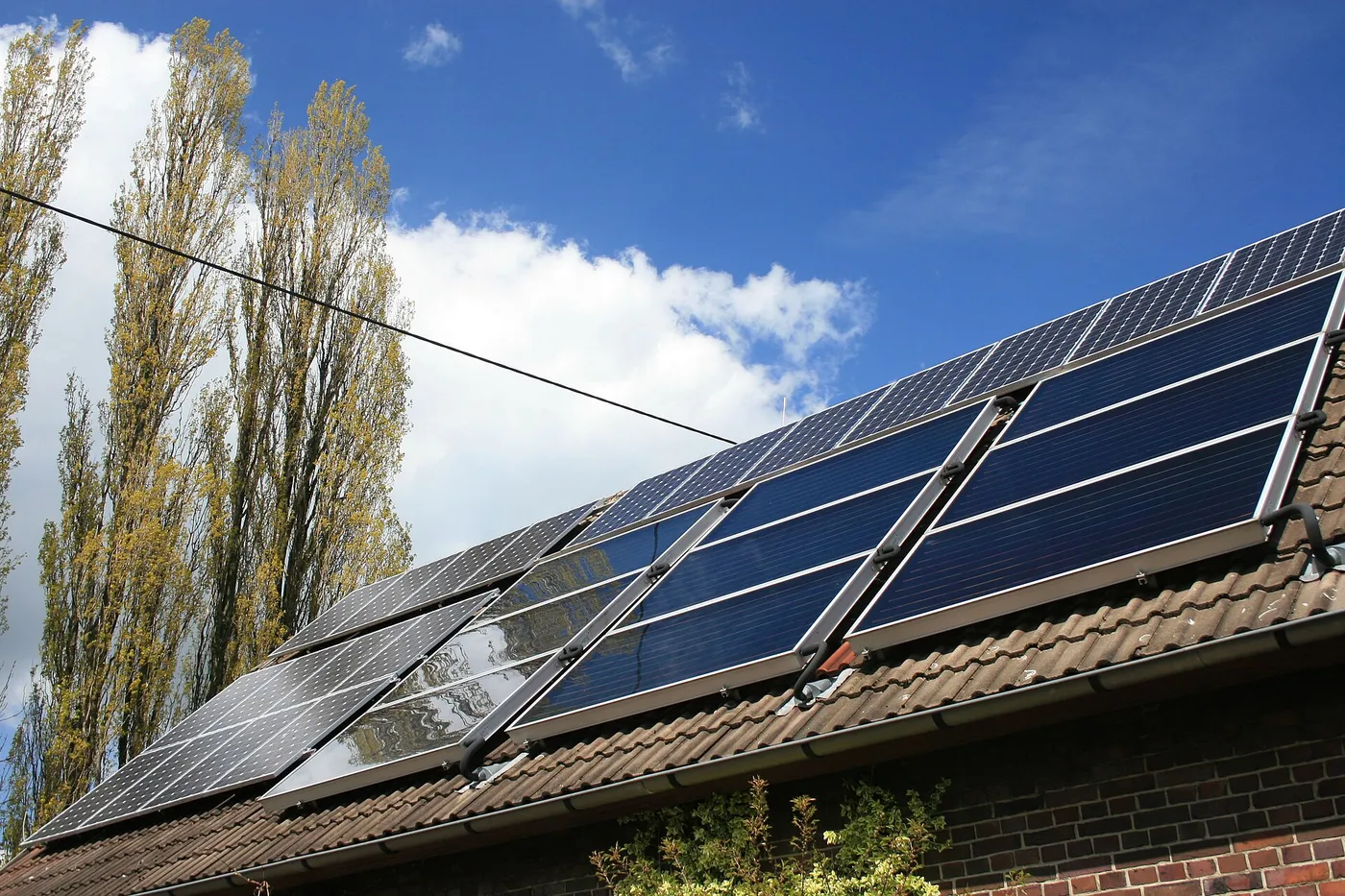
The frame also enables a standoff installation. Brackets can hold the module above an RV roof, leaving space for air movement and water drainage. That gap can reduce operating temperature compared with a laminate bonded directly to a roof, although actual temperature still depends on sunlight, wind, roof color, gap size, and module design.
The completed assembly is also heavier and presents more height to airflow. On a vehicle, mounting hardware must resist highway wind, vibration, and repeated thermal movement. The roof structure and vehicle manufacturer guidance determine whether those loads are acceptable.
Heat is the most overlooked difference
Silicon panel output decreases as cell temperature rises. The rate appears on the datasheet as a maximum power temperature coefficient. Sunlight heats any panel, but a module bonded directly to a roof may have less opportunity to release that heat from its rear surface. The roof itself can also become hot and transfer heat into the module.
A framed panel with a ventilated rear gap often has a thermal advantage. Air can move below the module, and the panel is not in full surface contact with hot roofing material. This does not guarantee that every rigid panel will outperform every flexible one. Cell technology, coefficient, panel color, wind, mounting gap, and irradiance still matter. It does explain why comparing nameplate watts alone can be misleading.
High temperature affects more than immediate output. Repeated thermal cycling makes materials expand and contract. Encapsulants, back layers, adhesives, cells, conductors, and the roof can move at different rates. A flexible installation that cannot accommodate that movement may develop lifting edges, stressed connections, moisture paths, or laminate damage.
Some installers place a compatible spacer or backing layer beneath a flexible panel to support it while improving heat behavior. That solution changes the installation height, bonding method, wind exposure, and drainage. It must be supported by the panel, roof, and mounting material instructions rather than treated as a universal recipe.
Weight and profile favor flexible panels
The clearest advantage of a flexible panel is reduced mass. Removing thick glass and a substantial aluminum frame can make the module easier to carry and reduce the load placed on a lightweight roof. This can matter on small trailers, pop up roofs, boats, and vehicles already close to a roof or total weight limit.
A flexible module also sits closer to the roof. The low profile may reduce visual impact and avoid interference with low branches or garage clearance. It should not be assumed to eliminate aerodynamic forces. Air can enter beneath a lifted edge, and a partially detached laminate can become a serious hazard at road speed.
Rigid panels require the weight of both the module and its brackets. They may also need crossbars or reinforcement depending on the roof. That penalty can be acceptable when the roof has adequate capacity and the owner values long term ventilation and serviceability.
Mounting a flexible panel is not simply gluing it down
Adhesive installation looks simple because it avoids a visible frame, but it creates several design questions. The adhesive must bond to both the module backing and the roof material, tolerate heat and ultraviolet exposure, accommodate movement, resist water, and remain secure under wind. A product suitable for one roof membrane may damage or fail on another.
Full surface bonding can trap heat and make future removal difficult. Spot bonding or strips may create channels, but they can also leave unsupported spans or water pockets if the manufacturer has not approved the pattern. Mechanical eyelets supplied on some flexible panels can help locate the module, yet they should not be assumed to carry every wind load by themselves.
Plan removal before bonding. A failed panel may need replacement while the roof remains in service. Aggressive adhesive can tear roofing material or leave residue that is difficult to remove. A removable mounting sheet or purpose designed system may improve serviceability, but it must still meet structural and weather requirements.
Rigid panel mounting has different risks
Rigid modules are typically secured with brackets or rails attached to suitable structural locations. The panel manufacturer specifies approved clamp zones or frame holes. The roof manufacturer or RV maker determines where attachments can be supported and how penetrations must be sealed.
A bracket spreads load through discrete points rather than the full module surface. Those points must resist uplift and vibration. Fastening only to thin roof skin without verified backing can fail. Adhesive mounted brackets also depend on surface compatibility and load testing, even though the panel itself remains removable from the brackets.
Penetrations create leak risk when poorly located or sealed. Sealant is not a substitute for structural attachment, and an attachment is not waterproof merely because it feels tight. Use the specified fasteners, compatible sealants, preparation method, and inspection schedule.
Durability depends on the failure you are trying to prevent
Rigid panels generally provide stronger protection against routine handling and point contact. Their frame keeps the cell laminate from following every roof movement, while the glass protects the front. This established construction is one reason rigid modules are common on permanent residential, commercial, and RV installations.
Flexible modules eliminate glass breakage and can tolerate a modest curve, but their exposed polymer surface may be more vulnerable to scratching, abrasion, and surface wear. A branch rubbing across the roof, a tool dropped during maintenance, or someone stepping on the module can damage it. Thin construction also makes backing support critical.
Neither type should be walked on unless the manufacturer provides an explicit procedure. A panel can contain cracked cells without obvious external damage. Avoid using it as a service path, luggage platform, or mounting base for unrelated equipment.
Output comparisons need equal area and test conditions
A rigid panel can have a higher rated output simply because it is larger. A flexible panel can have fewer watts because it was designed for a narrow roof strip. Compare rated power alongside module area and efficiency. If space is the constraint, watts per square meter and the way each shape fits the roof matter more than watts per panel.
Nameplate power is measured under standard test conditions, not on a hot vehicle roof. Real production changes with temperature, shade, sun angle, dirt, wiring loss, and controller behavior. The detailed explanation of solar panel rated watts and actual output covers those influences without turning this construction comparison into a performance worksheet.
Do not assume a flexible panel uses inferior cells. Many flexible and rigid products use monocrystalline silicon. The separate mono versus poly comparison explains cell structure. Here, the meaningful question is how the finished module protects and cools those cells.
Roof shape and shade can overrule the format
A flexible panel can occupy a gently curved area that cannot carry a flat frame. That can unlock otherwise unused roof space. It does not make a heavily shaded location productive. Roof vents, air conditioners, antennas, racks, and neighboring panels can cast moving shadows across either format.
A rigid panel on brackets may sometimes be positioned above a minor obstruction or moved to a clearer rectangle. Raising it can also create new wind loads and shadows. A flexible panel follows the roof closely and may fit around equipment, but narrow leftover shapes do not guarantee efficient use of panel area.
Map shade at several times of day before selecting a module shape. The best available rectangle may favor a particular rigid size, several smaller rigid panels, or a flexible module. The decision should follow the unshaded usable area rather than a preference for one construction.
Portable and foldable are different categories
Flexible does not necessarily mean portable. A thin module permanently bonded to an RV roof is flexible in construction but not in use. A foldable panel is designed to be packed, carried, opened, supported, and connected repeatedly. Its hinges or fabric sections, handles, stands, cable storage, and closure system are part of the product.
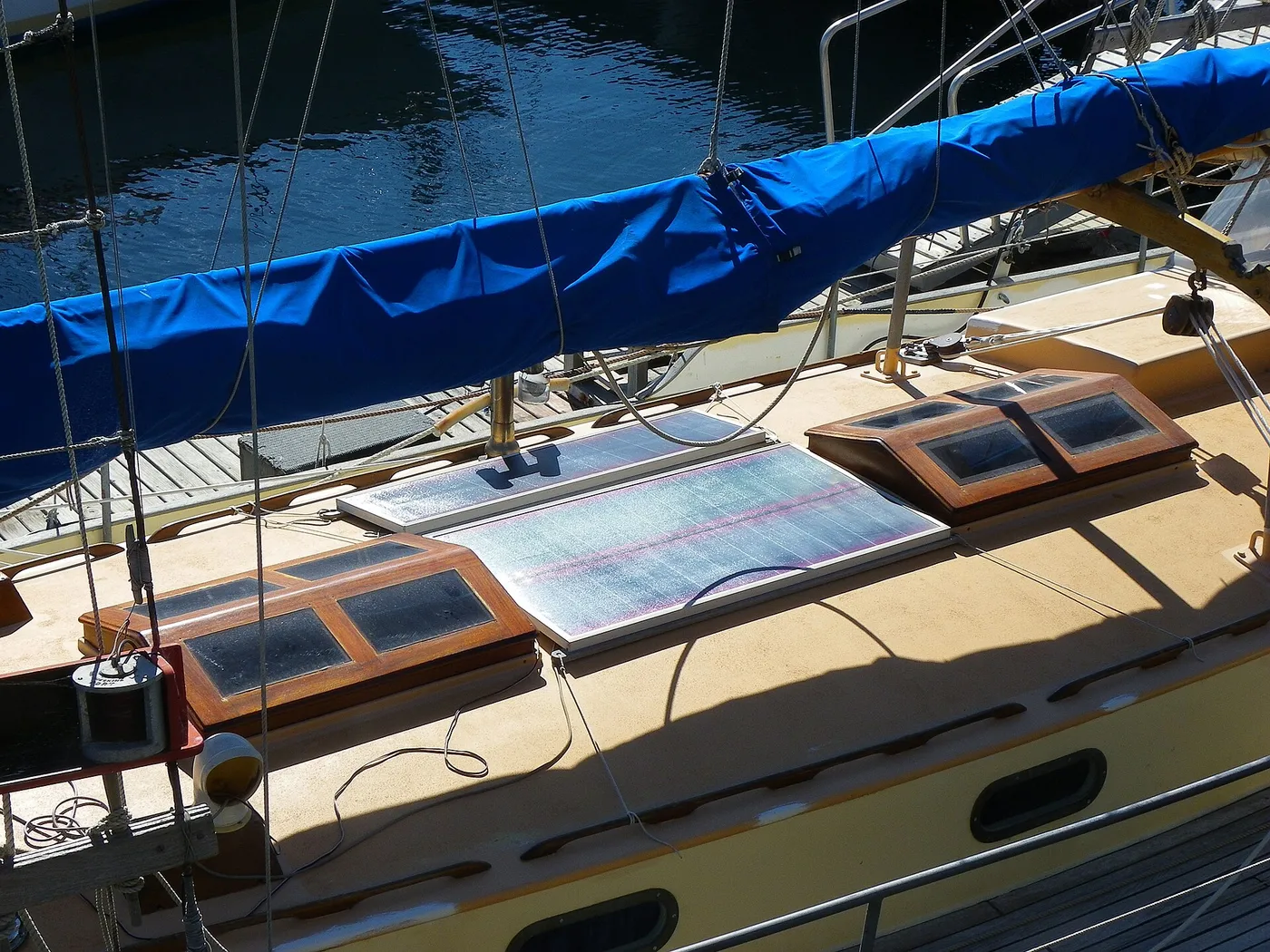
Travelers who want to park in shade and place the panel in sun may prefer a portable format. The best foldable solar panels guide compares that deployment category. A fixed flexible module cannot be aimed or moved after installation merely because its laminate can bend.
Likewise, a compact rigid panel can be portable if it has a suitable case and stand. Portability describes how the product is deployed, not whether the cell laminate lacks a frame.
Maintenance and inspection change with construction
Both formats need a clean light receiving surface, intact wiring, secure connectors, and sound mounting. Use only cleaning methods permitted by the panel manufacturer. Abrasive brushes, harsh chemicals, pressure washing, and stepping on the roof can damage a module or its seals.
Inspect flexible panels for lifting edges, bubbles, discoloration, scratches, surface clouding, cracked conductors, and changes around eyelets. Look for roof movement beneath the panel and water trapped near its edges. An output decline combined with a new hot or discolored area requires prompt investigation.
Inspect rigid panels for glass damage, frame movement, loose clamps, corrosion, failed sealant, junction box damage, and cables rubbing beneath the frame. Confirm that the ventilation and drainage gap has not filled with leaves or debris.
Record baseline output under repeatable conditions when the system is new. A single low reading on a cloudy day proves little, but a consistent change under similar sun and temperature can reveal a developing problem. Electrical troubleshooting should follow safe isolation procedures.
Service life and warranty language
Warranty length should not be used as a one number durability score. Read what is covered, what power level is promised, how a claim is proven, and whether removal, shipping, roof repair, or reinstallation are excluded. A flexible panel warranty may impose specific bend, backing, ventilation, and adhesive conditions.
Rigid module warranties may require approved clamp zones, structural support, and installation methods. Vehicle use can be treated differently from stationary use, so confirm that the intended RV application is permitted.
Permanent adhesive makes warranty service more complicated even if the panel itself qualifies for replacement. The labor and roof consequences of removing it may exceed the simple act of unbolting a framed module. Service access is therefore part of the ownership decision, not an afterthought.
Electrical safety applies to both formats
Any illuminated photovoltaic module can produce DC voltage. A thin flexible panel is not electrically harmless, and removing a rigid panel from its brackets does not deenergize it. Follow the shutdown and isolation sequence required by the panel, controller, battery, and vehicle system.
Do not disconnect ordinary solar connectors under load. DC arcing can persist and damage connectors or injure the person handling them. Use properly rated conductors, protection, disconnecting means, glands, and connectors. Verify polarity before making a connection.
Cables on a vehicle need protection from vibration, heat, ultraviolet exposure, sharp metal, and moving equipment. Roof entries must remain watertight and provide strain relief. A flexible panel lead should not be trapped under the laminate or bent sharply at the junction point.
Roof work brings fall risk as well as electrical risk. Secure the work area, account for wind, and avoid carrying a large panel in unsafe conditions. If roof structure, waterproofing, or electrical protection is uncertain, use qualified help.
When a flexible panel makes sense
Choose flexible construction when the surface has a gentle supported curve, the weight limit is strict, or a very low profile has a clear operational benefit. Confirm the module's bend radius, allowable installation surface, temperature guidance, and mounting method before purchase.
It can also make sense on a temporary lightweight project where the panel will receive full backing support and regular inspection. The owner should accept that adhesive selection, heat management, and future removal are central parts of the design.
The solar panels under 50 guide can help compare compact choices when the project calls for a small panel. The format should still follow the surface requirements rather than a desire for the thinnest available product.
When a rigid panel is the safer default
Choose rigid construction when the roof can carry the weight and brackets, ventilation is valuable, and long term serviceability matters. It is usually easier to inspect the rear wiring, replace the panel, and preserve an air gap beneath a framed module.
Rigid modules also offer a broad range of sizes and established mounting hardware. The best RV solar panels guide compares products intended for vehicle use, while the best RV solar panel kits guide is useful when matched mounting and electrical components are desired.
A rigid panel is not automatically safe because it uses familiar hardware. Verify the roof attachment, structural backing, wind loading, clamp position, sealant compatibility, and cable route. Good construction still depends on good installation.
Frequently asked questions
Do flexible solar panels produce less power than rigid panels?
Not inherently. Compare rated power, dimensions, module efficiency, temperature coefficient, and operating temperature. A flexible panel may run hotter when bonded directly to a roof, which can reduce real output even when its nameplate rating is similar.
Can a flexible panel be bent repeatedly?
Usually not. Many products are semi flexible and intended to conform to a limited curve during installation. Repeated bending or exceeding the stated radius can crack cells and interconnections. Follow the exact product limit.
Can a flexible solar panel be glued directly to an RV roof?
Only when the panel, roof, and adhesive manufacturers permit the complete method. Direct bonding affects heat, drainage, roof compatibility, wind resistance, and removal. Generic adhesive advice is not a substitute for those instructions.
Are rigid panels too heavy for an RV?
Not necessarily. Many RV roofs can accept framed modules, but the vehicle manufacturer or qualified installer should confirm roof capacity and attachment locations. Include brackets, rails, sealant, and reinforcement in the installed weight.
Which type lasts longer?
Rigid framed panels generally offer stronger mechanical protection and easier ventilation, but actual life depends on materials, manufacturing, climate, mounting, and maintenance. Compare the specific certifications and warranty terms rather than assuming a universal lifespan.
Is a foldable panel the same as a flexible panel?
No. Flexible describes the module's ability to conform within a bend limit. Foldable describes a portable product designed to open and close along defined sections. A permanently bonded flexible panel is not a foldable panel.
Bottom line
Rigid solar panels are the practical default when a roof can support their weight and mounting hardware. Their frame and glass protect the cells, create defined attachment points, permit rear ventilation, and simplify replacement. Flexible panels earn their place when low weight, low profile, or a gentle curved surface solves a real installation problem. Their success depends more heavily on backing support, bend limits, heat control, adhesive compatibility, waterproofing, and inspection. Compare the complete installed system, not just panel thickness, and choose the construction that the roof can safely support for years of travel.