
The short answer for today's buyer
Monocrystalline panels are usually the stronger choice when roof area, storage space, or mounting area is limited. Their cells are cut from silicon with one crystal structure, and current mono modules commonly convert a larger share of the available sunlight into electricity. Polycrystalline panels contain many crystal grains. They were once a common value option, but they now occupy a much smaller part of a market that has moved heavily toward monocrystalline designs.
That does not mean every mono panel is better than every poly panel. Cell type is only one line on the specification sheet. Module efficiency, dimensions, rated power, temperature coefficient, open circuit voltage, frame construction, warranty language, and mechanical load ratings all affect whether a panel fits a real installation. A well documented poly module can be a better decision than a poorly documented mono module, especially when the mounting area is generous and the electrical characteristics fit the rest of the equipment.
How the two cell types are made
Both categories are crystalline silicon photovoltaics. In either case, refined silicon becomes a semiconductor wafer that can absorb light and release charge carriers. Electrical contacts collect the resulting direct current, individual cells are connected, and the cell circuit is sealed into a module with protective layers, a front surface, a junction box, and often an aluminum frame.
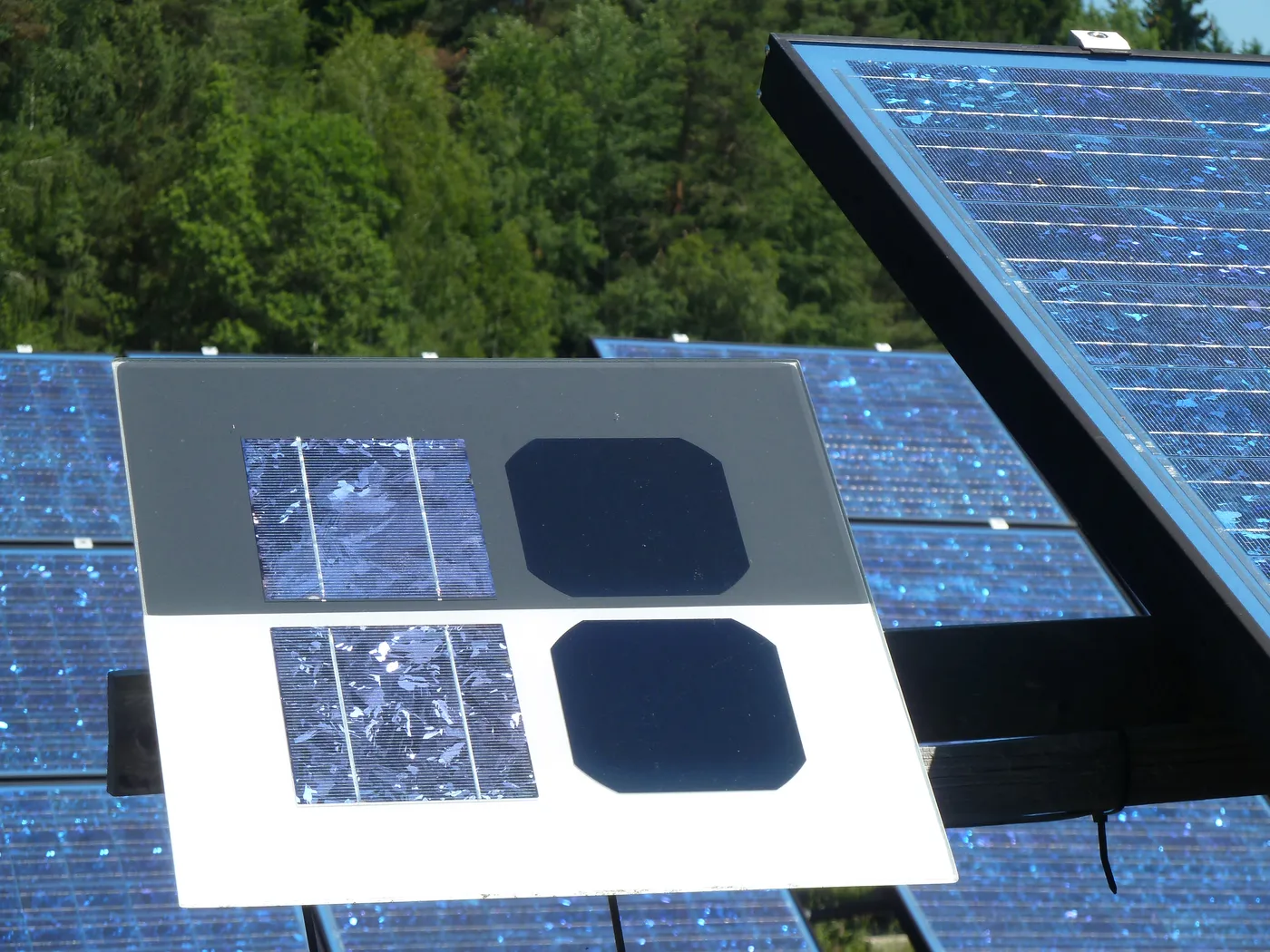
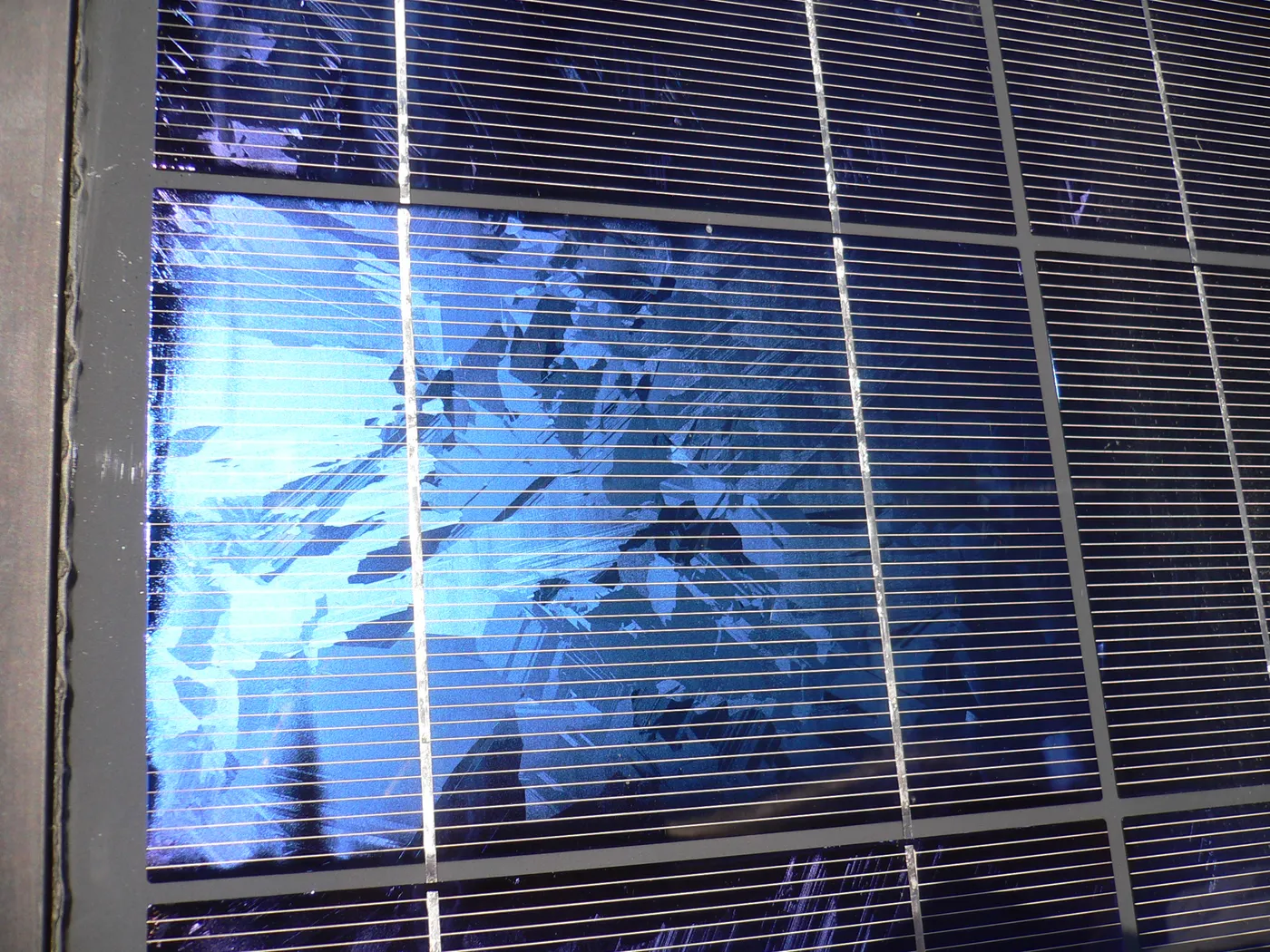
The distinction begins with the crystal structure of the wafer. A monocrystalline wafer is cut from material grown as one continuous crystal. Its orderly structure gives charge carriers fewer crystal boundaries to cross. A polycrystalline, also called multicrystalline, wafer solidifies with multiple crystal grains. Boundaries between those grains can impede carrier movement and contribute to lower conversion efficiency.
The U.S. Department of Energy describes monocrystalline silicon as a single crystal structure and polycrystalline silicon as many crystals. That difference explains the broad efficiency trend, but it does not describe every modern design feature. Contact layout, surface passivation, cell cutting, busbar design, encapsulation, and light management can materially change module performance. Newer mono cells may use PERC, TOPCon, heterojunction, or back contact structures. Two panels carrying the same broad mono label can therefore have meaningfully different specifications.
Mono vs poly comparison table
| Factor | Monocrystalline panel | Polycrystalline panel |
|---|---|---|
| Silicon structure | Cells use wafers formed from one crystal structure | Cells use wafers containing multiple crystal grains |
| Typical efficiency direction | Generally higher for current commercial modules | Historically lower for modules of similar generation |
| Area required for equal rated power | Usually less when module efficiency is higher | Usually more when module efficiency is lower |
| Appearance | Often dark black with relatively uniform cells | Often blue with a visibly crystalline pattern |
| Current market position | Dominant in current crystalline silicon shipments | Far less common in new consumer modules |
| Heat response | Depends on the module's stated temperature coefficient | Also depends on its specific temperature coefficient |
| Best reason to choose | Limited area or a need for higher power density | A suitable existing panel with verified specifications and ample mounting area |
Efficiency matters most when area is limited
Module efficiency expresses how much incident solar energy becomes electrical output under defined conditions. Higher efficiency does not make sunlight stronger or guarantee more daily energy in every installation. It allows more rated power to fit into a given module area.
That advantage matters on an RV roof crowded by air conditioners, vents, antennas, skylights, and walking space. It also matters when a portable panel must fit inside a vehicle or when a small shed roof has only one usable rectangle. If two modules have equal dimensions and one has a higher watt rating at the same test conditions, the higher rated module has greater power density.
DOE reported that monocrystalline silicon represented the overwhelming majority of global solar shipments in 2022. That market shift is important for shopping because a theoretical mono versus poly debate can hide a basic availability issue. Many new small modules, RV panels, and portable products now use mono cells. A buyer may find few current poly alternatives with comparable documentation.
For roof mounted travel systems, the best RV solar panels guide is the appropriate place to compare complete products after deciding how much area is available. Buyers who want the panel, controller, cabling, and mounting parts packaged together can instead review RV solar panel kits. Neither buying route removes the need to check the actual module dimensions.
Rated watts are not roadside watts
A panel's watt rating is established under standard test conditions. For photovoltaic modules, those conditions include irradiance of 1,000 watts per square meter and a cell temperature of 25 degrees Celsius. The cell temperature is not the same as the surrounding air temperature. A dark panel exposed to strong sunlight can operate substantially hotter than the air around it.
Real output changes with irradiance, cell temperature, sun angle, cloud cover, shade, surface contamination, wiring loss, and the behavior of the connected controller. A panel labeled with a particular power value is not promising that output throughout the day. The label supplies a standardized reference that allows products to be compared.
This matters in a mono versus poly comparison because sellers sometimes place the rated watt number beside a technology claim and imply that one explains the other completely. A higher rated mono panel may simply be larger than the poly panel beside it. Compare wattage per unit area, or compare module efficiency, before concluding that the cell type created the entire difference.
The separate guide to solar panel rated watts versus actual output covers the gap between laboratory ratings and field production. It also explains why a brief peak reading is not the same as daily energy. For this comparison, the important point is to use the same rating basis for both panels.
Temperature coefficient beats heat myths
Solar panels need light, but silicon photovoltaic voltage falls as cell temperature rises. The nameplate or datasheet normally lists a maximum power temperature coefficient, often expressed as a percentage change per degree Celsius relative to the reference condition. A more negative coefficient indicates a larger power reduction as the cell becomes hotter.
Generic claims that poly panels always perform better in heat, or that mono panels always have a decisive hot weather advantage, are not reliable buying rules. Published coefficients vary by specific module and cell architecture. Compare the coefficient on the two products under consideration. If one module lists a less negative maximum power coefficient, it is expected to retain a larger fraction of rated power as cell temperature rises, all else being equal.
Mounting affects operating temperature too. Air movement behind a rigid framed panel can help remove heat. A panel installed with little rear ventilation may run hotter. On a vehicle roof, the mounting method, roof surface, wind, speed, and parked orientation all change the thermal environment. Cell chemistry alone does not capture those conditions.
Cold weather creates the opposite electrical concern. Open circuit voltage rises as temperature falls. This does not turn a mono or poly panel into a free source of unlimited power, but it can push a series string above the maximum input voltage of a controller. That is a system design question, and it should be handled with the module's voltage temperature coefficient and the site's expected minimum temperature rather than a simple cell type rule.
Low light and shade depend on module design
Monocrystalline panels are often advertised as better in low light. Modern high efficiency mono modules may indeed produce more power from the same limited area, but low irradiance response is a property of the complete module and its cell design. It should not be inferred solely from the mono label.
Shade creates a different problem. Cells in a module are electrically connected, so shading one portion can restrict current through a cell string. Bypass diodes allow current to route around defined cell groups, reducing the impact and limiting reverse bias stress. The number and layout of those groups, the direction of the shade, and the module's internal connection pattern affect the result.
A black mono module does not ignore a roof vent shadow. A blue poly module does not necessarily collapse from one narrow shadow more severely than every mono design. Compare bypass diode arrangements when disclosed, and plan the mounting location around real shade sources. Antennas, roof racks, air conditioners, tree branches, and neighboring vehicles can cast moving shadows that a clean midday inspection misses.
If an installation has unavoidable partial shade, panel placement and array configuration may matter more than the mono versus poly distinction. The later article on solar panel angle and shading losses owns that placement analysis, while the series versus parallel article addresses how array wiring changes the effect of mismatched conditions.
Appearance is real but not electrical proof
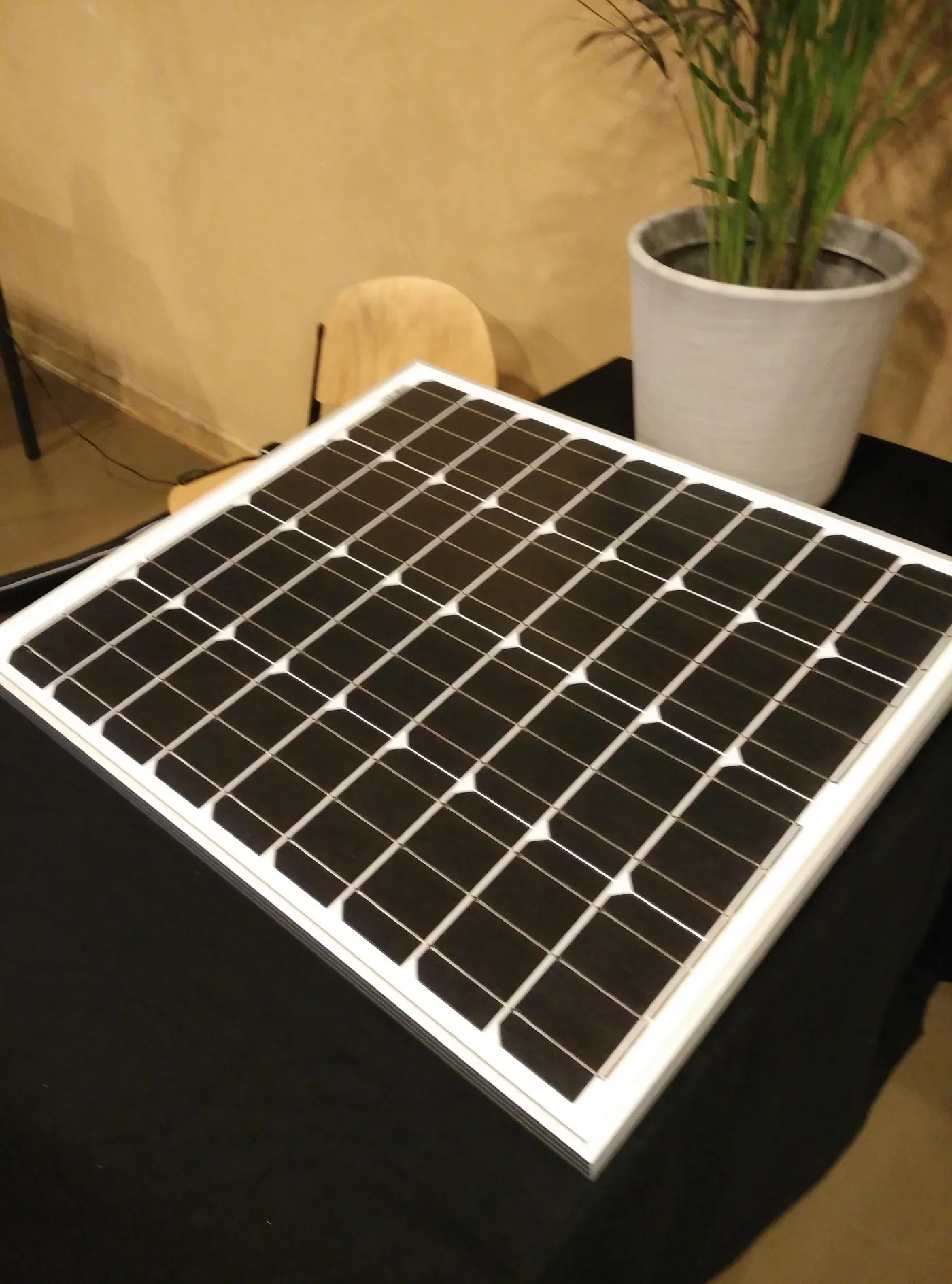
Traditional monocrystalline cells often look dark black and relatively uniform. Older mono cells were commonly cut with rounded corners because cylindrical ingots were sliced into wafers. Traditional polycrystalline cells often look blue with a fragmented or shimmering crystal pattern. These visual differences made the two categories easy to distinguish in older panels.
Modern construction complicates the visual shortcut. Anti-reflective coatings, black backsheets, cell gaps, half cut cells, shingled layouts, and all black frames can change a panel's appearance. A module that looks black is not automatically proof of a particular cell architecture, performance level, or temperature coefficient.
Durability is a module construction question
Both mono and poly cells are brittle silicon wafers protected inside a laminate. The ability of a panel to survive vibration, hail, wind, snow load, moisture, ultraviolet exposure, and thermal cycling depends heavily on the complete module construction. Glass thickness, encapsulant, backsheet or rear glass, frame, junction box, seals, cable support, and mounting method all matter.
There is no sound rule that one crystal structure automatically makes a finished panel mechanically tougher. A rigid framed mono panel and a rigid framed poly panel can be built to similar mechanical standards. Compare the manufacturer's load ratings, certifications, installation instructions, and warranty exclusions.
Vehicle use adds repeated vibration and movement that a stationary residential roof does not experience. A panel intended for RV use should have secure mounting points and cable management that prevents conductors from rubbing against roof edges. Adhesive, brackets, fasteners, and roof penetrations must be compatible with the vehicle structure and waterproofing method. Module technology does not compensate for poor installation.
Damage may not be obvious from the front. Cracked cells, moisture intrusion, loose connectors, a damaged junction box, or delamination can reduce output or create a hazard. Inspect panels and wiring after severe weather, roof work, or an impact. Do not step on a module unless its manufacturer explicitly permits a defined service procedure.
Degradation and warranty need separate reading
Photovoltaic output gradually declines with age. DOE materials describe crystalline silicon systems as mature and reliable, but a broad technology lifespan is not the same as the warranty for a specific product. A warranty may contain separate terms for materials and workmanship, power retention, labor, shipping, and transfer to a new owner.
Do not assume that mono always degrades more slowly than poly because it begins at a higher efficiency. Degradation depends on cell technology, module materials, manufacturing quality, climate, mounting, electrical stress, and specific failure mechanisms. Compare the written power warranty curves for the actual models.
A long printed period is not enough. Read the starting tolerance, any first year adjustment, annual decline allowance, claim process, required documentation, and remedies. A power warranty may promise only that the module will remain above a stated fraction of its original rating. It may not cover removal, transportation, diagnosis, or reinstallation.
The dedicated article on solar panel degradation and warranties examines those terms without repeating the panel chemistry comparison here. For mono versus poly, the decision rule is simple: compare actual warranties, not stereotypes attached to the cell name.
Weight and dimensions can overrule efficiency
Higher efficiency helps fit more power into limited area, but the highest efficiency module is not automatically the best physical fit. Measure the exact installation rectangle, including clearance from roof equipment, edges, service paths, and shadows. Then check module length, width, thickness, weight, frame hole locations, and cable exit position.
Two panels with equal rated power can have different proportions. A long narrow module may fit beside an RV vent where a shorter wide module will not. Conversely, a nominally efficient panel may waste roof area if its shape leaves unusable gaps. Layout several candidate rectangles on a scaled roof plan rather than comparing efficiency percentages alone.
Travelers who cannot dedicate roof space may prefer a panel that is deployed only when parked. The best foldable solar panels guide covers that product format. Foldability is a construction and deployment decision, not another name for monocrystalline technology. Many folding products use mono cells, but their hinges, fabric, stands, cabling, and weather limitations determine how they function in travel.
Electrical compatibility still controls the purchase
A panel must match the input limits of the connected charge controller or power station. The critical label values include open circuit voltage, short circuit current, voltage and current at maximum power, rated power, and temperature coefficients. These values are electrical limits, not optional details.
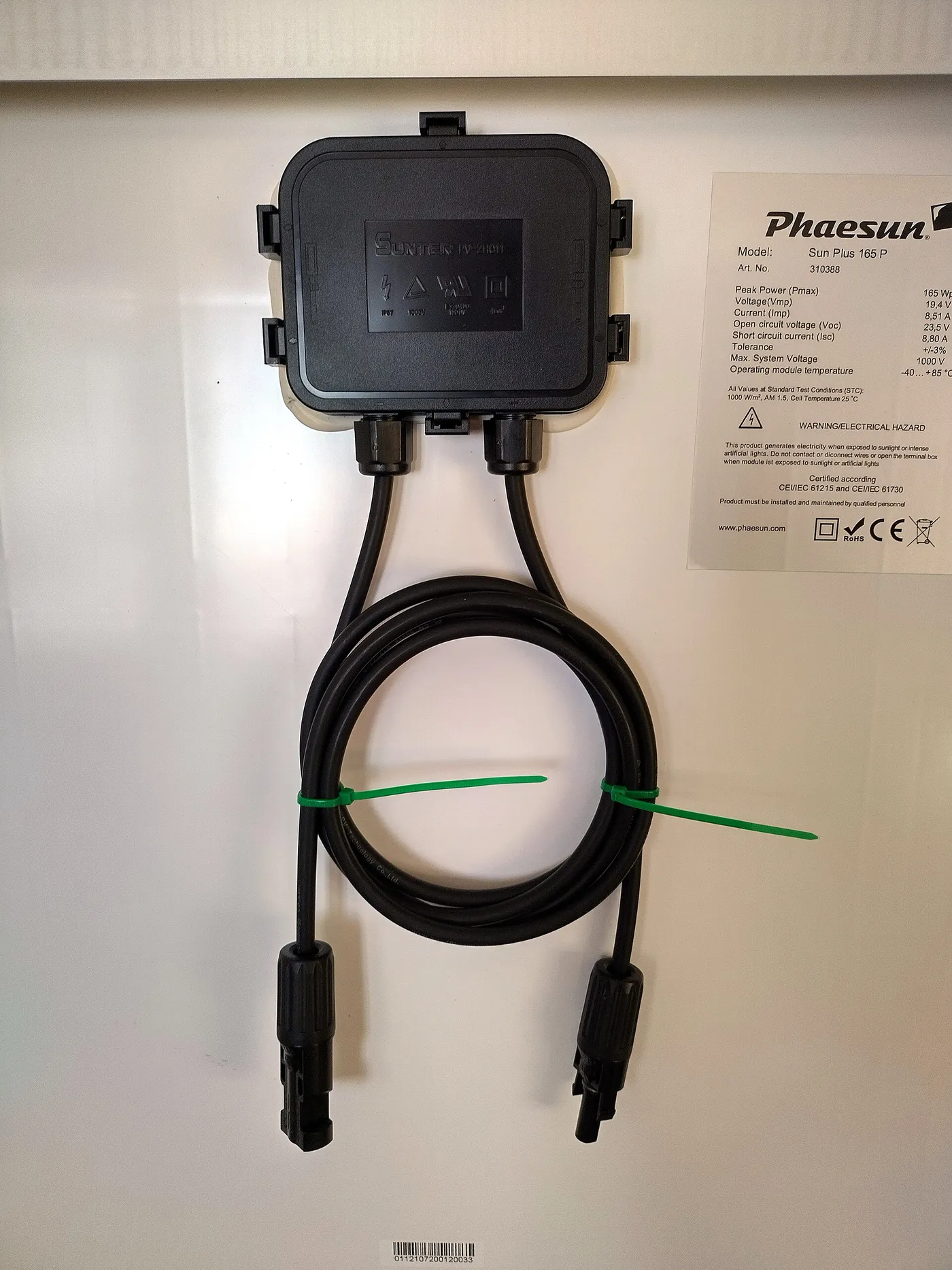
A mono panel and a poly panel with similar rated watts may have different voltage and current. Replacing one with the other can therefore change controller compatibility or array behavior. When panels are combined, mismatched electrical characteristics can reduce production. Do not mix modules merely because their front labels show the same nominal wattage.
Connector shape is not proof of compatibility. Polarity, voltage, current, cable rating, and controller limits must all be verified. Some portable power products use proprietary or adapter based inputs. Follow the equipment manuals and use listed components intended for the application.
Safety before module type
A solar panel produces voltage whenever sufficient light reaches it. Turning off a battery or inverter does not make an illuminated module inactive. Covering a panel may reduce output, but installers must follow the module and controller procedures rather than treating a loose cover as an electrical isolation device.
Never disconnect a connector under load unless the equipment is specifically designed and instructed for that operation. Direct current arcs can persist. Use correctly rated disconnects, overcurrent protection, conductors, connectors, and enclosures. Protect cables from sharp edges, heat, movement, ultraviolet exposure, and water entry.
Roof work also creates fall and structural hazards. A module can catch wind like a sail, especially on a vehicle roof. Follow the RV manufacturer, panel manufacturer, mounting system instructions, and applicable electrical rules. If the roof structure, sealing method, or electrical protection is uncertain, use qualified installation help.
Damaged modules require caution. Broken glass, exposed conductors, burned connectors, a melted junction box, or water intrusion can make a panel unsafe. Keep people away, isolate the system using the approved procedure, and obtain qualified inspection. Mono and poly modules both demand the same respect for live DC electricity.
How to choose between mono and poly
Begin with usable area. If the installation is space constrained, calculate how much rated power each candidate fits into the available rectangles. Mono will usually present the stronger options because current mono modules dominate the market and tend to offer higher efficiency.
Next compare the complete electrical label. Confirm that voltage, current, and temperature adjusted open circuit voltage remain within the receiving equipment's limits. Check module dimensions and cable reach. Then compare maximum power temperature coefficients, mechanical ratings, certifications, installation requirements, and warranty terms.
For a portable setup, add packed size, deployed stability, stand adjustment, cable storage, and weather guidance. For permanent RV mounting, add roof compatibility, wind exposure, vibration, sealant requirements, and service access. For a stationary ground setup, area may be abundant enough that a suitable poly panel remains perfectly useful.
Do not replace working poly panels simply because mono technology now dominates new products. Existing modules that remain safe, compatible, and productive still generate useful energy. Replacement makes sense when the system needs more power from limited area, a module is damaged, or the redesign creates a clear operational benefit.
Budget shoppers evaluating small panels can use the solar panels under 50 roundup to compare complete products within that category. The buying decision should still return to specifications and intended use rather than assuming the least expensive mono panel must outperform every poly alternative.
Frequently asked questions
Are monocrystalline solar panels always more efficient?
Monocrystalline modules generally achieve higher efficiency than polycrystalline modules of a similar era, but the label does not guarantee a particular number. Compare the module efficiency and dimensions on the actual datasheets. Cell architecture and module design can create meaningful differences within the mono category itself.
Do polycrystalline panels work better in hot weather?
Do not rely on that generalization. Compare each module's maximum power temperature coefficient. The less negative coefficient indicates less expected power loss for each degree of cell temperature increase above the reference condition. Mounting ventilation and the operating environment also affect cell temperature.
Can mono and poly panels be used in the same array?
It may be technically possible, but mismatched voltage and current characteristics can reduce performance or create compatibility problems. The controller limits, series and parallel arrangement, protection, and temperature adjusted voltage must all be checked. Matching panels are usually simpler to design and troubleshoot.
Why are polycrystalline panels less common now?
Manufacturing and cell technology have shifted strongly toward higher efficiency monocrystalline designs. DOE reported that mono accounted for most global solar shipments in 2022. As a result, buyers now encounter far more new mono products in residential, RV, and portable categories.
Is a black panel always monocrystalline?
No. Color and visual uniformity can provide clues, but coatings, backsheets, cell layouts, and all black construction can alter appearance. Use the model number, label, and manufacturer documentation to identify the cell and module technology.
Which type is better for an RV?
Monocrystalline is usually the practical choice because an RV has limited roof and storage area, and current mono products offer strong power density and broad availability. The final decision should also consider exact dimensions, weight, shading, voltage, temperature coefficient, mounting method, and controller compatibility.
Bottom line
Monocrystalline panels are the default choice for most new space limited installations because they generally offer higher module efficiency and dominate the current market. Polycrystalline panels remain capable of producing useful energy, and a safe, well documented poly module can still be appropriate where area is available or where an existing system is performing properly. Choose between actual modules, not between colors or slogans. Compare rated power against dimensions, read the temperature coefficient, verify electrical compatibility, inspect construction and warranty terms, and select the panel that fits the physical environment as well as the energy goal.