

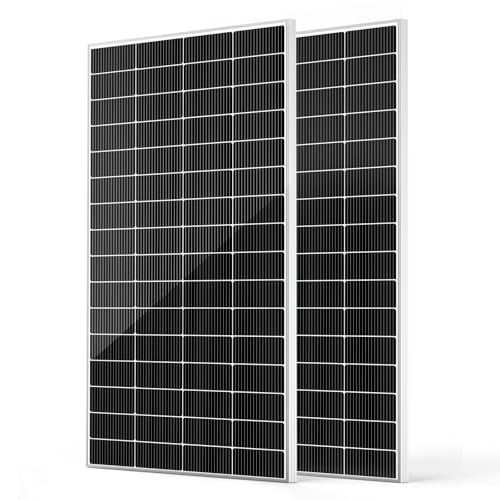


Renogy sells this as a pair of 200W N-type panels, each using 16-busbar cells at a claimed 25 percent efficiency. The maker states the panels are 7.5 percent smaller and 11.7 percent lighter than its predecessor, which helps on a crowded roof. A 24V-class panel keeps current low, which means less cable loss over a typical RV run.
Compared with the HQST 2x200W pair, it carries the same cell family, so the choice comes down to brand support and sizing. Wiring two panels in series raises voltage and tolerates partial shade better, but requires an MPPT controller able to accept the higher voltage. Wiring in parallel keeps voltage low and suits small PWM systems, at the cost of more current in the cable.
The frame is aluminium and mounts with standard Z-brackets, so installation is straightforward on a flat roof. Plan for sealant on every roof screw and inspect annually, because a dried Dicor bead is the usual leak source.
What works
- N-type 16BB cells hold up in heat
- Smaller and lighter than the previous model
- 24V-class panels reduce cable loss
- Two panels give a flexible layout
Watch out for
- Needs an MPPT controller for series wiring
- Costs more than the DOKIO single panel
Spec sheet
- Total power
- 400W (2 x 200W)
- Cell type
- N-Type 16BB
- Efficiency claim
- 25%
- Voltage class
- 24V panel
- Size vs predecessor
- 7.5% smaller, 11.7% lighter