


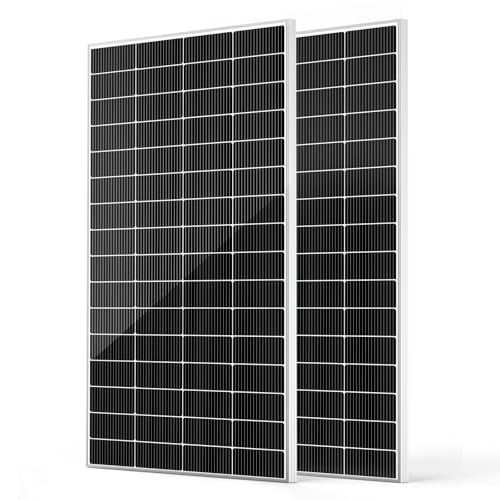


Renogy built the ShadowFlux around a cell layout designed to keep producing when part of the panel falls into shadow. On an RV roof, where a vent hood or ladder casts a moving shadow, that is the most useful trait a panel can have. The N-type 16-busbar cells reach up to 25% efficiency, and Renogy says the frame is about 7% smaller than comparable PERC panels.
The tradeoff is cost and limited electrical detail in the listing. The company advertises the shade behavior but does not publish the percentage of output retained under a shadow, so you should treat it as an advantage rather than a guarantee. Next to the plain Renogy 200W N-type, you pay extra for the shade layout, which pays off only if your roof is cluttered.
Mounting is conventional, with pre-drilled holes for Z-brackets or tilt mounts, and every penetration needs lap sealant and a yearly check. Wipe grime from the glass with water and a soft sponge, and inspect the MC4 junction box for cracks after hail or low branches. With a clean roof and good sealing it should serve well for many seasons.
What works
- Anti-shading cell layout limits power loss from partial shadow
- N-type 16BB cells reach up to 25% efficiency
- Smaller frame than comparable PERC panels
- Fits standard Z-bracket and tilt mounts
Watch out for
- Priced above the standard Renogy 200W N-type panel
- Rigid glass cannot follow a curved roof
Spec sheet
- Rated power
- 200W
- Cells
- N-type, 16 busbar
- Shade design
- ShadowFlux anti-shading
- Efficiency
- Up to 25%
- Size
- About 7% smaller than PERC