
Amazon affiliate links - we earn a commission.Affiliate disclosure

Buying guide · 13 min read · Updated 2026-11-07

Best Generators for Food Trucks (2026)

Six food truck generators compared by running watts, fuel type, 50A outlets and noise, with sizing advice for fryers, fridges and rooftop AC units.

James MillerBy James MillerLead Machine Editor5 machines comparedSpec-sheet verified
Best Generators for Food Trucks

At a glance

Our top picks

Side by side

Spec comparison

MachineGasoline outputEngineSafetyPropane output
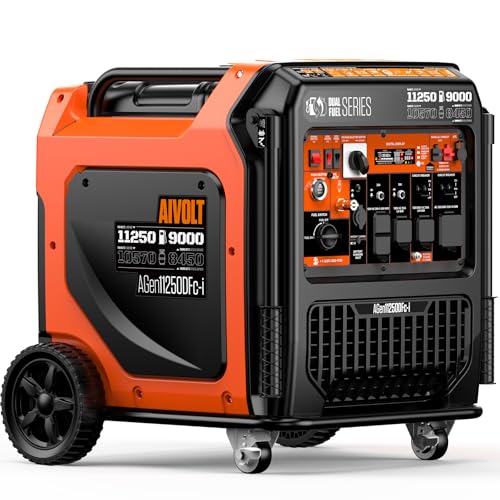
AIVOLT 11250W Dual Fuel Inverter Generator 50ABest for Full-Size TrucksAIVOLT 11250W Dual Fuel Inverter Generator 50A11,250 start / 9,000 running Wn/an/an/a
Champion 11,000W Wireless Remote Start Inverter GeneratorBest Remote StartChampion 11,000W Wireless Remote Start Inverter Generatorn/a459cc, electric startCO Shield shutdownn/a
Champion 11,000W Dual Fuel Inverter GeneratorBest Dual Fuel Big UnitChampion 11,000W Dual Fuel Inverter Generator11,000 start / 9,000 running W459cc, electric startCO Shield shutdown11,000 start / 8,100 running W
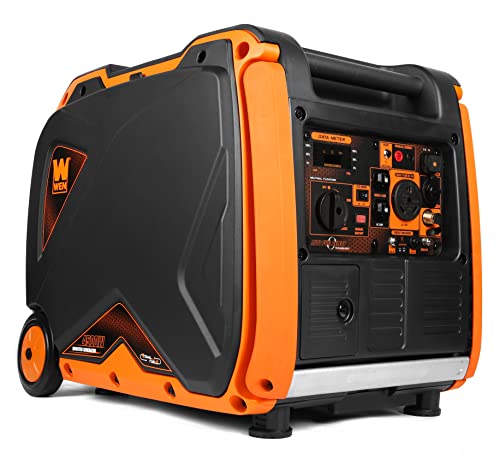
WEN 4800W Dual Fuel RV-Ready Inverter GeneratorBest Value Dual FuelWEN 4800W Dual Fuel RV-Ready Inverter Generator4,800 start / 4,000 running W224cc dual fuelCO Watchdog, fuel shut-off4,320 start / 4,000 running W
WEN DF450i 4500W Dual Fuel Inverter GeneratorBest Quiet Propane OptionWEN DF450i 4500W Dual Fuel Inverter Generator4,500 start / 3,500 running W212cc EPA III and CARBn/a4,500 start / 3,150 running W

A food truck is a hard job for a portable generator. The load is a stack of motors and heating elements that start at unpredictable moments, the engine runs for ten hours straight at a festival, and the exhaust sits close to a serving window full of customers.

Most buying mistakes come from reading the big peak number on the box instead of the running rating, or from forgetting that the loudest, hottest, most flammable thing in the lot is parked next to a cooking line. The picks below are sized and judged with that reality in mind.

Before you buy

6 Criteria to Look For Before Buying a Generator for Food Trucks

  1. 01

    Sum your running watts first

    Add up the running draw of every appliance that can be on at the same moment: fridges, hood fan, lights, point-of-sale gear, any electric warmers. Then add the single largest starting surge on top, because compressors and fan motors pull two to three times their running watts for a moment. The AIVOLT 11250W and the Champion units suit trucks that land near 7,000 running watts, while the WEN 4800 at 4,000 running watts suits trailers under about 3,000.

  2. 02

    Rated versus peak watts

    Peak watts only cover a few seconds of motor startup, so a machine sold as 6,000 watts may deliver 4,800 or less continuously. Always size against the running figure and treat the peak as a surge allowance. The RINADURS listing gives conflicting 6,000 and 5,500 peak figures, which is exactly why buyers should demand a clearly stated running rating.

  3. 03

    Fuel type and logistics

    Most trucks already carry propane for cooking, so a dual fuel generator can share the supply and remove gasoline from the lot. Propane output is typically about ten percent lower: the Champion dual fuel drops from 9,000 to 8,100 running watts, while the WEN 4800 keeps 4,000 on both. Size for the lower propane number if that will be your main fuel.

  4. 04

    Outlet type and voltage

    A truck wired with a 50A inlet needs a generator with a matching 50A outlet, not three household receptacles and an adapter jungle. The AIVOLT lists a 50A outlet specifically for trucks, while the WEN units top out at 30A RV-style receptacles. Check your inlet plug type before you check the wattage.

  5. 05

    Noise at the serving window

    Customers hear the generator while they order, and event organizers may cap noise levels. Ratings at 22 or 23 feet and quarter load are flattering, so expect more at heavy load. The WEN DF450i quotes 58 dBA at quarter load, which is a reasonable benchmark for quiet-zone markets, while the big 11,000-watt machines will be louder whenever the fryer line is working.

  6. 06

    Exhaust and CO placement

    Carbon monoxide in a food truck is a serious hazard because windows, hood vents and air intakes are all nearby. Place the generator downwind, well away from intakes and serving areas, never inside a compartment without a rated exhaust path. CO shutdown features on the Champion and WEN units are a safety net, not a substitute for good placement.

Detailed reviews

The 5 best generators for food trucks, explained

01
AIVOLT 11250W Dual Fuel Inverter Generator 50A
9,000W runningDual fuel50A outletRemote start
Check price on Amazon
Best for: Large trucks and trailers running refrigeration and rooftop cooling from one 50A inlet.

This is the only machine in the roundup with enough running capacity for a truck that treats electricity as a real utility. Nine thousand running watts on gasoline covers a reach-in cooler, an undercounter fridge, a rooftop air conditioner, an exhaust hood fan and lighting in one go, with room left for a countertop warmer. The 50A outlet is the feature that matters most here, because it lets you feed the truck's shore-power inlet with one heavy cord instead of splitting loads across household receptacles.

Propane operation drops the running figure, and the listing gives a lower starting number for that fuel, so plan your load list around the propane rating if you intend to run on the truck's own tank. Being an inverter design, it should hold voltage steadier than an open-frame unit, which is kind to the electronics in a card reader and a refrigeration control board. The trade is weight and size: a machine of this class is a two-person lift into a truck bed or onto a trailer rack, and it is not something you move every day.

Compared with the two Champion 11,000-watt units, it gives up nothing on running watts and puts the 50A outlet front and center, which makes it the simpler match for a truck wired with a 50A inlet. Park it so the exhaust points away from the awning and the serving window.

What works

  • 9,000 running watts handles a full electrical line
  • 50A outlet suits a standard truck shore-power inlet
  • Runs on gasoline or propane
  • Remote start helps with early prep shifts

Watch out for

  • A heavy, two-person machine to load and unload
  • Propane mode lowers the usable running rating

Spec sheet

Gasoline output
11,250 start / 9,000 running W
Fuel
Gasoline or propane
Main outlet
50A RV-style
Start
Electric and remote
Windings
Copper
02
Champion 11,000W Wireless Remote Start Inverter Generator
9,000W running80 ft key fob459cc engineCO Shield
Check price on Amazon
Best for: Operators who start and stop the generator several times a day and want to do it from a distance.

Champion's gasoline-only 11,000-watt inverter is the one to buy when your day starts before the street is awake. The key fob starts and stops the engine from up to 80 feet, so you can fire it up from the prep kitchen or kill it from the serving window without walking around to the back of the truck. A 459cc engine with a battery-fed electric start and a cold-start feature keeps early mornings from turning into a recoil-cord workout.

Its 15-hour tank figure is the number to read carefully, since that is the listing's basis for a light load, not a fryer-and-AC load. Under a heavy lunch rush expect far shorter between fills, which means a jerry-can routine you should plan before the event. CO Shield is a shutdown feature worth having on a unit that lives near a crowd, but it is a backup, not permission to park the exhaust near an air intake.

Against the dual fuel Champion, this one is simpler and gives you the full 9,000 running watts on gasoline with no fuel-switch decisions. If you cook on propane already and want to share a tank, the dual fuel version in this list is the better fit. Run the carburetor dry before long storage, since gummed jets are the usual reason a stored machine will not start in spring.

What works

  • Wireless fob starts it from up to 80 feet
  • Same 9,000 running watts as its dual fuel sibling
  • Battery-included electric start with cold-start help
  • CO Shield cuts the engine on dangerous buildup

Watch out for

  • Gasoline only, so no sharing the truck's propane tank
  • Long tank-life figure applies to light loads only

Spec sheet

Output
11,000 start / 9,000 running W
Engine
459cc, electric start
Remote range
Up to 80 ft
Runtime
Up to 15 hours, full tank
Safety
CO Shield shutdown
03
Champion 11,000W Dual Fuel Inverter Generator
9,000W gas running8,100W propaneLPG hose includedCO Shield
Check price on Amazon
Best for: Trucks that already run propane appliances and want a single fuel supply.

The number that makes this machine attractive to a food truck is not the gasoline rating, it is the propane one. Eight thousand one hundred running watts on LPG is only a ten percent haircut from the gasoline figure, and that lets the generator draw from the same kind of tank that already feeds your fryer and flat top. One fuel to stock, one delivery to schedule, and no gasoline jugs sitting near a cooking line.

The tradeoff against the gasoline-only Champion is the fuel-switching step and a hose to connect and check for leaks, plus a drop in cold-weather propane vapor pressure that can make winter starts less cooperative on propane. The 459cc engine and electric start match its sibling, so the real choice is about fuel logistics, not performance. It also stands apart from the AIVOLT by listing its LPG hose in the box, which saves a trip to the hardware store before your first event.

Ownership advice is mostly about storage and leak habits. Soap-test the propane fittings whenever you reconnect, store gasoline only if you plan to use it, and run the unit under load monthly in the off season so the carburetor does not sit wet.

What works

  • Propane running output stays at 8,100 watts
  • LPG hose included for immediate hookup
  • Shares one fuel supply with propane cooking gear
  • Electric start on a 459cc engine

Watch out for

  • Propane hookup adds a leak-check routine
  • Propane lowers output below the gasoline rating

Spec sheet

Gasoline output
11,000 start / 9,000 running W
Propane output
11,000 start / 8,100 running W
Engine
459cc, electric start
Fuel hose
LPG hose in the box
Safety
CO Shield shutdown
04
WEN 4800W Dual Fuel RV-Ready Inverter Generator
4,000W runningDual fuel224cc engineCO Watchdog
Check price on Amazon
Best for: Small concession trailers and market stalls with light electrical loads.

A running rating of 4,000 watts on both fuels is the headline, because most dual fuel machines lose some output on propane and this one does not lose running watts at all according to the listing. That makes load planning easy: whatever you can run on gasoline, you can run on propane. For a small trailer with a fridge, a few lights, a coffee grinder, a hot water heater and a point-of-sale setup, that is plenty of room.

It is not a machine for a truck with a fryer drawing from electricity or a large rooftop air conditioner starting under load. Stack a 13,500 BTU class air conditioner with a freezer and an electric kettle and the running total gets uncomfortably close to the ceiling. Compared with the 11,000-watt units here, it is a third of the weight class and a fraction of the noise, which matters at a farmers market where neighboring vendors can hear it.

Upkeep is the usual small-engine routine, with a few specifics: the WEN's CO Watchdog sensor needs to be kept free of grease mist if your setup puts it near a cooking vent, and its fuel shut-off valve should be closed before storage so the carburetor drains.

What works

  • Running watts stay at 4,000 on propane
  • Quiet enough for a crowded market lot
  • Electric start on a small, manageable frame
  • CO Watchdog sensor shuts it down on buildup

Watch out for

  • Too small for electric fryers or big rooftop AC
  • Peak output drops slightly on propane

Spec sheet

Gasoline output
4,800 start / 4,000 running W
Propane output
4,320 start / 4,000 running W
Engine
224cc dual fuel
Start
Electric
Safety
CO Watchdog, fuel shut-off
05
WEN DF450i 4500W Dual Fuel Inverter Generator
3,500W gas running3,150W propane58 dBA at quarter loadAuto fuel select
Check price on Amazon
Best for: Quiet-zone events and small trailers where propane is the main fuel.

Auto Fuel Selection is the unusual feature here: the machine starts on propane and falls back to gasoline automatically when the tank runs low. For a vendor who forgets to check the cylinder before a long event, that safety net can save an evening of sales. The 212cc engine carries EPA III and CARB compliance, which matters if you work in states that restrict non-compliant equipment at permitted events.

The noise claim of 58 dBA at quarter load and 22 feet is measured under light load, so a truck running refrigeration plus a fan will sit above that, but it remains one of the quieter units on this list. Its 3,500 running watts on gasoline and 3,150 on propane are noticeably below the WEN 4800, so it makes sense only if your load is genuinely small or if noise limits at your regular site matter more than headroom.

Owners should know that auto-switching hides a fuel problem: if the machine quietly swaps to gasoline, you may burn through your stored gas without noticing.Glance at the tank gauge, and replace gasoline older than about six months.

What works

  • Automatically falls back to gasoline if propane runs out
  • Quiet 58 dBA rating at quarter load
  • EPA III and CARB compliant engine
  • Includes fuel shut-off for storage

Watch out for

  • 3,150 running watts on propane is tight for cooling plus fridge
  • Auto switching can quietly burn stale gasoline

Spec sheet

Gasoline output
4,500 start / 3,500 running W
Propane output
4,500 start / 3,150 running W
Engine
212cc EPA III and CARB
Noise
58 dBA, quarter load, 22 ft
Fuel logic
Auto propane to gasoline switch

Spec sheet decoder

What the numbers on the box really mean

The specs manufacturers lead with, translated into what they tell you about real-world performance.

Running watts

The continuous output the generator can hold for hours, set by engine and alternator. This is the number you size your load against.

Watch forThe Champion 11,000-watt machines run 9,000 continuous, so the box number overstates daily capacity by about a fifth.

Starting or surge watts

A short allowance for motor startup, typically lasting a few seconds. It is not usable output.

Watch forThe WEN 4800 lists 4,800 starting on gasoline but only 4,320 on propane, so the surge shrinks with fuel as well.

Fuel-specific ratings

Dual fuel units publish a separate gasoline and propane rating because propane contains less energy per volume.

Watch forChampion's 8,100 running watts on propane is the number to use if you cook with LPG and plan to run the generator from the same supply.

Runtime at 25 percent load

A fuel economy figure measured at quarter load, which is a light, idling-like draw. Real food truck loads run much higher.

Watch forChampion's 15-hour figure is a light-load claim, so budget for refills sooner under heavy load.

dBA at distance

Sound pressure is measured at a stated distance, usually 22 to 23 feet, and at part load. Doubling load pushes the noise up noticeably.

Watch forThe WEN DF450i lists 58 dBA at quarter load and 22 feet, which is the only noise number among these picks that is stated with its test conditions.

Methodology

How We Evaluated These Generators for Food Trucks

Running capacity versus truck load

We compared each machine's continuous rating to realistic food truck loads, not the peak badge. The 9,000-watt units were scored for full trucks, while the 3,500 and 4,000 watt units were scored for trailers. Anything with an unclear running rating lost points.

Fuel flexibility

Food trucks usually carry propane, so we rewarded machines that can share that supply and punished big output drops on propane. The WEN 4800 holding 4,000 running watts on both fuels scored well here. Gasoline-only models were judged on tank life and refill logistics instead.

Outlets and hookup

We checked whether each model offers the outlet type a truck inlet expects, with the 50A on the AIVOLT as the clearest match. Models with only household receptacles and a 30A socket scored lower for full trucks. Included hoses and fuel shut-offs counted as practical extras.

Safety and noise

CO shutdown features, low-oil protection and quoted noise levels were compared based on the spec sheet. The 58 dBA quarter-load figure on the WEN DF450i set the quiet benchmark. We did not treat any safety feature as a replacement for correct exhaust placement.

Ownership and documentation

We looked at how clearly each listing states running watts, runtime basis and fuel switching, plus how familiar the engine family is for service. The two Champion models share a 459cc engine, which simplifies parts and oil questions. Thin documentation, as on the RINADURS, reduced confidence.

Decision guide

How to Choose the Right Generators for Food Trucks

By Truck or Trailer Size

SituationPickWhy
Full truck with fryer line, fridges and rooftop ACAIVOLT 11250W9,000 running watts and a 50A outlet carry the whole electrical line
Full truck that starts and stops the engine oftenChampion 11,000W Remote Start80 ft key fob and 9,000 running watts on gasoline
Mid-size truck cooking on propaneChampion 11,000W Dual FuelKeeps 8,100 running watts on propane from the shared tank
Concession trailer with a fridge and lightsWEN 4800 Dual Fuel4,000 running watts on either fuel is plenty for light loads
Small stand in a quiet-rule marketWEN DF450i58 dBA at quarter load with propane-first operation

By Budget

SituationPickWhy
Lowest entry costWEN DF450iDual fuel and auto fuel select at the smallest price tier here
Mid-tier smaller dual fuelWEN DF450iDual fuel and auto fuel select at a modest price tier
Mid-tier higher output dual fuelWEN 4800 Dual FuelMore running watts than the DF450i for a similar class
Premium, full-sizeChampion 11,000W Dual FuelLarge output plus LPG hose in the box
Top of the rangeAIVOLT 11250WLargest listed output and the 50A outlet

Gasoline vs Propane

Gasoline

Gasoline gives the highest output and starts reliably in cold weather, which is why the Champion 11,000W Remote Start keeps its full 9,000 running watts. The cost is fuel storage near a cooking area and stale fuel if the truck sits idle for weeks.

Propane

Propane stores indefinitely, burns cleaner and shares the supply that already feeds your fryer and flat top. The Champion dual fuel gives up about ten percent running watts, while the WEN 4800 keeps 4,000 on both fuels.

Pick propane or dual fuel if your cooking line is already propane. Pick gasoline-only only if you want the maximum output and are comfortable handling jugs away from the cooking area.

Remote Start vs Manual Access

SituationPickWhy
Generator sits behind the truck, out of reach from the windowChampion 11,000W Remote StartStart and stop from 80 ft away
Same layout, but cooking on propaneAIVOLT 11250WRemote start plus a 50A outlet and propane mode
Short setup, you stand next to the generatorWEN 4800 Dual FuelElectric start is enough without a key fob
Cold-morning startsChampion 11,000W Dual FuelCold-start feature on a 459cc engine
Short setup, tight budgetWEN DF450iPush-button start without a key fob premium

For Fryers and Refrigeration Specifically

Look for

Check whether your fryer is gas or electric, since an electric fryer can pull thousands of watts continuously and dominates the load. Add the compressor startup surge for your reach-in cooler, and keep the total running load under about 70 percent of the rated running watts so the engine is not at its limit all day.

In this comparison

An electric-fryer truck needs the AIVOLT 11250W or either Champion, since 9,000 running watts is the only class that has headroom. A propane-fryer truck with just refrigeration and lights is comfortably served by the WEN 4800 or WEN DF450i.

When to Spend More

Spend more if

You run an electric fryer, rooftop AC or a full refrigeration line, or you work multi-day festivals where a failed generator costs more than the price gap. The AIVOLT 11250W and Champion 11,000W machines carry that load with headroom. Also spend more if your inlet is 50A and you do not want adapters.

Save if

Your cooking is propane and your electrical load is a fridge, lights and a tablet. The WEN 4800 and WEN DF450i cover that with less noise, less fuel and less weight. Save too if the truck only works a few weekends a year.

Ownership

Maintenance schedule

The upkeep that decides whether this machine lasts two seasons or ten.

TaskIntervalWhy it matters
Oil changeAfter the first 20 hours, then every 50 to 100 hoursSmall crankcases run hot and hold little oil, and a food truck engine often runs ten hours a day. Fresh oil is the cheapest insurance on a machine that earns money.
Air filter checkEvery 25 hours or after dusty eventsFestival lots are dusty and kitchen grease mist can coat a filter. A clogged filter makes an inverter engine hunt and burn extra fuel.
Spark plug inspectionEvery 100 hoursA fouled plug is the most common no-start cause after stale fuel. Keep a spare plug in the truck.
Propane fitting leak testEvery time you reconnectBrush soapy water on fittings and watch for bubbles. Never use a flame, and replace any hose that shows cracks.
Fuel stabilizer or dry-runBefore storage over 30 daysGasoline gums carburetor jets, which is the top failure cause for stored generators. Run the carburetor dry or use stabilizer before any off-season layup.

FAQ

Frequently Asked Questions

How big a generator does a food truck need?

Add up the running watts of everything that runs together, then add the largest single starting surge. Many small trailers land between 3,000 and 4,000 running watts, while a truck with an electric fryer and rooftop air conditioner needs 7,000 to 9,000. Keep your typical load around 50 to 70 percent of the rated figure.

Should I choose gasoline or propane?

If your cooking line already runs on propane, dual fuel lets you share one supply and keep gasoline out of the lot. Expect about ten percent less running power on propane. If you need maximum output and cold-weather starting, gasoline is the safer choice.

Is an inverter generator really better for a food truck?

Inverter models deliver cleaner power for card readers and refrigeration control boards and run more quietly because the engine follows the load. The tradeoff is cost per watt. For the largest trucks, output matters more than the inverter label.

Does a bigger generator waste fuel on a small load?

A large engine at light load burns more fuel per watt than a right-sized one, and wet-stacking can foul plugs. Inverter units soften this with an eco mode that drops engine speed. Matching size to load still saves money over a season.

Why do the peak and running watts differ so much?

Peak covers a few seconds of motor startup, while running watts are what the alternator can sustain. The Champion 11,000-watt units sustain 9,000, a gap of about 18 percent. Always buy on the running number.

Where should I park the generator?

Keep it outdoors, downwind and well away from the serving window, vents and air intakes, since exhaust carries carbon monoxide. Never run it in an enclosed compartment without a proper exhaust path. A CO shutdown sensor is a backup, not a substitute.

Bottom line

The short version

Browse more generators for food truckson Amazon →
James Miller, Lead Machine Editor

About the author

James Miller

Lead Machine Editor, MachineFanatic

James Miller leads MachineFanatic's buying guides, turning spec sheets, manuals and owner feedback into clear verdicts on power tools, outdoor power equipment, shop machines and kitchen machines.

More from James →

Keep reading

Related guides