
Amazon affiliate links - we earn a commission.Affiliate disclosure

Buying guide · 12 min read · Updated 2026-11-13

Best Power Stations for Van Life (2026)

Six portable power stations for van life from 256Wh to 3840Wh, compared on weight, DC outputs, solar and driving recharge, fridge runtime and real daily loads.

James MillerBy James MillerLead Machine Editor6 machines comparedSpec-sheet verified
Best Power Stations for Van Life

At a glance

Our top picks

Side by side

Spec comparison

A van is a small, moving electrical system with a tight budget for space and weight. Every pound of battery eats into payload, every cubic inch matters in a cabinet, and a power station has to earn its place by doing several jobs at once.

The best choice depends on how you live. A weekend camper needs lights, a laptop and a phone, a full-timer needs a fridge, cooking and a work setup, and both need a sensible way to recharge on the road. This guide compares six stations across that range.

Before you buy

6 Criteria to Look For Before Buying a Power Station for Van Life

  1. 01

    Daily watt-hours in a van

    Add the day: a 12V compressor fridge uses 300 to 600Wh, a laptop desk 200 to 300Wh, lights and a fan 100Wh. That is 600 to 1000Wh, which suits the Apex 300's 2764Wh with margin and overwhelms a 288Wh unit. Weekend rigs can live on 288Wh to 519Wh.

  2. 02

    DC outputs versus AC inverter

    Running a 12V fridge or lights from a DC port avoids inverter losses of 10 to 15 percent. The Apex 300's Hub D1 provides a 50A Anderson and lighter ports, while the Jackery 300 offers a 120W car port. An AC-only unit wastes energy on DC gear.

  3. 03

    Weight and tie-down

    A heavy battery in a collision is a projectile. The Apex 300 and Elite 400 need a bolted or strapped mount, while the 7.5 lb Jackery 300 and 8.3 lb DaranEner fit a shelf with a strap. Count payload as well.

  4. 04

    Recharging while driving

    Van life is mostly parked, so recharging on drive days matters. A 12V socket supplies a few hundred watt-hours an hour at most, while a DC-to-DC charger or an alternator input does more. Check each unit's DC input limit.

  5. 05

    Solar input fit

    The Elite 400 includes 400W of panels, while others need panels sold separately. Roof space limits array size, so check the unit's solar wattage and voltage window. Cloudy weeks need generous storage.

  6. 06

    Heat in a parked van

    A closed van in summer can exceed 60 degrees Celsius inside, which stresses lithium cells. LiFePO4 units like the Jackery 300 and DaranEner tolerate heat better, but ventilation and shade still help.

Detailed reviews

The 6 best power stations for van life, explained

01
BLUETTI Apex 300 2764.8Wh LFP Power Station with Hub D1
2764.8Wh LFP3840W AC output6 AC outlets120/240V output
Check price on Amazon
Best for: Full-time vans that want one box to run a fridge, desk and kitchen.

Six AC outlets and a bolt-on DC hub turn the Apex 300 into the closest thing to a built-in van electrical system you can buy as a box. The 2764.8 watt-hour LFP battery feeds 3840 watts of AC and, uniquely in this guide, 120 and 240 volt output at the same time. The Hub D1 adds a 50 amp Anderson connector, two cigarette lighter ports, two DC5521 ports and USB-C and USB-A ports, so a 12V compressor fridge, lights and a Starlink-style dish can run without the inverter.

That breadth means a van with a fridge, a laptop desk, an induction cooktop and a fan can run off one device. Compared with the 3840Wh Elite 400 it has less energy but a much stronger inverter and the hub, and against the 288Wh stations it is nearly ten times the storage at several times the weight. It is a fixed installation, not a grab-and-go bag.

Secure it with straps and a mounting plate, because a heavy battery in an accident is dangerous. Plan ventilation around the case, use the DC hub for fridge and lights to save inverter overhead, and recharge from solar or a DC-to-DC source on drive days. Run the DC hub's output through fuses sized for each device, since a short on a 50 amp connector is a real fire risk.

What works

  • 2764.8Wh LFP with 3840W AC output
  • Six AC outlets with 120V and 240V output
  • Hub D1 adds a 50A Anderson and DC ports
  • Runs a full van kitchen without a built-in bank

Watch out for

  • Very heavy and takes payload and cabinet space
  • Highest outlay among the single boxes
  • Overkill for a weekend rig

Spec sheet

Capacity
2764.8Wh LFP
AC output
3840W across six outlets
Voltage
120V and 240V simultaneous output
DC hub
Hub D1 with 50A Anderson, lighter ports, DC5521, USB-C and USB-A
Intended use
RV and van power without shore hookup
02
BLUETTI Elite 400 3840Wh Station with Two 200W Panels
3840Wh2600W output3900W surgeTwo 200W panels
Check price on Amazon
Best for: Boondocking vans that want maximum storage with solar included.

Three and a half kilowatt-hours with panels in the box is the pitch for off-grid stretches, and the Elite 400 kit includes two 200 watt solar panels and a rolling trolley. Its 2600 watt output with a 3900 watt surge runs a fridge, a laptop desk and a kettle together, and the biggest battery in this guide keeps a van going for days of modest use.

Four hundred watts of panels will not refill 3840 watt-hours quickly, so expect a day or more of good sun to recover a deep discharge, which makes a van's roof or a driving DC source a useful companion. Compared with the Apex 300 it holds more energy but offers a lower output and no DC hub, and against the 519Wh GRECELL it has seven times the storage.

In a van the trolley is mostly for loading, since the case will sit in a cabinet or on the floor. Strap it down, set a charge limit for storage and use the panels on a stand outside the van when parked.

What works

  • 3840Wh is the largest capacity in the group
  • Two 200W solar panels included
  • 2600W output with 3900W surge
  • Trolley makes loading easier

Watch out for

  • 400W of panels recharge it slowly
  • Heavy and bulky for most vans
  • Lower output than the Apex 300

Spec sheet

Capacity
3840Wh
AC output
2600W, 3900W power lifting
Solar
Two 200W panels included
Mobility
Easy-roll trolley system
Use
Refrigerators to power tools
03
GRECELL 500W 519Wh Portable Power Station
519Wh500W pure sine60W USB-C PD10 devices
Check price on Amazon
Best for: Weekend vans with modest loads and a limited budget.

Mid-size means 519 watt-hours and 500 watts of pure sine output, the sweet spot for a weekend van with a laptop, lights and a small fan. A 60 watt USB-C PD port charges phones and laptops directly, and the unit can run up to ten devices at once through its AC, DC and USB ports.

The listing describes a lithium pack without naming LiFePO4, so expect a shorter cycle life than a LiFePO4 unit, which matters in a van that cycles the battery daily. Compared with the 288Wh DaranEner it has nearly double the energy, and against the 2764Wh Apex 300 it is a small, portable choice. It will not run a kettle or an induction burner.

Use it for lighting, a laptop and phones, and recharge it from solar or the vehicle's 12V socket. Store it out of direct sun, since a van cabin can exceed safe temperatures for lithium cells. Because it is a small unit, it also works as a secondary battery for a laptop desk while the main system runs the fridge.

What works

  • 519Wh with 500W pure sine output
  • 60W USB-C PD charges laptops directly
  • Runs up to ten devices at once
  • Compact enough for a shelf

Watch out for

  • Listing does not state LiFePO4, so cycle life is shorter
  • 500W cannot run cooking or heating appliances
  • Less polished app and support

Spec sheet

Capacity
519Wh
AC output
500W pure sine
USB-C
60W PD
Devices
Up to 10 at once
Chemistry
Lithium, not stated as LiFePO4
04
DaranEner 288Wh 600W LiFePO4 Power Station
288Wh LiFePO4600W, 1200W surge8.3 lb3500+ cycles
Check price on Amazon
Best for: Weekend and part-time vans that want LiFePO4 life in a small, light unit.

A 600 watt inverter with a 1200 watt surge on a 288 watt-hour LiFePO4 pack at 8.3 pounds makes this DaranEner a small station that can still run a blender or a small hot plate for a few minutes. The 3500-plus cycle claim and 12 safety protections with a battery management system suit a van where the battery is cycled almost every day.

It recharges to 80 percent in about two hours by AC, or faster with solar and AC together, which fits a stop at a campground. Compared with the 256Wh ALLWEI it has a stronger inverter and a higher surge, and against the 519Wh GRECELL it has about half the energy but a LiFePO4 pack and more output. It is a gear battery, not a kitchen battery.

Use it for a laptop, lights and a router, and keep it in a cabinet with a few inches of airflow. Recharge it from a solar panel or the vehicle, and do not rely on it for a fridge.

What works

  • 600W output with 1200W surge in 8.3 lb
  • 3500+ stated cycles on LiFePO4
  • 12 safety protections with a BMS
  • Recharges to 80 percent in about 2 hours

Watch out for

  • 288Wh is short for a fridge
  • Basic app and limited support
  • Slower recharge than the premium brands

Spec sheet

Capacity
288Wh LiFePO4
AC output
600W, 1200W surge
Weight
8.3 lb
Fast charge
0 to 80 percent in 2 hours by AC
Cycle claim
3500+ cycles with 12 safety protections
05
Jackery Explorer 300 292Wh LiFePO4 Power Station
292Wh LiFePO47.5 lb100W USB-C PD2 AC outlets
Check price on Amazon
Best for: Minimalist vans and day trips that need a light, proven battery.

A 120 watt car port and a 100 watt USB-C port are the outputs that suit a van, because they power 12V gear and laptops without wasting energy through the AC inverter. The Explorer 300 weighs 7.5 pounds, uses LiFePO4 cells rated for more than 4000 cycles and carries a brand with a wide support network, which matters when you are far from home.

It has two AC outlets and four other ports, so six devices can run at once. Capacity is modest, at 292 watt-hours, so it is a supplement to the van's main battery or the sole source for a minimalist rig. Compared with the 288Wh DaranEner it has a similar capacity with more output flexibility and brand support, but a lower inverter rating.

Strap it down so it cannot slide, keep it out of a hot cabin and recharge it while driving through the 12V socket. For day-to-day van life it works as a go-bag battery. Keep its charge cable in the same drawer, since a lost charger in a remote spot is the most common reason a small battery fails.

What works

  • 100W USB-C PD and 120W car port suit DC gear
  • 7.5 lb is light for van storage
  • Over 4000 stated cycles on LiFePO4
  • Established brand with wide support

Watch out for

  • 292Wh limits runtime for a laptop desk and fridge
  • Only two AC outlets
  • Lower inverter rating than the DaranEner

Spec sheet

Capacity
292Wh LiFePO4
Weight
7.5 lb
USB-C
100W PD
Other ports
Two AC, two USB-A, 120W car port
Cycle life
Over 4000 stated
06
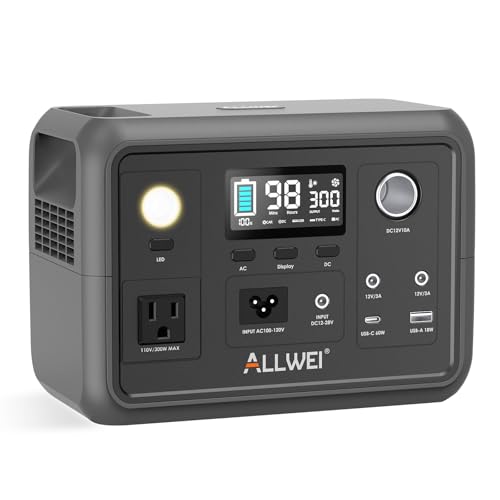
ALLWEI 300W 256Wh Pure Sine LiFePO4 Power Station
256Wh LiFePO4300W, 600W surgePure sine AC60W USB-C PD
Check price on Amazon
Best for: Solo travelers with a laptop, lights and phone and little space.

One pure sine AC outlet, two DC5521 ports, a car lighter port, an 18 watt USB-A port and a 60 watt PD USB-C port make the ALLWEI a compact personal power pack for a van. It stores 256 watt-hours in LiFePO4 cells and supplies 300 watts, with 600 watts of surge for brief spikes.

It is the smallest station here after the Jackery, and it makes sense for one person with a laptop, lights and a phone. Compared with the 292Wh Jackery it has similar capacity but only one AC outlet, and against the 288Wh DaranEner it has half the output rating. It will not cope with kitchen gear, and the single outlet limits what you can run at once.

Use the DC outputs for lights and a fan to save inverter losses, and recharge it from the vehicle on drive days. Keep it somewhere that stays cool in summer. A silicone mat under the case reduces vibration and keeps it from sliding on rough roads.

What works

  • 256Wh LiFePO4 with pure sine output
  • 60W USB-C PD and several DC outputs
  • Compact and light
  • 600W surge covers small startup spikes

Watch out for

  • Only one AC outlet
  • 300W rating limits kitchen appliances
  • Short runtime for a fridge

Spec sheet

Capacity
256Wh LiFePO4
AC output
300W continuous, 600W peak surge
AC outlets
One pure sine outlet
Other ports
Two DC5521, car lighter, USB-A 18W, PD 60W
Class
Compact personal power

Spec sheet decoder

What the numbers on the box really mean

The specs manufacturers lead with, translated into what they tell you about real-world performance.

Watt-hours

The energy stored, which sets days of use. Compare it with your daily watt-hours.

Watch forThe lineup runs from 256Wh on the ALLWEI to 3840Wh on the Elite 400.

DC output current

The amps available at 12V for fridges, lights and pumps. High DC output avoids inverter losses.

Watch forThe Apex 300 hub lists a 50A Anderson connector.

Surge watts

A brief allowance for motor startup, such as a fridge compressor.

Watch forThe DaranEner lists 1200W surge and the ALLWEI 600W.

Cycle life

The number of full cycles before capacity falls to about 80 percent. Vans cycle daily, so it matters.

Watch forThe Jackery states over 4000 and the DaranEner 3500 plus.

120V and 240V output

Split-phase output that can power both 120V and 240V appliances.

Watch forOnly the Apex 300 lists simultaneous 120V and 240V.

Methodology

How We Evaluated These Power Stations for Van Life

Fit for van daily loads

We matched capacity and output to a fridge, laptop and lighting day. The Apex 300 and Elite 400 cover a full-time day, and smaller units cover weekends.

DC and charging options

We rated DC ports and road charging, since vans live on 12V. The Apex 300's hub and the Jackery's car port led.

Weight and mounting

Payload and safety matter in a van. Lighter units scored higher, and the heaviest need a proper mount.

Chemistry and cycle life

We favored LiFePO4 for daily cycling. The GRECELL's unstated chemistry cost it points.

Ownership realism

Support, app polish and heat tolerance came from spec sheets and owner feedback patterns. Established brands earned credit for warranty reach.

Decision guide

How to Choose the Right Power Stations for Van Life

By Van Type

SituationPickWhy
Solo traveler with a laptopALLWEI 256WhCompact LiFePO4 with USB-C PD
Weekend van, small gearDaranEner 288Wh600W output in 8.3 lb
Part-time van with a fridgeGRECELL 519Wh519Wh with 500W pure sine
Full-time van with kitchen and deskBLUETTI Apex 3002764Wh, six AC outlets and a DC hub

By Budget

TierPickWhy
Lowest outlayALLWEI 256WhCheapest small LiFePO4 pick
Low to middleDaranEner 288WhStrong inverter for its price
MiddleGRECELL 519WhMore energy at a moderate outlay
HighestBLUETTI Elite 400 kitLargest capacity with panels included

Single Station vs Built-In Battery Bank

Single station

The Apex 300 and DaranEner install in minutes and can leave the van. They cost more per watt-hour but need no wiring.

Built-in battery bank

A bolted-in lithium bank with an inverter and DC-to-DC charger costs less per watt-hour and integrates cleanly, but it needs wiring skill.

Choose a station for simplicity and a built-in bank for a permanent build.

Charging Style

PreferencePickWhy
Solar includedBLUETTI Elite 400 kitTwo 200W panels in the box
Car socket and USB-C rechargeJackery Explorer 300120W car port and 100W USB-C
Fast AC refill at a campgroundDaranEner 288Wh0 to 80 percent in 2 hours

For Remote Work Specifically

Look for

USB-C PD for the laptop, enough watt-hours for a day of work and a router, and a way to recharge on the move. Quiet fans help on calls.

In this comparison

The Jackery 300 and GRECELL offer PD ports, and the Apex 300 runs a full desk setup with room to spare.

When to Spend More

Spend more if

You live in the van full time or run a fridge and a desk. The Apex 300 or Elite 400 earns its cost.

Save if

You only camp on weekends. The DaranEner 288Wh or ALLWEI is enough.

Ownership

Maintenance schedule

The upkeep that decides whether this machine lasts two seasons or ten.

TaskIntervalWhy it matters
Check the tie-downBefore each tripA loose battery is a hazard in a collision. Retighten straps and mounts.
Store at partial chargeDuring storageAbout 40 to 60 percent reduces cell stress.
Avoid heatSummerA closed van is hot. Keep the unit shaded and ventilated.
Clean ventsTwice a yearDust blocks cooling, and vans collect a lot of it.
Check DC connectorsEvery seasonVibration loosens connectors. Loose DC contacts overheat under load.

FAQ

Frequently Asked Questions

How big a power station do I need for van life?

A fridge, laptop and lights total roughly 600 to 1000Wh a day. Weekend vans can use 288Wh to 519Wh, while full-timers need 2000Wh or more.

Can a power station run a 12V fridge?

Yes, ideally through a DC output. A 12V compressor fridge averages 30 to 50 watts, so a 500Wh unit lasts roughly 8 to 12 hours. Opening the lid often and hot weather push the number toward the high end.

How do I recharge on the road?

By solar, the vehicle's 12V socket or a DC-to-DC charger. A 12V socket adds only a few hundred watt-hours per hour of driving. Solar on the roof is the only truly independent option, so many vans combine it with a smaller drive charge.

Is LiFePO4 better for van life?

Yes. It tolerates heat and daily cycling better and lasts thousands of cycles.

Can I run an air conditioner?

Not for long. A 3000Wh station runs a 1500W unit for roughly an hour and a half. Use shore power or a larger bank.

Should I secure the power station?

Yes. Strap or bolt it down, since a loose battery is dangerous in a crash.

Bottom line

The short version

Browse more power stations for van lifeon Amazon →
James Miller, Lead Machine Editor

About the author

James Miller

Lead Machine Editor, MachineFanatic

James Miller leads MachineFanatic's buying guides, turning spec sheets, manuals and owner feedback into clear verdicts on power tools, outdoor power equipment, shop machines and kitchen machines.

More from James →

Keep reading

Related guides