
Amazon affiliate links - we earn a commission.Affiliate disclosure

Buying guide · 12 min read · Updated 2026-11-13

Best Power Stations Under $500 (2026)

Six power stations at or under $500 on listing prices when updated, from 512Wh to 1056Wh, compared on inverter strength, recharge time and cell chemistry.

James MillerBy James MillerLead Machine Editor6 machines comparedSpec-sheet verified
Best Power Stations Under $500

At a glance

Our top picks

Side by side

Spec comparison

MachineCapacityFast chargeAC outputUSB-C
Anker SOLIX C1000 1056Wh LiFePO4 Power StationBest OverallAnker SOLIX C1000 1056Wh LiFePO4 Power Station1056Wh LiFePO480 percent in 43 minutes, full in 58n/an/a
EcoFlow DELTA 3 Classic 1024Wh 1800W Power StationBest for UPS UseEcoFlow DELTA 3 Classic 1024Wh 1800W Power Station1024Wh0 to 80 percent in 45 minutes1800W, 3600W surge with X-Boost100W output
EcoFlow RIVER 2 Pro 768Wh 800W LFP Power StationBest Mid-Size PickEcoFlow RIVER 2 Pro 768Wh 800W LFP Power Station768Wh LFPFull in about 70 minutes800W, up to 1600W with X-Boostn/a
GRECELL 999Wh 1000W Pure Sine Power StationBest Capacity per OutlayGRECELL 999Wh 1000W Pure Sine Power Station999Whn/a1000W pure sine, 2000W surge60W PD
ANTPO 500W 512Wh LiFePO4 Pure Sine Power StationBest ValueANTPO 500W 512Wh LiFePO4 Pure Sine Power Station512Wh LiFePO40 to 80 percent in about 1 hour500W continuous, 1000W surge, pure sine60W PD
ALLWEI 500W 512Wh LiFePO4 Power Station with UPSBest Small UPS PickALLWEI 500W 512Wh LiFePO4 Power Station with UPS512Wh LiFePO4n/a500W100W PD fast charge

The $500 ceiling is where power stations stop being pocket gadgets and start being real appliances. Here you find 500 to 1000 watt-hours of storage and inverters that can run a coffee maker, a small cooler or a power tool, so the questions become output, recharge speed and longevity.

That extra budget also buys the first serious fast-charging systems, which change how a station fits into daily life. Prices move, and the $500 cap reflects listing prices when this guide was updated.

Before you buy

6 Criteria to Look For Before Buying a Power Station Under $500

  1. 01

    Capacity band under the cap

    Under $500 you pick between roughly 500Wh and 1000Wh. A 512Wh unit like the ANTPO runs a laptop and fan for a weekend, while the Anker C1000's 1056Wh adds a small cooler and a coffee maker. Choose the band that matches your heaviest day. A plug-in watt meter and a quick tally of daily use will tell you which band fits.

  2. 02

    Inverter rating and surge

    The ANTPO and ALLWEI give 500W, the GRECELL 1000W, the RIVER 2 Pro 800W and the EcoFlow DELTA 3 Classic 1800W. Surge numbers such as the Classic's 3600W cover only a brief spike. Match the continuous rating to your appliance.

  3. 03

    Recharge time

    The Anker charges to 80 percent in 43 minutes and the Delta 3 Classic in 45, while the ALLWEI takes about 2.5 hours. A fast charger turns a small battery into a bigger one. Check solar input if you camp off-grid. Fast charging also means you can run a smaller battery harder between wall visits.

  4. 04

    Cell chemistry

    LiFePO4 lasts thousands of cycles, and the Anker, EcoFlow, ANTPO and ALLWEI use it. The GRECELL does not state it, so expect a shorter life. If you cycle weekly, chemistry outweighs a small price difference.

  5. 05

    UPS switchover

    The Delta 3 Classic states under 10ms and the ALLWEI lists a UPS function. Without one, a computer may reset during an outage. Check the actual switching claim before relying on it.

  6. 06

    Weight and portability

    A 1000Wh pack is a two-hand lift, while a 512Wh unit is easier. If you will carry it to a campsite, weigh the extra energy against the lifting. A heavy station often stays home. A one-person lift limit of about 25 pounds is a handy rule for deciding.

Detailed reviews

The 6 best power stations under $500, explained

01
Anker SOLIX C1000 1056Wh LiFePO4 Power Station
1056Wh LiFePO42400W SurgePad80% in 43 minCar cable included
Check price on Amazon
Best for: Buyers who want the biggest, fastest-charging LiFePO4 pack the cap allows.

Forty-three minutes to 80 percent is the headline number, and it changes how a 1056 watt-hour station fits into a week: plug it in while you cook dinner and it is ready for a morning of use. Anker stores that energy in LiFePO4 cells, with a stated lifespan of a decade, and a car charging cable comes in the box. Fast charging is not just a convenience, since a battery you can refill in under an hour is effectively larger than its label suggests.

The SurgePad technology delivers up to 2400 watts for appliances that exceed the standard rating, so a kettle or a power tool that would trip a conventional 1000 watt inverter can run. That is a big step up from the 500 watt units of the cheaper class. Compared with the 1024Wh EcoFlow it has slightly more energy and a faster headline charge, and against the 999Wh GRECELL it carries LiFePO4 and a stronger brand.

The case is a two-hand lift, so decide where it lives. Keep it cool, set the charge limit for storage and recharge it every few months. For a first big station at this budget, it is the safest choice.

What works

  • 1056Wh LiFePO4 with a stated decade of life
  • 80 percent charge in 43 minutes
  • SurgePad lets it run high-wattage appliances
  • Car charging cable included

Watch out for

  • Heavy for a two-hand lift
  • Higher listing price than the 500Wh class
  • Fan noise during fast charging

Spec sheet

Capacity
1056Wh LiFePO4
Output
SurgePad technology to 2400W
Fast charge
80 percent in 43 minutes, full in 58
Lifespan claim
A decade stated
Included
Car charging cable
02
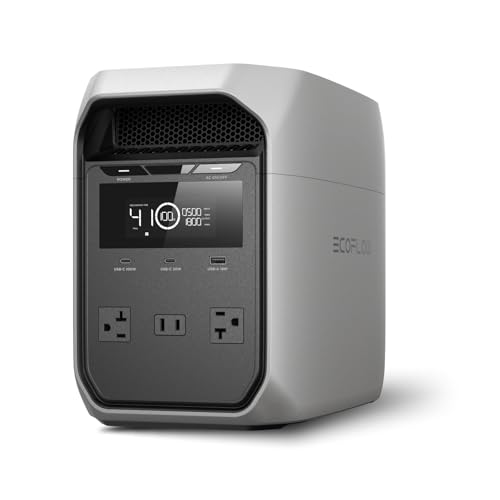
EcoFlow DELTA 3 Classic 1024Wh 1800W Power Station
1024Wh1800W output3600W surgeUnder 10ms UPS
Check price on Amazon
Best for: Home offices and bedrooms that need a true UPS with serious capacity.

A sub-10 millisecond transfer to battery makes the Delta 3 Classic a credible UPS for a PC, a server or a medical device, and few stations under this cap can claim that. It also delivers 1800 watts with a 3600 watt surge using X-Boost, plenty for a coffee maker, a microwave or a power tool.

A 45 minute charge to 80 percent keeps it in rotation, and a 100 watt USB-C output charges a laptop directly. Next to the Anker C1000 it has a slightly lower capacity and a stronger UPS story, and against the 768Wh RIVER 2 Pro it offers more energy, a higher surge and a better inverter. It is the station for a home office or a bedroom where a dropped connection matters.

Leave it plugged in to keep the UPS armed, and use the app to limit the charge. Fans run during fast charging, so choose a spot away from a microphone. If you share the unit between a desk and a camp trip, keep a short extension cord with it so the outlet layout never forces an awkward setup.

What works

  • Under 10ms UPS protects computers and servers
  • 1800W output with 3600W surge in X-Boost
  • 0 to 80 percent charge in 45 minutes
  • 100W USB-C output charges laptops

Watch out for

  • Capacity is slightly lower than the Anker's
  • Heavy for travel
  • Fan noise during fast charging

Spec sheet

Capacity
1024Wh
AC output
1800W, 3600W surge with X-Boost
Fast charge
0 to 80 percent in 45 minutes
UPS switchover
Under 10 milliseconds
USB-C
100W output
03
EcoFlow RIVER 2 Pro 768Wh 800W LFP Power Station
768Wh LFP800W, 1600W X-Boost70 min recharge11 outlets
Check price on Amazon
Best for: Car campers and small households that want a light, flexible mid-size unit.

Eleven outlets, four of them AC, make the RIVER 2 Pro one of the more flexible mid-size stations, and the 768 watt-hour LFP pack is sized for a day of camping without being a back-breaker. It delivers 800 watts, or up to 1600 watts in X-Boost mode for resistive gear, and fully recharges in about 70 minutes.

The cell chemistry is rated for more than 3000 cycles to 80 percent capacity, which EcoFlow translates into almost ten years of use. Compared with the 1056Wh Anker it has less energy and less output, but it is lighter and easier to carry, and against the 512Wh ANTPO it has half again the energy and a more capable inverter. It is the all-rounder for car camping and short outages.

Use X-Boost only for resistive loads, avoid leaving it in a hot car and store it at partial charge. The app is a plus for tuning charge limits. Its mid-size weight makes it the one in this group most likely to actually leave the house, which is a better test of value than raw capacity.

What works

  • 768Wh LFP with more than 3000 stated cycles
  • 800W output with 1600W X-Boost mode
  • Full recharge in about 70 minutes
  • Eleven outlets including four AC

Watch out for

  • X-Boost does not suit motors
  • Less energy than the 1000Wh class
  • Fans audible during fast charging

Spec sheet

Capacity
768Wh LFP
AC output
800W, up to 1600W with X-Boost
Fast charge
Full in about 70 minutes
Outlets
11 in total, four AC
Cycle life
More than 3000 to 80 percent
04
GRECELL 999Wh 1000W Pure Sine Power Station
999Wh1000W pure sine2000W surge60W USB-C PD
Check price on Amazon
Best for: Occasional campers wanting near 1kWh at a modest outlay.

Nearly a thousand watt-hours and a 1000 watt pure sine inverter at a modest outlay is the GRECELL's proposition. It surges to 2000 watts, powers up to ten devices through two AC sockets, three USB QC ports, a 60 watt USB-C PD port and DC outputs, and its battery management system stops charging a device when it is full.

The listing does not state LiFePO4, so expect a standard lithium chemistry with a shorter cycle life than the Anker or the EcoFlow units. For occasional camping and emergency backup, that is an acceptable trade for the lower cost. Compared with the 1056Wh Anker it has a similar capacity but a weaker brand and no stated fast charge, and against the 512Wh ANTPO it is nearly double the energy.

Store it at partial charge, top it up every few months and avoid deep discharges. It is a strong choice if you want the biggest battery for the lowest outlay and do not mind the chemistry. A plug-in watt meter helps confirm that your appliances actually fit within the 1000 watt rating before a trip.

What works

  • 999Wh with a 1000W pure sine inverter
  • 2000W surge covers small compressor starts
  • Up to ten devices at once
  • 60W USB-C PD charges laptops

Watch out for

  • Chemistry is not stated as LiFePO4
  • Lesser-known brand with limited support
  • Slower charge than the premium brands

Spec sheet

Capacity
999Wh
AC output
1000W pure sine, 2000W surge
Outputs
Two AC, three USB QC, plus USB-C and DC
USB-C
60W PD
Devices
Up to ten at once
05
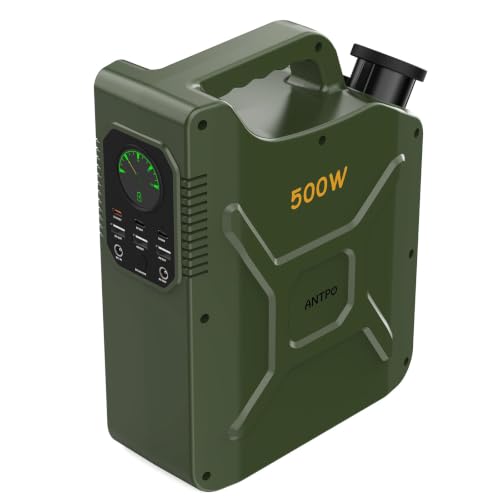
ANTPO 500W 512Wh LiFePO4 Pure Sine Power Station
512Wh LiFePO4500W, 1000W surge60W USB-C PD3500+ cycles
Check price on Amazon
Best for: Regular small-scale users who want LiFePO4 longevity at a low outlay.

A 3500-plus cycle claim on a 512 watt-hour LiFePO4 pack at a low outlay is the ANTPO's reason for existing. It provides a 500 watt pure sine inverter with a 1000 watt surge, a 60 watt PD USB-C port and a car outlet, and the listing quotes 0 to 80 percent in about an hour from a high-power AC input.

That chemistry gives it a decade-class lifespan the GRECELL cannot promise, in a smaller package. Compared with the 999Wh GRECELL it holds half the energy but outlasts it, and against the ALLWEI 512Wh it offers a similar capacity with a higher stated cycle count and no UPS claim. It will not run a kettle, but it handles laptops, lights, a fan and a small cooler. For a laptop at 60 watts and a phone, it should give roughly seven hours of use before it needs a refill.

Keep it charged to about 60 percent for storage and check it every three months. It is the sensible unit for regular small-scale use.

What works

  • 512Wh LiFePO4 with a stated 3500+ cycles
  • 500W pure sine with 1000W surge
  • 60W USB-C PD
  • About one hour to 80 percent

Watch out for

  • 500W cannot run heating appliances
  • Lesser-known brand
  • No UPS function stated

Spec sheet

Capacity
512Wh LiFePO4
AC output
500W continuous, 1000W surge, pure sine
USB-C
60W PD
Cycle claim
3500+ charge cycles
Fast charge
0 to 80 percent in about 1 hour
06
ALLWEI 500W 512Wh LiFePO4 Power Station with UPS
512Wh LiFePO4500W outputUPS backup100W USB-C PD
Check price on Amazon
Best for: Desk and bedside backup with a UPS function at a modest outlay.

Three charging modes and a UPS function set the ALLWEI apart from the plain 500 watt crowd. The unit provides a 500 watt output from a 512 watt-hour LiFePO4 pack, a 100 watt USB-C PD port and an instant backup when the grid fails, protecting a desktop PC or a router.

In Q mode it refills in about 2.5 hours from AC, and a 100 watt solar panel fills it in about 6.5 hours, which is realistic for a weekend. Compared with the ANTPO it adds the UPS and a stronger USB-C port, while the ANTPO leads on stated cycle life. Against the 768Wh RIVER 2 Pro it is smaller and less powerful, but it is easier to carry.

Leave it plugged in if you want it as a UPS, and choose the charging mode to match the situation. It is a good bedside or desk unit. Keep the charging mode in mind when you pack, since Q mode is the one to use when time is short.

What works

  • UPS function protects a PC or router
  • 512Wh LiFePO4 with 500W output
  • 100W USB-C PD
  • Three selectable charging modes

Watch out for

  • Charging to full takes about 2.5 hours
  • 500W limits appliances
  • Smaller brand with limited support

Spec sheet

Capacity
512Wh LiFePO4
AC output
500W
UPS function
Instant backup when the grid fails
USB-C
100W PD fast charge
Charging
About 2.5 hours in Q mode, 6.5 hours from a 100W panel

Spec sheet decoder

What the numbers on the box really mean

The specs manufacturers lead with, translated into what they tell you about real-world performance.

Watt-hours

The energy stored, which sets runtime. Usable energy is about 85 percent after inverter losses.

Watch forThe lineup runs from 512Wh to 1056Wh.

Continuous watts

The sustained AC output. It decides which appliances can run.

Watch forCompare the 500W ANTPO with the 1800W Delta 3 Classic.

X-Boost or SurgePad

Modes that let a station run appliances above its rated watts by limiting voltage. They suit resistive loads.

Watch forThe Anker lists SurgePad to 2400W and the RIVER 2 Pro lists X-Boost to 1600W.

Fast charge time

The time to reach 80 percent from AC. Faster charging gives more usable cycles per week.

Watch forThe Anker quotes 43 minutes and the Classic 45.

Cycle life

The number of full cycles before capacity falls to about 80 percent.

Watch forThe ANTPO states 3500 plus and the RIVER 2 Pro more than 3000.

Methodology

How We Evaluated These Power Stations Under $500

Capacity and output

We compared watt-hours and inverter ratings, since a mismatch strands energy. The Anker and EcoFlow Classic led the larger tier, and the RIVER 2 Pro led the mid tier.

Recharge speed

We reviewed AC charge times, because a fast charger multiplies usefulness. The Anker's 43 minutes and the Classic's 45 minutes stood out.

Chemistry and longevity

We favored LiFePO4 with stated cycle counts. The GRECELL's unstated chemistry lost points.

UPS and electronics protection

We weighed switching claims for computers and routers. The Classic's under 10ms and the ALLWEI's UPS function earned credit.

Ownership realism

Weight, fan noise and brand support came from spec sheets and owner feedback patterns. We also checked that every unit was listed at or below the cap when we updated this guide.

Decision guide

How to Choose the Right Power Stations Under $500

By Use

SituationPickWhy
Car camping with a cooler and coffee makerAnker SOLIX C10001056Wh and SurgePad to 2400W
Home office and server backupEcoFlow DELTA 3 ClassicUnder 10ms UPS and 1800W
Light and flexible campingEcoFlow RIVER 2 Pro768Wh with 11 outlets
Laptop, fan and lights on a budgetANTPO 512WhLiFePO4 with 3500 plus cycles

By Budget Within the Cap

TierPickWhy
Lowest outlayANTPO 512WhLiFePO4 at the lowest outlay
Low to middleALLWEI 512WhUPS function at a small step up
MiddleGRECELL 999WhNear 1kWh at a moderate outlay
UpperEcoFlow RIVER 2 ProMid-size LFP with fast charging
HighestAnker SOLIX C1000Largest, fastest-charging pack

500Wh Class vs 1000Wh Class

500Wh class

The ANTPO and ALLWEI are light and cheap, and cover laptops, lights and a small cooler. They cannot run a coffee maker for long.

1000Wh class

The Anker and EcoFlow Classic run a kettle or a tool and give a full day of use, but they weigh far more.

Choose 500Wh for carrying and 1000Wh for appliances.

Charging Needs

PreferencePickWhy
Fastest AC refillAnker SOLIX C100080 percent in 43 minutes
Fast with UPSEcoFlow DELTA 3 Classic45 minutes to 80 percent
Slow charging is fineALLWEI 512WhAbout 2.5 hours in Q mode

For Home Outage Backup Specifically

Look for

A UPS function, enough watt-hours for a refrigerator and a router overnight, and a fast recharge between storms. LiFePO4 suits long storage.

In this comparison

The Delta 3 Classic adds under 10ms UPS and 1800W, and the Anker C1000 adds 1056Wh with fast refill.

When to Spend More

Spend more if

You want fast charging and a stronger inverter. The Anker or EcoFlow Classic justify the step up.

Save if

You only run small gear a few times a year. The ANTPO is enough.

Ownership

Maintenance schedule

The upkeep that decides whether this machine lasts two seasons or ten.

TaskIntervalWhy it matters
Store at partial chargeDuring storageAbout 40 to 60 percent reduces cell stress.
Top up the batteryEvery three monthsSelf-discharge drains a stored pack. A top-up avoids deep discharge.
Avoid heat and freezingAlwaysHeat degrades cells, and charging below freezing can damage them.
Clean ventsTwice a yearDust blocks cooling during fast charging.
Update firmwareYearlyApp updates improve charge limits and fix bugs.

FAQ

Frequently Asked Questions

What can a power station under $500 run?

A 500Wh unit runs laptops, lights and a small cooler, and a 1000Wh unit adds a coffee maker or a power tool for short periods. Prices move, so check the listing against the cap.

Is LiFePO4 worth it at this price?

Yes if you will use it often. It lasts thousands of cycles against several hundred, which spreads the cost over many years.

Can it run a refrigerator?

A 1000Wh unit can run a household fridge for roughly 8 to 16 hours. A 512Wh unit suits a mini fridge only. Add a margin for defrost cycles and cold weather.

Do I need a UPS function?

For a computer or router, yes. A switchover of 10 milliseconds or less keeps most equipment running. Test it once with a lamp before trusting it.

How do I size solar panels?

Check the unit's solar input wattage and voltage window. A 100 watt panel refills a 512Wh unit in about 6 to 9 hours of good sun.

Can I take it on a plane?

No. Airlines allow up to 100Wh without approval and 100 to 160Wh with approval, so every unit here is ground-use only.

Bottom line

The short version

Browse more power stations under $500on Amazon →
James Miller, Lead Machine Editor

About the author

James Miller

Lead Machine Editor, MachineFanatic

James Miller leads MachineFanatic's buying guides, turning spec sheets, manuals and owner feedback into clear verdicts on power tools, outdoor power equipment, shop machines and kitchen machines.

More from James →

Keep reading

Related guides