
Amazon affiliate links - we earn a commission.Affiliate disclosure

Buying guide · 13 min read · Updated 2026-11-07

Best Solar Generators for CPAP (2026)

Six solar-ready power stations for CPAP machines compared on watt-hours, pure sine wave output, DC ports and recharge options for camping and outages.

James MillerBy James MillerLead Machine Editor6 machines comparedSpec-sheet verified
Best Solar Generators for CPAP

At a glance

Our top picks

Side by side

Spec comparison

A CPAP machine is a small appliance with a big requirement: it has to run for a full night without stopping. At a campsite or during an outage, a portable power station fed by solar panels can do that job, but only if its battery is sized for the humidifier and the hours.

Most buyers look at the headline watt rating and miss the number that matters, the watt-hours. A CPAP uses few watts but runs for eight hours or more, so capacity, not output, decides whether you wake up to a dead battery or a charged one.

Before you buy

6 Criteria to Look For Before Buying a Solar Generator for CPAP

  1. 01

    Watt-hours, not watts

    A CPAP draws 30 to 60 watts running without a humidifier and up to 100 watts with a heated one, so an eight-hour night uses roughly 240 to 800 watt-hours. The Jackery Explorer 300 holds 292Wh, the Daran 288Wh and the Bluetti Elite 100 Mini 1004.8Wh. Multiply the CPAP's real draw by sleep hours, then divide by about 0.85 for inverter losses, to find your minimum capacity.

  2. 02

    Heated humidifier and tube

    The heated humidifier is the largest consumer in a CPAP system, sometimes doubling the draw. Turn it off or use a lower setting on battery, and use a heated tube only if needed. If you must use the humidifier, step up to a 1,000Wh class station like the Bluetti Elite 100 Mini or the Jackery 1000 v2.

  3. 03

    Pure sine wave AC

    A CPAP's power supply and motor run best on a clean sine wave, which the EnginStar and the Jackery stations provide. Modified sine inverters can cause extra heat, noise and error codes in sensitive machines. Check the listing wording and, for medical use, ask the CPAP maker whether the station is suitable.

  4. 04

    DC power option

    Many CPAPs offer a 12V DC cable that bypasses the AC inverter. A DC cable can save 10 to 20 percent of battery energy, because converting battery DC to AC and back to DC wastes power. Check your CPAP model and confirm that the station has a 12V port with enough amps.

  5. 05

    Solar input and recharge time

    A 200W panel in good sun recovers roughly 600 to 800Wh a day, but clouds and shade cut that sharply. Check the station's maximum solar input in watts and volts, and the connector type, before buying a panel. A fast wall recharge, like the Daran's 80 percent in about 1.6 hours, is also valuable between nights.

  6. 06

    Safety and backup planning

    A power station is a convenience, not a medical device. A CPAP user who depends on therapy for health reasons should keep a backup plan, such as a spare battery, a car inverter or a plan to sleep without therapy for a night, and discuss it with their sleep clinician. Test the setup at home before relying on it away from home.

Detailed reviews

The 6 best solar generators for cpap, explained

01
Jackery Explorer 300 Portable Power Station 292Wh
292Wh7.5 lbPure sine AC6 outputs
Check price on Amazon
Best for: Campers using one CPAP for a night or two without a heated humidifier.

A typical CPAP draws 30 to 60 watts without a heated humidifier and 60 to 100 watts with one, so a night of eight hours needs roughly 240 to 800 watt-hours at the machine. The Explorer 300's 292Wh covers a no-humidifier night with margin and about half of a heated-humidifier night, which makes it the right size for a single sleeper on a weekend trip with the humidifier off or the machine on a DC cord.

The design is the lightest in the group at 7.5 pounds, and it offers outputs for six devices, so it can charge a phone and run a CPAP at once. Against the EnginStar 296Wh, the Jackery has a stronger brand reputation, and against the larger Bluetti and Jackery 1000 v2, it trades capacity for a body you can carry with one hand.

In ownership, the main rule is to run the CPAP on a low-draw setup. Turn off the humidifier heater or use a DC cable if the machine supports it, since converting battery power to AC and back to the CPAP's DC wastes energy. Recharge it by solar panel during the day and keep it out of hot cars.

What works

  • 292Wh covers a typical night without a heated humidifier
  • Light at 7.5 pounds for hiking and car camping
  • Outputs for six devices alongside the CPAP
  • Established brand with solar panel pairing options

Watch out for

  • Not enough for a full night with a heated humidifier
  • Small capacity limits multi-night trips without recharging
  • Solar panels are sold separately

Spec sheet

Capacity
292Wh
Weight
7.5 lb
Outputs
Power for 6 devices
Battery
Lithium, listed as backup LiFePO4
Use
Camping, backup, CPAP
02
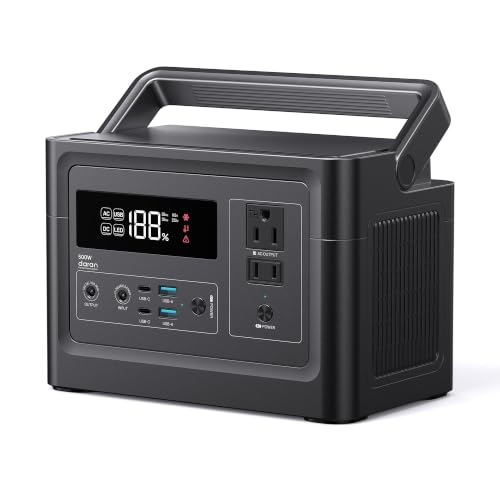
Daran 500W Mini Portable Power Station 288Wh LiFePO4
288Wh LiFePO4500W outputFast charge8 lb
Check price on Amazon
Best for: Budget buyers who want LiFePO4 and fast recharge for CPAP use.

The Daran combines a LiFePO4 battery with a 500W output and a fast recharge claim of zero to 80 percent in about 1.6 hours. For CPAP use, the chemistry is a real advantage: LiFePO4 cells tolerate more charge cycles and heat than standard lithium-ion, which matters for a device used nightly rather than occasionally.

Its 288Wh is almost the same as the Jackery 300, so the runtime is similar. The 500W output is generous for a CPAP, which uses a fraction of that, and it leaves room for a small fan or a phone charger. A fast recharge helps in an outage, where a few hours of wall power between nights can restore most of the battery.

Ownership advice is to treat it as a one-night battery for a CPAP with a heated humidifier off. Pair it with a solar panel if you plan multiple nights, and check that the panel's voltage and connector match the station's solar input before buying.

What works

  • LiFePO4 battery for longer cycle life
  • Fast recharge to 80 percent in about 1.6 hours
  • 500W output has headroom for a CPAP and extras
  • Compact and portable at about 8 pounds

Watch out for

  • 288Wh limits a heated humidifier night
  • Less established brand than Jackery
  • Solar panels must be bought and matched separately

Spec sheet

Capacity
288Wh LiFePO4
Output
500W, 1000W peak
Recharge
0 to 80% in about 1.6 hours
Weight
8.04 lb
Chemistry
LiFePO4
03
EnginStar 300W 296Wh Portable Power Station With Pure Sine Wave
296Wh300WPure sine waveETL certified
Check price on Amazon
Best for: Buyers who want pure sine wave and a certification mark at a modest price.

The EnginStar delivers 296Wh with a pure sine wave 300W AC outlet and an ETL certification, which is the combination a CPAP owner should look for. Pure sine output matches wall power closely, so a CPAP's power supply and any attached humidifier or heated tube run as designed rather than with the extra heat and noise some modified sine inverters cause.

The 300W ceiling is enough for a CPAP, whose running draw is typically well under 100 watts, but the unit will not run a space heater or a coffee maker. Compared with the Jackery 300, it offers a similar capacity and certification, while being a less known name, and compared with the Marbero it has a slightly larger battery.

Care is routine: keep the vents clear, recharge before storage and avoid leaving it in a hot car. Check the CPAP's power draw with a plug-in meter on a night at home, which gives you a real number to plan from rather than a catalog estimate.

What works

  • Pure sine wave AC output suits CPAP power supplies
  • ETL certification for safety
  • 296Wh capacity covers a night without a heated humidifier
  • Multiport design for phones and a light

Watch out for

  • 300W ceiling limits other appliances
  • Less recognized brand
  • Heated humidifier shortens runtime a lot

Spec sheet

Capacity
296Wh
Output
300W AC, pure sine wave
Certification
ETL certified
Voltage
110V AC
Ports
Multiport AC, DC and USB
04
BLUETTI Elite 100 Mini 1004.8Wh 700W LiFePO4 Power Station
1004.8Wh LFP700W23.6 lbCompact
Check price on Amazon
Best for: Users who run a heated humidifier or want two nights of capacity.

At 1004.8Wh, the Elite 100 Mini has more than three times the capacity of the small stations, which is what a CPAP with a heated humidifier needs. A machine drawing 80 watts with the humidifier on uses about 640Wh over eight hours, and a 1,000Wh pack covers that with room for a second night at lower settings or a modest amount of other loads.

The maker pitches it as about 45 percent smaller and 36 percent lighter than similar one kilowatt-hour units, though at 23.6 pounds it is a carry-in, not a hike-in. A LiFePO4 battery and a 700W output cover a CPAP and small appliances. Against the Jackery 1000 v2, it is smaller and lighter but lower in output, and against the 300Wh class it is a different weight and cost tier.

In ownership, the extra capacity gives resilience: a two-night outage with a CPAP and a few lights is manageable on one charge. Recharge from the wall between nights, add a solar panel if the outage is long, and store at partial charge for long gaps.

What works

  • 1004.8Wh covers a heated-humidifier night with margin
  • LiFePO4 battery for long cycle life
  • 700W output for a CPAP plus small loads
  • Compact for its capacity class

Watch out for

  • At 23.6 pounds it is heavy for backpacking
  • Costs much more than the 300Wh class
  • 700W output limits larger appliances

Spec sheet

Capacity
1004.8Wh
Output
700W
Chemistry
LiFePO4
Weight
23.59 lb
Size
45 percent smaller than similar 1 kWh units
05
Jackery Solar Generator 1000 v2 With 200W Solar Panel
1024Wh LiFePO41500W output200W panel10 ms UPS
Check price on Amazon
Best for: Households that want CPAP backup plus a refrigerator and solar recharge.

This bundle pairs a 1024Wh LiFePO4 station with a 200W solar panel, which makes it the most complete solar answer here. The 10 millisecond UPS switchover is relevant to a CPAP: plugged into the station while it is wall-charged, the CPAP can ride through a short utility outage without rebooting, which is not true of most small units.

The 1500W output and pure sine AC ports mean it can run a CPAP, a refrigerator and a few lights together, which turns it from a night-only device into a household backup. Against the Bluetti Elite 100 Mini, it has more output and a solar panel in the box, but costs more and weighs more. Against the Anker C1000 Gen 2, it is a similar class with a different charging approach.

In practice, a 200W panel can recover roughly 600 to 800Wh on a good sunny day, so a CPAP's nightly draw can be replaced by solar on a clear day. Cloud cover and shade cut that sharply, so keep a wall recharge option for storms.

What works

  • Includes a 200W solar panel
  • 10 ms UPS switchover protects a plugged-in CPAP
  • 1500W output runs a CPAP and appliances
  • 1024Wh LiFePO4 capacity covers multiple nights

Watch out for

  • Heavy and costly compared with small stations
  • Solar recovery depends on sun and shade
  • More capacity than a single-CPAP user needs

Spec sheet

Capacity
1024Wh LiFePO4
Output
1500W, 3000W peak
Panel
200W solar panel included
UPS
10 ms switchover
Ports
USB-C, USB-A, DC car, pure sine AC
06
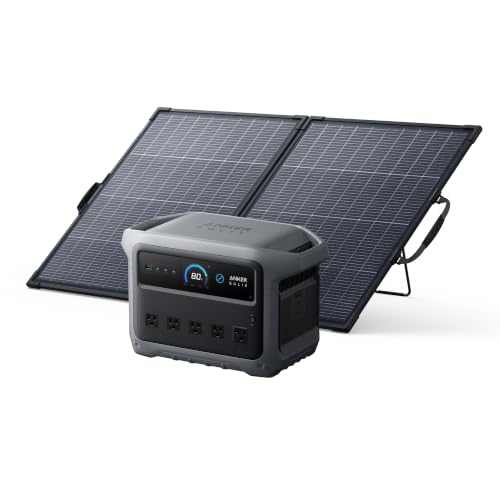
Anker SOLIX C1000 Gen 2 Solar Generator With 200W Panel
2000W output9 ports200W panelSolar kit
Check price on Amazon
Best for: Households that want CPAP backup with high output and solar.

The C1000 Gen 2 is a 2,000W portable power station with nine ports and a 200W solar panel in the kit. For a CPAP, the output is far beyond what is needed, but the real draw is capacity and the ability to power the CPAP alongside refrigeration, a fan and charging for a household in an outage.

The high output is useful because it lets the same unit run kitchen appliances, a small heater or a power tool, so it earns its place beyond sleep. Against the Jackery 1000 v2, it is a similar class with a higher quoted output, and against the Bluetti Elite 100 Mini it adds a solar panel in the kit at the cost of weight and size. The panel is dispatched separately from the station, so check that both arrive before a trip.

Ownership centers on planning. Keep the panel's cable and connectors dry, recharge the station before storms and plan the CPAP's DC or AC route for efficiency. A big unit used only for a CPAP wastes its potential, but it provides the most resilience.

What works

  • 2,000W output through nine ports
  • 200W solar panel in the kit
  • Capacity for multiple CPAP nights
  • Runs household appliances as well

Watch out for

  • Heavier and more expensive than small stations
  • Panel ships separately from the station
  • Far more power than a CPAP alone needs

Spec sheet

Output
2,000W via 9 ports
Solar
200W solar panel
Class
1 kWh-class power station
Delivery
Panel ships separately
Brand
Anker SOLIX

Spec sheet decoder

What the numbers on the box really mean

The specs manufacturers lead with, translated into what they tell you about real-world performance.

Wh (watt-hours)

The stored energy in the battery, 292Wh on the Jackery 300 and 1004.8Wh on the Bluetti.

Watch forRuntime is about Wh times 0.85 divided by load watts.

Pure sine wave

An AC waveform that closely matches wall power, offered on the EnginStar and Jackery stations.

Watch forCheck wording; some small stations use modified sine.

LiFePO4

Lithium iron phosphate cells, used on the Daran, Bluetti and Jackery 1000 v2, with long cycle life.

Watch forThey are heavier than standard lithium-ion per Wh.

UPS switchover

The Jackery 1000 v2's 10 ms switch to battery during a power cut.

Watch forMost small stations do not offer it, and not all CPAPs tolerate a gap.

Solar input

The maximum watts and volts the station accepts from a panel.

Watch forA mismatched panel charges slowly or not at all.

Methodology

How We Evaluated These Solar Generators for CPAP

Capacity for a night

We evaluated watt-hours against a typical CPAP's draw, comparing the 288Wh to 296Wh small stations with the 1004.8Wh Bluetti and the 1024Wh Jackery. Capacity mattered more than output.

Output quality

We considered pure sine wave output and certification, including the EnginStar's ETL mark and the Jackery's pure sine AC ports.

Solar practicality

We looked at included panels and solar input. The Jackery 1000 v2 and Anker C1000 Gen 2 include 200W panels, while small stations require a separate purchase.

Portability

We compared weight and size, from the 7.5-pound Jackery 300 to the 23.6-pound Bluetti. A station you will not carry is useless on a trip.

Ownership and safety

Based on owner feedback patterns, LiFePO4 packs last longer and keep capacity. We also gave weight to UPS switchover and clear specifications.

Decision guide

How to Choose the Right Solar Generators for CPAP

By CPAP Setup

SituationPickWhy
No humidifier or humidifier offJackery Explorer 300292Wh covers a night with margin
Heated humidifier onBLUETTI Elite 100 Mini1004.8Wh covers 640Wh nights with spare
CPAP plus fridge and lightsJackery Solar Generator 1000 v21500W output and a solar panel

By Budget

Budget tierPickWhy
Lowest outlayEnginStar 296WhPure sine wave 300W station
Middle groundDaran 500W 288WhLiFePO4 and fast recharge
Highest outlayAnker SOLIX C1000 Gen 22,000W with 200W solar panel

Small Station vs 1 kWh Station

Small station

The Jackery 300, Daran and EnginStar hold about 290Wh. They are light and cheap, and suit one night of CPAP use without a heated humidifier.

1 kWh station

The Bluetti, Jackery 1000 v2 and Anker C1000 carry about 1,000Wh. They cover a heated humidifier and multiple nights, but weigh over 20 pounds.

Pick small for weekend camping; pick 1 kWh for outages and heated humidifiers.

AC vs DC Connection

PreferencePickWhy
Use the CPAP's wall adapterEnginStar 296WhPure sine AC output
Save energy with a DC cordDaran 288WhCompact LiFePO4 with DC output
Ride through short outagesJackery 1000 v210 ms UPS switchover

For Camping and Outages Specifically

Look for

Enough watt-hours for your longest night, a solar input that matches a panel you can carry and a plan to recharge. Measure your CPAP's draw with a plug-in meter at home.

In this comparison

The Jackery 300 fits weekend camping, the Bluetti handles humidifier nights and the Jackery 1000 v2 gives solar recharge and UPS in one kit.

When to Spend More

Spend more if

You use a heated humidifier or face multi-day outages. The 1 kWh stations give the capacity to cope.

Save if

You only camp for a night or two and can switch off the humidifier. A 290Wh station is enough.

Ownership

Maintenance schedule

The upkeep that decides whether this machine lasts two seasons or ten.

TaskIntervalWhy it matters
Recharge before storageEvery 3 monthsBatteries self-discharge. Store at roughly 40 to 60 percent and top up on schedule.
Measure CPAP drawWhen you change settingsA plug-in meter shows real watts, so you can size runtime accurately.
Clean the ventsEvery 6 monthsDust blocks airflow and raises temperature. Use a dry cloth or compressed air.
Test the solar connectionBefore each tripA mismatched or damaged cable gives no charge. Check the panel on a sunny day.
Keep out of heat and coldAlwaysA hot car damages cells, and charging below freezing harms them.

FAQ

Frequently Asked Questions

How many watt-hours do I need for a CPAP?

About 240 to 800Wh per night, depending on the machine and humidifier. Measure your CPAP with a plug-in meter and multiply by sleeping hours.

Can a small power station run a CPAP all night?

Often yes, without a heated humidifier. A 290Wh station covers about eight hours at 30 to 35 watts, but a heated humidifier needs far more.

Is a DC cable better than AC?

It usually saves 10 to 20 percent of energy by avoiding inverter losses. Check that your CPAP model supports a DC cord.

Do I need pure sine wave output?

It is the safer choice for a CPAP's power supply. Modified sine outputs may cause heat or error codes in sensitive machines.

How many solar panels do I need?

A 200W panel in good sun recovers about 600 to 800Wh a day. Cloud and shade reduce it, so keep a wall recharge option.

Should I rely on a power station for medical therapy?

Treat it as a convenience and keep a backup plan. Discuss outage plans with your sleep clinician and test the setup at home first.

Bottom line

The short version

Browse more solar generators for cpapon Amazon →
James Miller, Lead Machine Editor

About the author

James Miller

Lead Machine Editor, MachineFanatic

James Miller leads MachineFanatic's buying guides, turning spec sheets, manuals and owner feedback into clear verdicts on power tools, outdoor power equipment, shop machines and kitchen machines.

More from James →

Keep reading

Related guides