
Amazon affiliate links - we earn a commission.Affiliate disclosure

Buying guide · 13 min read · Updated 2026-11-13

Best Solar Generators for Off-Grid Camping (2026)

Six solar generators for week-long off-grid camping, ranked by real daily panel harvest and how many cloudy days each battery can ride out.

James MillerBy James MillerLead Machine Editor6 machines comparedSpec-sheet verified
Best Solar Generators for Off-Grid Camping

At a glance

Our top picks

Side by side

Spec comparison

Off-grid camping turns the question from how big the battery is into how much the sun gives back. A tank that is flat on day three and has no way to recover is a flashlight, however impressive the spec sheet looked at the shop.

We ranked six solar generators by the balance between daily harvest and daily use. Each is judged on whether its panel can refill what a typical day consumes, how it behaves when the weather turns, and how easily the whole kit packs and sets up at a remote site.

Before you buy

6 Criteria to Look For Before Buying a Solar Generator for Off-Grid Camping

  1. 01

    Daily harvest versus daily use

    Panel watts times 4.5 sun hours times 0.7 gives daily Wh. A 30W panel returns about 95Wh, 100W about 315Wh and 400W about 1,260Wh. Match that to what you consume: lights and phones use about 100 to 150Wh a day, a cooler another 300 to 500Wh. Track a real day on your first trip, then adjust the panel size for the next.

  2. 02

    Panel packability

    The SolarSaga Light packs flat and weighs little, while rigid 200W panels need a roof rack or a big trunk. At a walk-in site pack weight matters more than efficiency, and a 100W folding panel is often the right size. Check the panel's folded dimensions against your pack before you commit.

  3. 03

    Battery buffer for bad weather

    Cloudy days cut harvest by 70 to 90 percent. A battery that holds two days of use, such as the Elite 200 V2's 2,080Wh, rides through; a 155Wh Marbero does not. Plan for at least one day of reserve. A vehicle 12V charger is the cheapest insurance against a long gray stretch.

  4. 04

    Charging input limits

    Each station accepts only a fixed input. A 60W DC input pairs with a 60 to 100W panel, a bigger panel adds nothing. Check voltage and connector type, since many small stations use DC5521 barrels. Over-sizing the panel beyond the input limit wastes money and can trip the charger.

  5. 05

    Efficient ports

    USB-C PD ports skip the inverter, saving 10 to 15 percent. The Jackery 300's 100W and the Daran units' 60W PD ports are the efficient way to charge a laptop at camp. Powering a laptop from a 60W port is quicker than from a 300W AC outlet.

  6. 06

    Cold and heat

    Lithium cells should not be charged below freezing and lose capacity in the cold. In hot sun, keep the battery shaded and the panel exposed. LiFePO4 handles heat better than older chemistries.

Detailed reviews

The 6 best solar generators for off-grid camping, explained

01
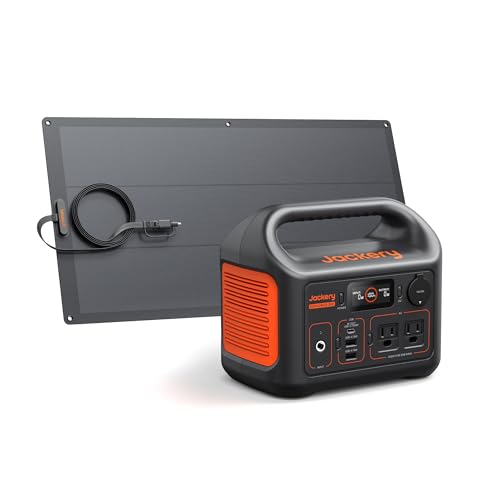
Jackery Solar Generator 300 with SolarSaga 100W Light Panel
292Wh LiFePO4300W AC100W panel7.5 lb battery
Check price on Amazon
Best for: Backpack and canoe campers who want a self-refilling electronics battery.

A 100W panel is where off-grid starts to make sense. In real sun it returns about 300 to 350Wh a day, which is slightly more than the 292Wh this battery holds, so a typical day of lights, phones and a laptop goes out and comes back in, and you can camp for a week without a wall outlet. The panel is the lightweight Light version, which packs easily for a walk-in site.

The battery itself is a 7.5 pound LiFePO4 unit rated for over 4,000 cycles, with six outputs including a 100W USB-C PD port that charges a laptop without waking the inverter. That PD path is the efficient way to use a small battery in the field.

The limit is power. 300W will not run a cooler for more than a few hours or a kettle at all, so this is an electronics-and-lights kit. Keep the panel clean and aimed, switch off the AC inverter and store the pack around half charged between seasons. A useful field habit is to clip the panel to the tent fly or a branch facing south, and to move it every two hours or so; that alone can lift the day's harvest by a fifth over leaving it flat on the ground.

What works

  • 100W panel refills about a full battery a day
  • 7.5-pound LiFePO4 battery
  • 100W USB-C PD charges laptops efficiently
  • 4,000-plus cycle life

Watch out for

  • 300W cannot run a cooler or kettle
  • Light panel is less rugged than rigid ones
  • 292Wh is a small tank for bad weather

Spec sheet

Capacity
292Wh
Rated AC output
300W
Included panel
100W SolarSaga Light
Battery weight
7.5 lb
Cycle life
4,000+
02
BLUETTI Elite 200 V2 with 2x200W Solar Panels, 2,080Wh
2,080Wh LFP2,600W AC400W panels10W standby
Check price on Amazon
Best for: Base-camp stays of a week or more with a powered cooler.

When off-grid means a week at a base camp with a powered cooler, lights, a laptop and a small stove fan, this is the right size. Two 200W panels return around 1,200Wh on a good day, matching the 2,080Wh tank's daily use of 800 to 1,100Wh, and the listing says a full solar recharge takes about five and a half hours of sun.

The standby draw of about 10W means the inverter can stay on for a cooler without silently draining the pack, and a 2,600W output gives you room for a kettle or an induction burner in short bursts. It is a heavy kit, so it suits a drive-up site, a boat or a pack animal, not a long carry.

Use the panels on the ground, tilt them toward the sun and move them every few hours. Clean them each morning, check cable connectors and store the battery at moderate charge between seasons. Because it is a bigger system, set up a routine: panels out by nine, cooler on the battery overnight, and a glance at the display each evening to see whether the day's harvest covered the day's use.

What works

  • Two 200W panels refill about 1,200Wh a day
  • 2,080Wh covers a cooler and electronics
  • Low 10W standby draw
  • 2,600W output for short cooking bursts

Watch out for

  • Heavy for any hike-in site
  • Two panels need ground space
  • Cloudy stretches slow refill sharply

Spec sheet

Capacity
2,080Wh
Rated AC output
2,600W
Included panels
2 x 200W
Standby draw
About 10W
Solar recharge
About 5.5 hours
03
Jackery Solar Generator 1000 v2 with 100W Panel, 1,070Wh
1,070Wh LiFePO41,500W AC100W panel10-year lifespan
Check price on Amazon
Best for: Campers who mix off-grid days with regular hookups.

This kit lives in the awkward middle: a large battery with a small panel. A 100W panel returns roughly 300 to 350Wh a day, which is about a third of what a kilowatt-hour battery holds, so on its own it will not sustain a cooler for a week. It will, however, carry electronics and lights indefinitely and stretch a cooler by a day or two.

What the unit offers in exchange is flexibility. A 1,500W inverter and a 3,000W surge run most camp appliances, the LiFePO4 pack is described as holding over 70 percent capacity after a decade, and an hour-long wall recharge makes it ideal for trips that start or end at a hookup.

If you plan a longer trip, add a second panel. Compared with the Elite 200 V2 it is lighter and less expensive but has half the capacity and a quarter of the panel power. Keep it shaded in the day and store it at half charge. Many campers buy this kit as a starting point and add a second 100W panel before the first long trip, which turns it into a genuinely self-sustaining setup for electronics.

What works

  • 1,500W inverter and 3,000W surge
  • About one hour wall recharge
  • LiFePO4 rated for a decade of use
  • Accepts a second panel

Watch out for

  • 100W panel only refills a third of the tank a day
  • More weight than electronics-only needs
  • Brand premium over generic units

Spec sheet

Capacity
1,070Wh
Rated AC output
1,500W
Surge
3,000W
Included panel
100W
Wall recharge
About 1 hour
04
DaranEner 350W 230.4Wh LiFePO4 Power Station
230.4Wh LiFePO4350W AC700W surge6.9 lb
Check price on Amazon
Best for: Weight-conscious campers who still want a pure sine AC outlet.

At 6.9 pounds this is among the lightest LiFePO4 stations that still offers a 350W pure sine output, and its 700W surge starts a small fan or a mini pump. It has two 350W AC outlets and a four-mode LED light with SOS, and the listing says it can power six devices at once.

The panel is not included, so you add one that matches the input. A 60 to 100W folding panel fits the profile and puts back 200 to 300Wh a day, close to the 230Wh tank. Versus the Jackery 300 it holds 62Wh less but delivers 50W more, and it weighs about the same.

Use it for lights, phones, a camera kit and a fan, and plan on charging from the vehicle before you walk in. Check any panel's connector against the input before you buy, and store the unit half charged. Because the case is small, it also fits a bear canister or a dry bag, which keeps it safe from rain and curious wildlife.

What works

  • 6.9 pounds with 350W output
  • LiFePO4 chemistry
  • Two AC outlets and a light
  • Pure sine wave output

Watch out for

  • No panel included
  • 230Wh is a small tank
  • Brand has a short track record

Spec sheet

Capacity
230.4Wh
Rated AC output
350W
Surge
700W
Weight
6.9 lb
Size
9 x 5.4 x 6.2 in
05
DaranEner 288Wh Power Station with 350W Rated AC
288Wh LiFePO4350W x2 AC600W surgePD 60W
Check price on Amazon
Best for: Budget campers who want a 288Wh pack to pair with their own panel.

A step up in energy from the 230Wh unit, this 288Wh pack still weighs little and adds a 60W USB-C PD port and six outputs. The 350W rating and 600W surge cover a fan, a laptop, a camera and a small pump, and the listing says the cell choice is premium LiFePO4 with a battery management system.

It pairs with a 100W folding panel for a sustainable daily cycle, since a 100W panel returns roughly 300 to 350Wh in good sun. A 60W or 120W panel also works if its voltage fits the input, so check the specs before you buy.

Stacked against the Jackery 300 it is similar in energy and a bit cheaper but has a thinner support network. Treat it as a budget alternative: keep the receipt, test it before the trip and store it half charged. The six ports mean two people can charge phones, a headlamp and a camera together without swapping cables each night.

What works

  • 288Wh at a light weight
  • 60W USB-C PD port
  • Six outputs
  • LiFePO4 chemistry

Watch out for

  • No panel included
  • Thinner support network
  • 600W surge is modest

Spec sheet

Capacity
288Wh
Rated AC output
350W per outlet
Surge
600W
USB-C
60W PD
Ports
6
06
MARBERO 155Wh Solar Generator with 30W Panel
155Wh battery100W AC x2150W surge30W panel
Check price on Amazon
Best for: First-time off-grid campers with minimal needs.

This is the complete-kit beginner option: a 155Wh battery, a 30W panel with a 6.5 foot cable, and ports for phones, lights and a small fan. For a weekend at a site with sun it works as advertised, and for a first solar generator the all-in-one packaging is attractive.

It is honest about being small. A 30W panel returns about 90 to 100Wh a day in good sun, which is about two-thirds of the battery, so heavy use for several days leaves it flat. The 100W AC outlets also rule out a laptop charger with a large brick.

Use it for lights and phones, charge it fully before you leave and treat the panel as a top-up. Beside the Jackery 300 kit it holds about half the energy and a third of the panel power, at a fraction of the cost. The long 6.5 foot panel cable lets you keep the battery in shade while the panel sits in the sun, which is the right habit with any station.

What works

  • Complete kit with panel and cable
  • Very light and inexpensive
  • Two AC outlets and USB ports
  • Simple to use

Watch out for

  • 30W panel cannot refill heavy use
  • 100W AC limit
  • Small 155Wh tank

Spec sheet

Capacity
155Wh
AC outlets
2 x 100W
Surge
150W
Included panel
30W
Panel cable
6.5 ft

Spec sheet decoder

What the numbers on the box really mean

The specs manufacturers lead with, translated into what they tell you about real-world performance.

Panel wattage

The lab rating of the panel. Real output is 60 to 80 percent of it.

Watch forFrom the Marbero's 30W to the Elite 200 V2's 400W kit.

Wh capacity

The battery tank. It sets how long you can run without sun. Real usable energy is about 85 percent of the figure.

Watch forFrom 155Wh to 2,080Wh in this lineup.

Idle draw

Power used by the inverter with no load.

Watch forThe Elite 200 V2 lists about 10W.

USB-C PD

A fast-charge port that bypasses the inverter.

Watch forThe Jackery 300 offers 100W, the Daran 288Wh 60W.

Cycle life

Charges before capacity drops to about 80 percent. Longer life lowers the real cost per year of use.

Watch forThe Jackery 300 lists over 4,000.

Methodology

How We Evaluated These Solar Generators for Off-Grid Camping

Harvest balance

We estimated each kit's daily solar return and compared it with a light, moderate and cooler-heavy daily use. The Jackery 300's 100W panel and the Elite 200 V2's 400W kit balance best.

Reserve for clouds

We checked how many gray days each battery can absorb. The Elite 200 V2 lasts about two, the Jackery 300 about one, the Marbero less than a day.

Pack weight

We rated kit weight for walk-in use. The Daran 230Wh at 6.9 pounds and the Jackery 300 at 7.5 pounds led. We counted the panel, cable and battery together when judging carry weight.

Efficiency of ports

We favored units with USB-C PD ports, which cut conversion losses in the field.

Ownership

We used listing details and owner feedback patterns for support and longevity, not our own trips.

Decision guide

How to Choose the Right Solar Generators for Off-Grid Camping

By Trip Length

TripPickWhy
Weekend, light useMARBERO 155Wh kitComplete kit
Week, electronics onlyJackery Solar Generator 300 with SolarSaga100W panel refills daily
Week with a coolerBLUETTI Elite 200 V2 kit400W of panels
Mixed hookups and off-gridJackery Solar Generator 1000 v21,500W and 1-hour recharge
Ultralight weekDaranEner 350W 230Wh6.9 pounds

By Budget

TierPickWhy
LowestMARBERO 155Wh kitPanel included
Low-midDaranEner 288WhPair with your own panel
MidDaranEner 350W 230WhUltralight
UpperJackery Solar Generator 300 kitBrand and panel
TopBLUETTI Elite 200 V2 kitCooler-capable

Bigger Battery vs Bigger Panel

Bigger battery

The Jackery 1000 v2 stores 1,070Wh and rides out cloudy days. It is heavy and its 100W panel refills slowly.

Bigger panel

The Elite 200 V2's 400W and the Jackery 300's 100W emphasize refill. They sustain daily use but need sun.

For a week off-grid, favour harvest first and tank second.

Panel Choice

PreferencePickWhy
Lightest panelJackery 300 with SolarSaga LightPacks flat
Most harvestBLUETTI Elite 200 V22 x 200W
Bring your own panelDaranEner 288Wh60W DC input
Small panel, short tripsMARBERO 155Wh30W included

For Hike-In Sites Specifically

Look for

Total kit weight under about 12 pounds, a folding panel and a PD port for laptops. Every ounce counts on a long carry.

In this comparison

The Jackery 300 with SolarSaga Light and the 6.9-pound DaranEner 230Wh are the only two that stay under that.

When to Spend More

Spend more if

You want a powered cooler or camp for over a week. The Elite 200 V2 kit is the one.

Save if

You only run lights and phones. The Marbero or DaranEner packs are enough.

Ownership

Maintenance schedule

The upkeep that decides whether this machine lasts two seasons or ten.

TaskIntervalWhy it matters
Track daily Wh in and outEach dayA quick look at the display tells you if harvest matches use and lets you adjust. Keep a note in your trip log so next year's sizing is based on real numbers.
Aim and clean the panelEvery morningDust and a bad angle can cut output by a third.
Store at half chargeBetween tripsModerate charge slows lithium aging.
Inspect folding panel seams and cablesEach tripCreases and loose connectors lose power. Carry a spare connector or a roll of tape for field repairs.
Keep the battery in shadeAlwaysDirect sun heats the pack and shortens its life.

FAQ

Frequently Asked Questions

How much solar do I need for off-grid camping?

Match daily use. Lights and phones need about 100 to 150Wh a day, so a 60 to 100W panel works. A cooler adds 300 to 500Wh, so choose 200 to 400W. A week-long trip with a cooler is the point where 400W of panels starts to pay for itself.

Can I rely on a small panel?

Only for small loads. A 30W panel returns about 95Wh a day, which a laptop charge alone can use up. It is fine as a top-up for a phone, not as a power source for the trip.

Which is the best value?

For light use, the Marbero kit or DaranEner packs with your own panel. For cooler use, the Elite 200 V2 kit is the most capable of this group. Both routes work, but check the panel's connector before you order.

What happens on cloudy days?

Harvest drops by 70 to 90 percent. A larger battery bridges it, and a car 12V charger is a good backup. Switch non-essential loads off first so the cooler and lights keep running.

Do I need a charge controller?

Not if the station has a built-in MPPT, as these do. Match panel voltage to the input range. A mismatch between panel voltage and station input is the most common cause of poor charging.

Are they safe in a tent?

LiFePO4 stations produce no fumes, but keep them ventilated, dry and away from heat. Never charge a battery inside a sleeping bag or an enclosed pocket.

Bottom line

The short version

Browse more solar generators for off-grid campingon Amazon →
James Miller, Lead Machine Editor

About the author

James Miller

Lead Machine Editor, MachineFanatic

James Miller leads MachineFanatic's buying guides, turning spec sheets, manuals and owner feedback into clear verdicts on power tools, outdoor power equipment, shop machines and kitchen machines.

More from James →

Keep reading

Related guides