
The wrong machine for the storm
Every winter, owners of a single-stage machine face the same morning. A foot of wet snow fell overnight, the plow came by and left a hard ridge at the end of the driveway, and the little machine that was perfect for dustings is now bogging down and shoving the snow instead of throwing it. That is not a defective machine. It is the wrong mechanism for the job.
The difference between single-stage and two-stage is not size or price alone. It is how snow moves through the machine, and that decides what snow the machine can handle, what surface it can work on, and how much of the work you do with your arms. Understanding the mechanism is the fastest way to buy the right one.
This article owns the mechanism difference. Sizing, skid shoe adjustment and battery limits each have their own articles, linked where they matter.
How a single-stage machine works
A single-stage snow blower has one moving component that does all the work: a horizontal auger with rubber or rubber-edged paddles. As it spins, the auger scrapes the snow off the surface, pulls it toward the center, and throws it out of the discharge chute in one motion. Snow moves through exactly one stage.
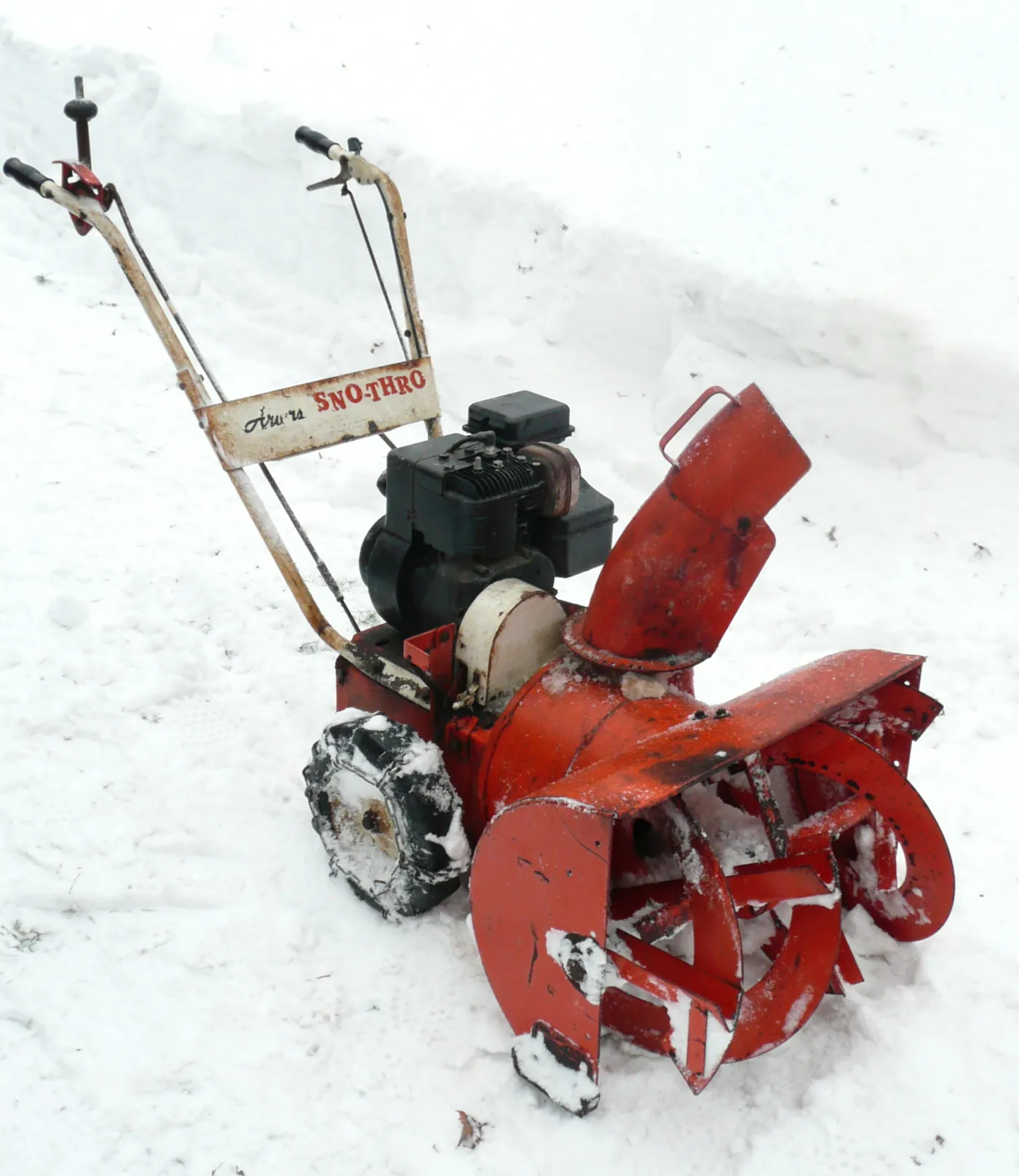
Because the auger touches the ground, it clears right down to the pavement, leaving a thin layer or none at all. It also means the auger helps pull the machine forward as it bites into the snow, which is why many single-stage machines are lightly self-propelled by auger contact alone, and you steer and guide more than you push.
The trade-off is that the auger throws the snow directly, so throwing distance depends on auger speed, and the rubber paddles wear against the pavement. They are replaceable parts, but they need checking each season. Because the auger contacts the surface, single-stage machines work only on paved or similarly hard, smooth ground.
How a two-stage machine works
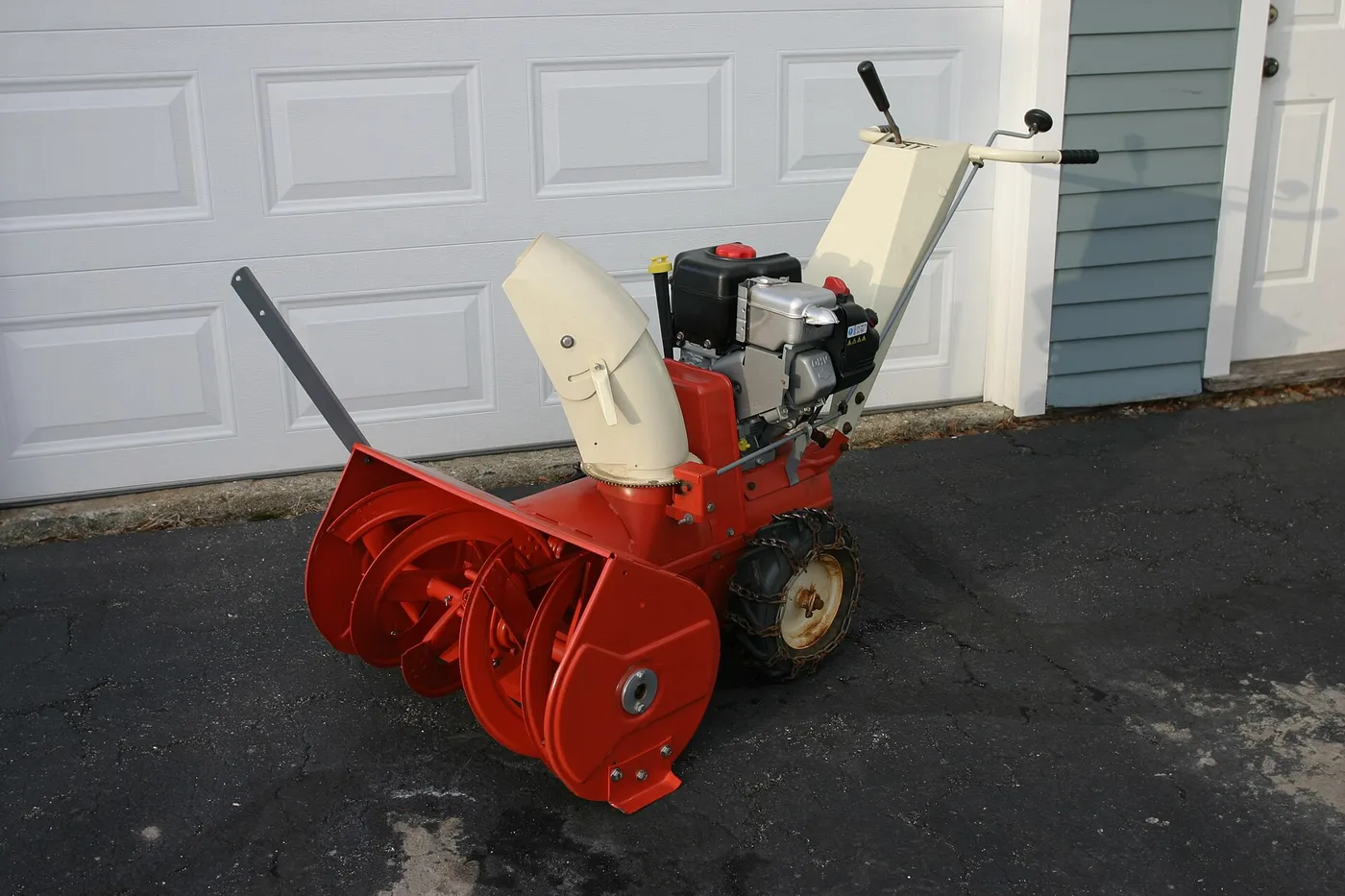
A two-stage machine splits the job. The first stage is a metal auger that breaks up and gathers the snow, moving it toward the middle. The second stage is a high-speed impeller, a fan-like part, that catches the snow from the auger and flings it out through the chute.
The auger does not touch the ground. It sits just above it, with a scraper bar and skid shoes setting the height, so the machine does not rely on the auger to pull it along. Instead, it has powered wheels or tracks that drive the machine forward, often with several forward speeds and reverse.
Splitting the work between an auger and an impeller lets the machine move far more snow and throw it a greater distance. It also lets the machine chew through compacted, heavy or icy snow, including the ridge left by a plow. The cost is weight, size, complexity and the need for more maintenance.
Side-by-side comparison
| Factor | Single-stage | Two-stage |
|---|---|---|
| Snow path | One auger scrapes and throws | Auger feeds a separate impeller |
| Auger contact | Rubber edge touches pavement | Metal auger rides above the surface |
| Drive | Light auger pull, often some wheel drive | Powered wheels or tracks, multiple speeds |
| Surfaces | Paved only | Paved, gravel and uneven ground with care |
| Snow type | Light to moderate, fresh | Deep, heavy, wet, packed, plow ridges |
| Weight and size | Lighter, easier to store and turn | Heavier, bulkier, needs more storage room |
| Clearing to bare surface | Yes, to a thin layer | Leaves a thin layer set by the skid shoes |
| Maintenance | Paddles, belts, fuel or battery care | Shear pins, belts, gearbox, tires, fuel |
Why surface decides it
If your driveway is gravel, crushed stone or loose pavers, a single-stage machine is the wrong tool, full stop. The rubber paddles contact the ground, and any loose stone becomes a projectile. It can fire gravel into windows, cars or people, and it chews the rubber quickly. A two-stage machine with its auger raised on skid shoes avoids that problem.
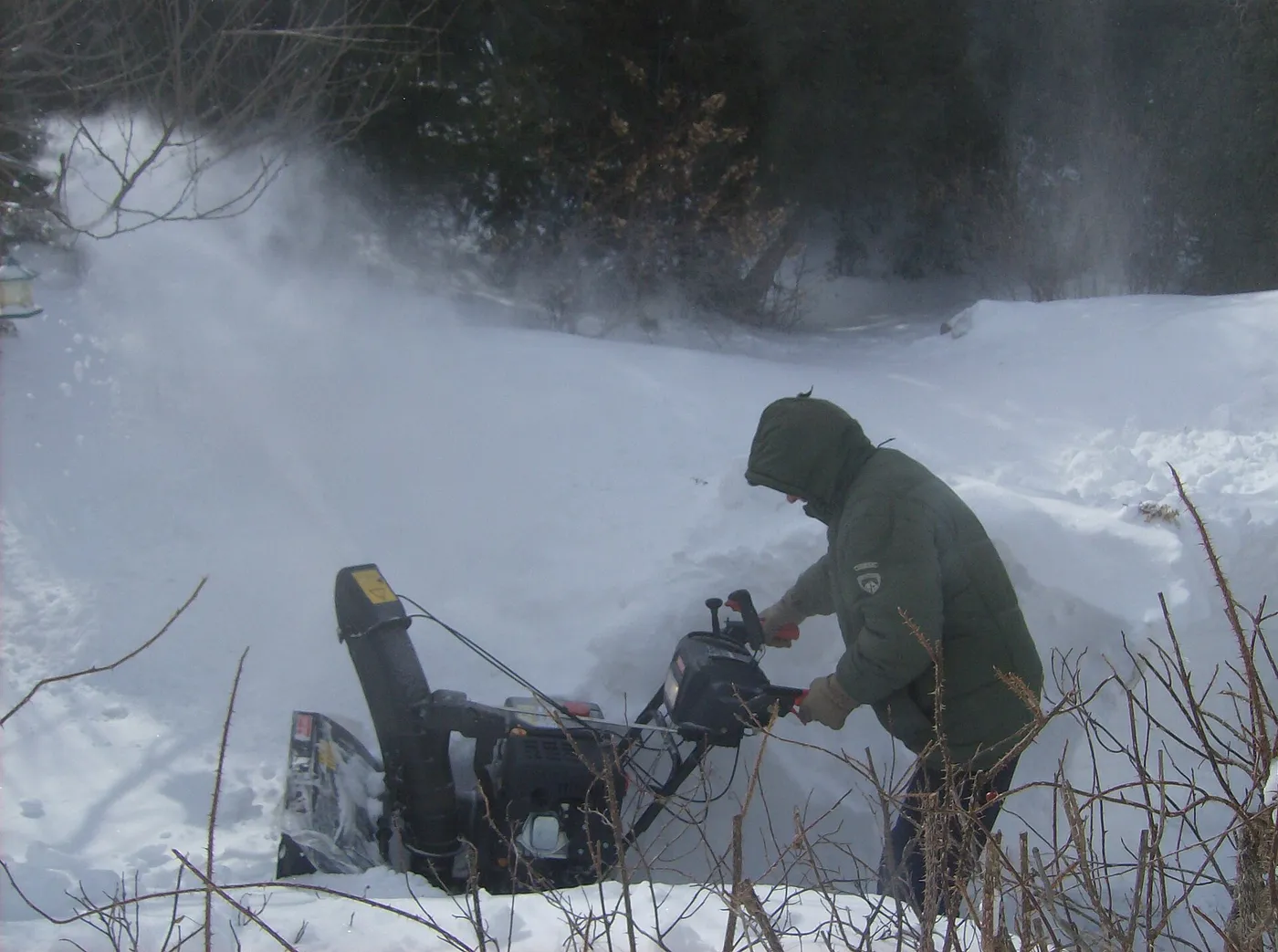
On a smooth asphalt or concrete drive, a single-stage machine works well and leaves a cleaner finish. The scraping action clears nearly to the surface, which helps melting and reduces the ice layer that sticks to the pavement.
Uneven ground, cracked pavement and heaved paving slabs can catch the auger of a single-stage machine and jar the handlebars. Two-stage machines tolerate rough surfaces better, because the height is set by the shoes and the machine is heavy and self-propelled.
How the skid shoes are set is critical in a two-stage machine on any surface, and we cover that procedure in our skid shoe adjustment guide.
Snow depth and snow type
Single-stage machines are happiest with fresh, light snow of modest depth, usually in the single-digit inches, though manufacturers' ratings vary. As depth increases, the auger can only lift so much snow at a time, and the machine slows down and works harder.
Two-stage machines handle depth, weight and consistency that overwhelm a single-stage machine. Wet, heavy snow, packed snow, and the frozen ridge left at the end of the drive by a municipal plow all call for a metal auger and an impeller. The auger breaks the material up and the impeller throws it.
A common failure mode is trying to use a single-stage machine on the plow ridge. The rubber paddles cannot break up that frozen material, so the machine either stalls or bounces. Experienced owners of single-stage machines hand-shovel the ridge first, then use the machine for the rest.
If your region sees large storms or frequent heavy, wet snow, the capacity of a two-stage machine is worth the extra bulk. In areas that get occasional light snow, a single-stage machine is usually enough.
Throwing distance and control
An impeller throws snow farther than an auger alone. That matters on a wide driveway or where you want snow cast over a bank. Most two-stage machines let you rotate the chute and adjust the deflector to aim the stream, often from the handlebars. Single-stage machines have chutes too, but with a shorter throw.
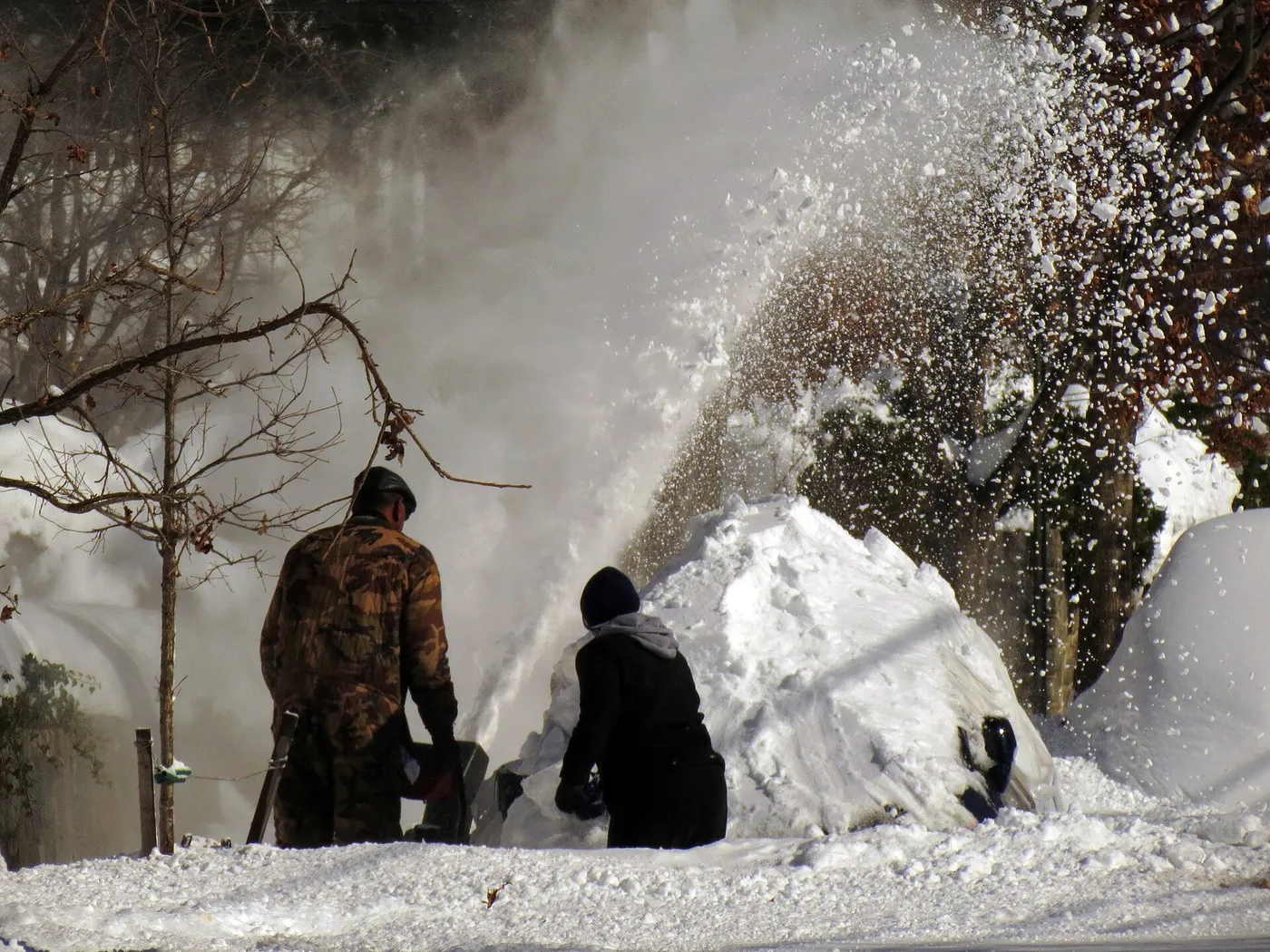
Wind affects both. Throwing into a headwind sends fine snow back at you, and a longer throw does not fix it. Plan your passes so that you throw downwind where possible, and clear from the side nearest the wind source across the drive.
Ownership and maintenance
Single-stage machines have fewer parts. The common wear items are the rubber paddles and the scraper bar, which wear against the pavement, and the belt that drives the auger. Replacing paddles is straightforward, but it must be done when they are worn down, because a worn paddle loses its ability to scrape.
Two-stage machines add more: a gearbox, a friction disc or hydrostatic drive on many models, shear pins on the auger that are designed to snap to protect the gearbox, tires or tracks, and skid shoes that wear down. They are more complex and more capable, and they need seasonal servicing to stay reliable.
Shear pins are a safety and protection feature. If the auger hits a hidden object, the pin breaks rather than damaging the gearbox. Keep spares and follow the manual for replacement. Never substitute a bolt, which defeats the design.
Engine-driven machines of either type need fuel care, an oil change and a spark plug check each season. Electric and battery machines need battery care and a look at the belts and paddles.
Power source is a separate question
Stage describes the mechanism. It is not the same as the power source. You can find single-stage machines that are gas-powered, corded electric or battery-powered, and two-stage machines that are gas or battery. The mechanism decides what snow the machine can move. The power source decides how long it runs and how it feels to use.
Battery single-stage machines are now common and well suited to small paved driveways. Battery two-stage machines also exist, and their limits in deep snow are examined in our battery snow blower article.
If you are looking at cordless machines, our roundups of the best snow blowers and the best 40V snow blowers show how battery platforms and mechanisms combine in practice.
Which one should you buy
| Your situation | Better fit |
|---|---|
| Short paved driveway, light to moderate snowfall | Single-stage |
| Gravel or crushed stone driveway | Two-stage |
| Frequent heavy, wet snow or deep accumulations | Two-stage |
| Plow ridge at the end of the drive every storm | Two-stage, or hand-shovel the ridge first |
| Limited storage space, want light handling | Single-stage |
| Long driveway where speed matters | Two-stage, matched to width and snowfall |
| Sloped driveway | Two-stage with strong wheel drive, for traction |
The table is a guide, not a rule. The best machine is the one matched to your worst typical storm rather than your average one, because the storm you remember is the one the machine must survive.
Slopes, traction and control
A sloped driveway changes the equation. A single-stage machine relies partly on the auger to pull itself forward, and on ice or a downhill it can slide or surge. Powered wheels or tracks on a two-stage machine give traction control, with a choice of forward speeds and a reverse gear, so you can crawl uphill or hold the machine back going down.
Weight helps here too. A heavier machine sits down onto the surface and resists skidding, which is one of the quiet reasons professionals lean toward two-stage models for steep or icy drives. Tire choice matters as well, with chains or aggressive tread helping on packed ice.
If you must use a single-stage machine on a slope, work across and downhill when possible, keep a firm grip on the handlebars, and avoid sudden throttle changes. Never stand downhill of the machine.
Noise, fuel and storage practicalities
Engine-driven machines of either type are loud, and a two-stage machine, with its larger engine, is usually louder. Hearing protection is a sensible habit. Early morning snow clearing in a close neighborhood benefits from a quieter electric or battery option, where the mechanism and the snow allow it.
Fuel adds its own routine. Fresh fuel with stabilizer, a seasonal oil change and a spark plug check keep a gas machine ready. Drain or stabilize the fuel at the end of the winter, and store the machine under cover. Leaving a gas snow blower with old fuel is as risky for the carburetor as it is for any other small engine.
Storage space is the quieter constraint. A two-stage machine can occupy a large footprint in a garage, and its weight makes it awkward to move around. Measure the space and the door before you commit, particularly if you also store a mower and other tools.
Wear parts you will actually replace
The rubber paddles on a single-stage auger and the scraper bar on a two-stage housing are the parts that wear out fastest, and checking them each season is the cheapest way to keep a machine clearing well. Rubber paddles that have worn down noticeably, or have cracked, stop scraping cleanly and leave a film of packed snow. Compare them with a new set or the wear mark in the manual.
On a two-stage machine, check the shear pins and spare them, inspect the drive belts for glazing or cracks, and look at the tire treads and skid shoes. A worn belt slips under load, which feels like a loss of power in heavy snow, and it is a cheap fix compared with a gearbox. Spend an hour on this before the first storm and you will rarely be caught out mid-blizzard.
Check how it feels before you commit
Specifications only go so far. If you can, push a machine around a shop floor before buying. Notice how it turns with the auger engaged lever squeezed, how the chute control moves, and whether the handlebars sit at a comfortable height for you. A machine that feels awkward in the shop will feel worse after an hour in the cold with gloves on.
Ask about parts, too. Paddles, belts, shear pins, scraper bars and skid shoes should be easy to find for the model you choose, since a machine you cannot repair in January is a machine that fails you in the first big storm.
The middle cases
Some owners sit in the middle. A medium driveway, mixed paved and gravel areas, or moderate snowfall with a few big storms can go either way. In that case, think about how much you value convenience compared with capacity. A single-stage machine is lighter, easier to start and quicker to put away, while a two-stage machine rarely struggles with anything.
A practical approach is to size the machine to the area, a topic covered in our snow blower size guide, and then decide on the stage based on surface and snow type. If you cannot decide, the safer choice for a variable climate is the machine that can handle the worst storm.
If you do choose a single-stage, accept its limits: shovel the ridge, avoid gravel, and keep storms from getting too deep before you clear. You can also read about specific cordless options in the 60V snow blower roundup.
Frequently Asked Questions
What is the main difference between single-stage and two-stage?
A single-stage machine uses one auger to scrape and throw the snow. A two-stage machine uses an auger to gather snow and a separate impeller to throw it, with wheels or tracks driving the machine forward.
Can a single-stage snow blower handle gravel?
No. The rubber auger touches the ground and can throw loose stones, damaging property and risking injury. Use a two-stage machine with the skid shoes set to lift the auger above the gravel.
Is two-stage always better?
Not always. A two-stage machine is more capable, but it is heavier, bulkier and needs more maintenance. For a small paved drive with light snow, a single-stage machine is easier to use and often does a cleaner job.
Which clears down to the pavement better?
A single-stage machine, because its rubber auger scrapes the surface. A two-stage machine leaves a thin layer of snow, set by the skid shoe height.
Do two-stage machines need shear pins?
Most do. The pins are designed to break if the auger strikes a hard object, protecting the gearbox. Always replace them with the correct pin from the manufacturer.
How deep can a single-stage machine clear?
That depends on the model, so check the manufacturer's stated capacity. As a general approach, single-stage machines suit modest depths, and for deeper snow you should clear in stages or use a two-stage machine.
Bottom line
Choose by surface first, snow second. Paved drive and manageable snowfall point to a single-stage machine, which is lighter and clears cleaner. Gravel, deep or heavy snow, a plow ridge or a long run point to a two-stage machine with an impeller and powered drive.
Buy for the worst storm you expect, not the average one, and respect the safety rules around augers and chutes. Once you know the mechanism, the product choice becomes much simpler.