
How sizing goes wrong
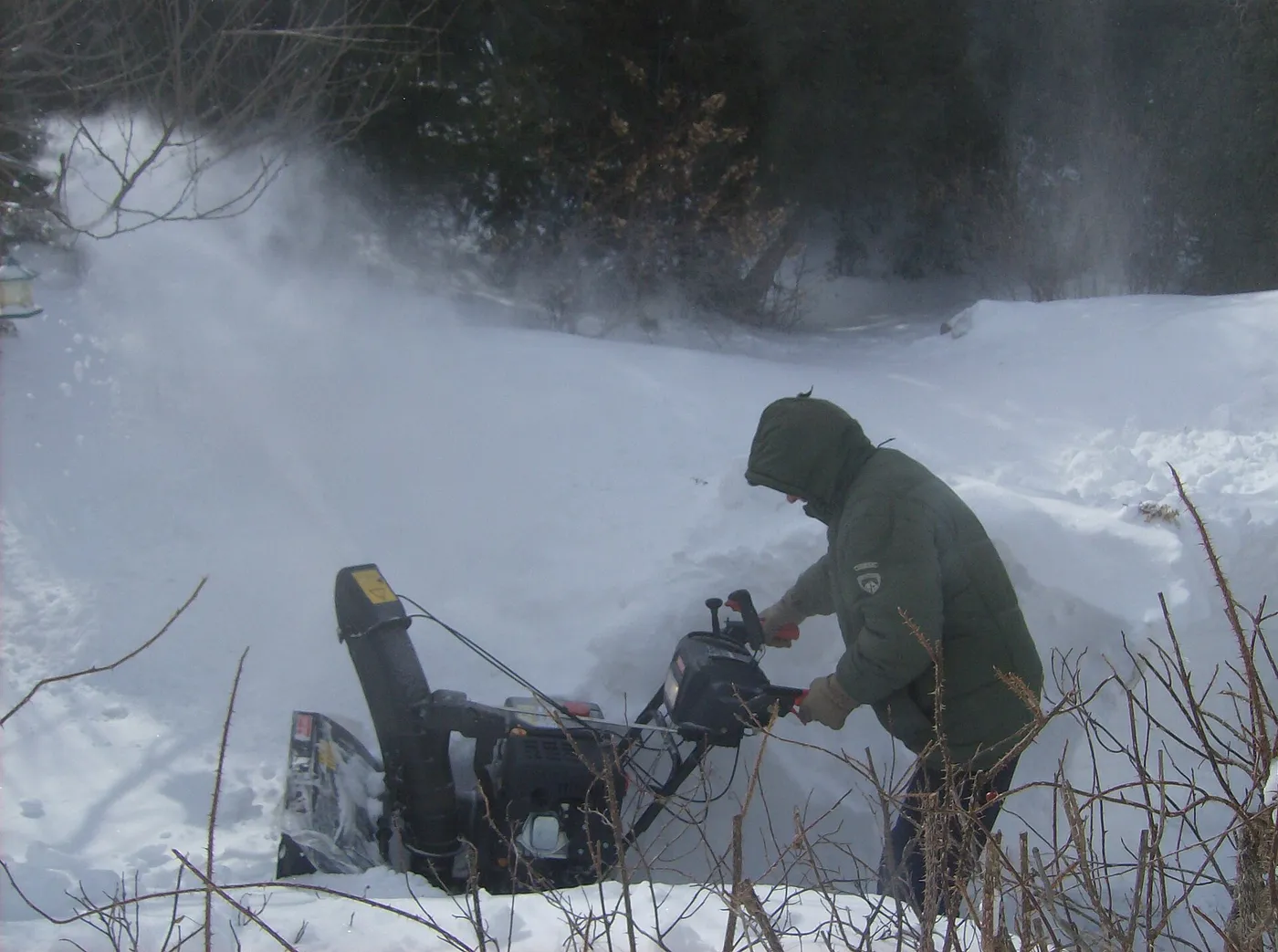
Two mistakes account for most disappointed snow blower owners. The first is buying too small: a narrow machine on a wide, long driveway means many passes, a cold afternoon and a sore back, and the intake is too short to enter a drift without riding over it. The second is buying too large: a big machine on a short drive is awkward to turn, hard to store and more expensive than the job needs.
Size is not one number. It is a set of three, and each answers a different question. Clearing width tells you how many passes the driveway takes. Intake height tells you how deep a snowfall the machine can enter. Drive type and power tell you whether the machine can keep going when the snow gets heavy.
This article owns sizing. The mechanical difference between machine types is covered in our single-stage versus two-stage comparison, and cordless limits get their own treatment in the battery snow blower article.
Clearing width: how many passes you make
Clearing width is the width of the path the auger cuts in a single pass. Single-stage machines typically range from compact widths of around 18 inches to roughly 24 inches or more, while two-stage machines usually span from the mid-20s into the 30s and beyond. Check the exact specification on any machine you consider.
The effect is easy to picture. A car-width drive of roughly ten feet takes a narrow machine many more passes than a wide one. Every extra pass is time spent in the cold and extra distance walked, so on a large area the width of the machine is a direct measure of how long the job takes.
There is a ceiling to the benefit. A very wide machine is heavy, harder to manoeuvre around parked cars and steps, and needs more engine or motor power to fill the width with snow. For the typical suburban driveway, a mid-range width is usually the best compromise.
A simple rule is to estimate your passes. Measure the width of the drive and divide by the machine's clearing width, allowing a little overlap. If the answer is more than five or six passes in each direction, consider going wider.
Intake height: how deep it can go
Intake height is the height of the opening at the front of the housing, which sets the deepest snow the machine can enter in one pass. A machine with a low intake can only take shallow layers, and it will push or ride up on snow deeper than that. A taller intake lets the auger take bigger bites.
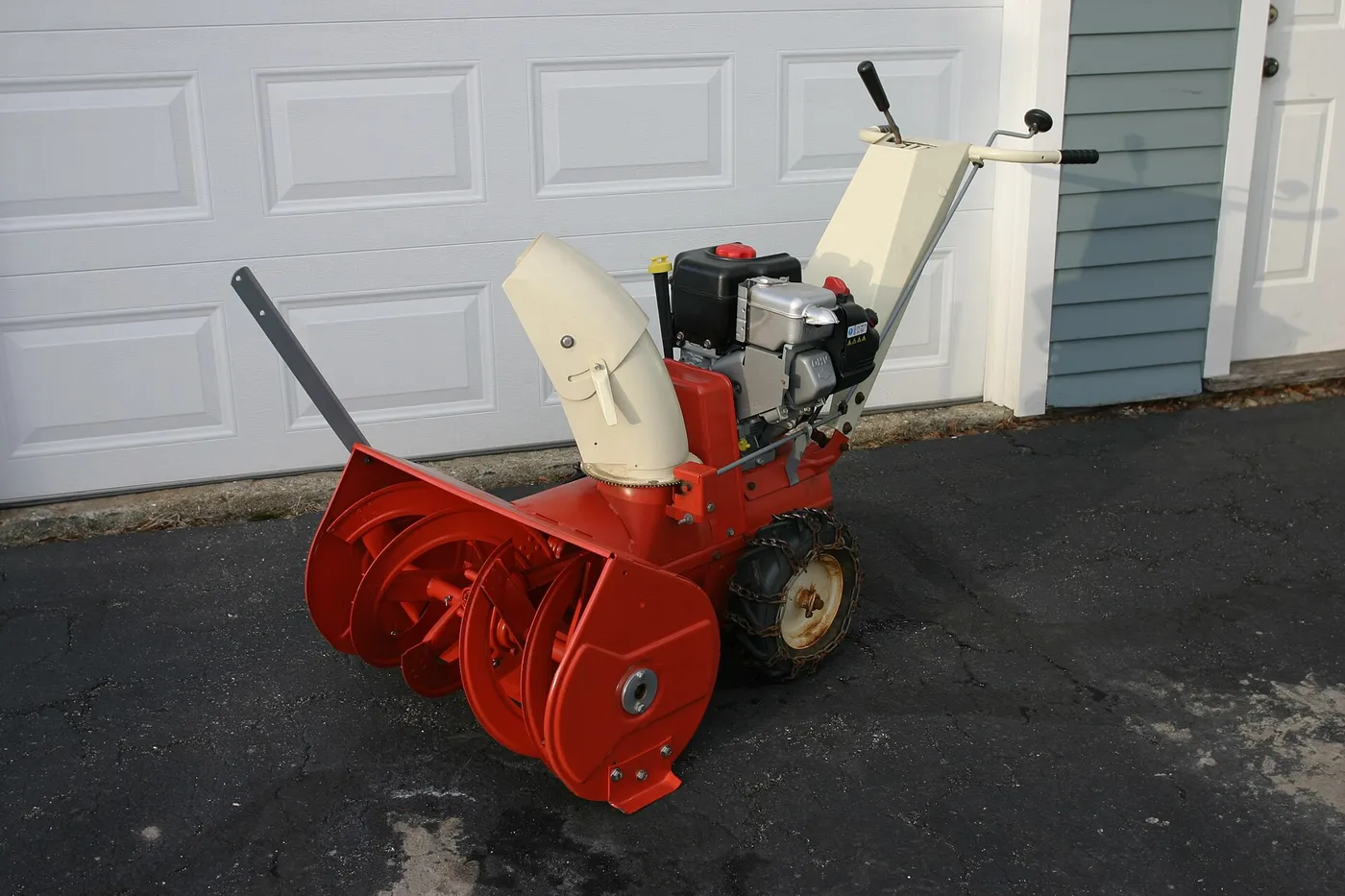
Single-stage machines generally have a lower intake, which is why they suit modest snowfall. Two-stage machines have taller housings and intakes, designed to enter deeper drifts. Look at the intake height on the spec sheet and compare it with the deepest snow you regularly see on your drive.
Depth is not the whole story, because depth and density interact. Eight inches of dry powder is easy, while eight inches of wet, heavy snow weighs several times as much and is far harder to throw. Treat the intake height as the upper bound on depth and judge weight separately.
If your storms regularly leave more snow than the intake, you have two choices. Clear in layers, taking the top off first and going back for the rest, or move to a machine with a higher intake. Layered clearing works, but it doubles the effort.
Drive type and power
Drive type decides whether you push or steer. Non-driven machines require you to push them, which is fine for a light single-stage unit. Self-propelled machines drive the wheels or tracks, and you walk behind and guide. On a long or sloped driveway, powered drive is the difference between a tolerable job and an exhausting one.
Many two-stage machines offer several forward speeds and a reverse. Lower speeds suit deep or heavy snow, because the auger and impeller get more time to throw each bite, while higher speeds suit light snow and travelling between jobs. Some have a drive control that lets you steer by releasing one wheel, which helps turning in tight spaces.
Tracked machines spread weight and grip better on ice and slopes, and they are less likely to slide. Wheels are cheaper and quicker to manoeuvre on flat ground. If your driveway is steep or regularly icy, traction deserves more attention than width.
Power matters too. Engine displacement or motor power sets how much snow the machine can throw at once. A wide machine with a small engine bogs down in heavy snow, so check that the power matches the width.
Driveway length, area and time
Work out your actual area before you shop. Multiply the length by the width of the drive, and add any paths, steps and a parking pad. A rough figure is all you need. Then think about how long you are willing to spend. A machine that finishes in twenty minutes is a different purchase from one that takes an hour.
| Driveway | Typical snowfall | Suggested class |
|---|---|---|
| Short, one car, paved | Light, a few inches at a time | Compact single-stage, narrow width |
| Medium, two cars, paved | Moderate, occasional heavier storms | Wider single-stage, or an entry-level two-stage |
| Long or wide, paved | Moderate to heavy | Two-stage, mid to wide width, powered drive |
| Gravel or crushed stone | Any | Two-stage with adjustable skid shoes |
| Long, sloped or very exposed | Heavy, drifting | Wide two-stage, tracks or good tires, strong engine |
| Rural lane, large area | Heavy | Large two-stage, or consider a tractor attachment |
The table gives starting points, and the right answer shifts with your local snow and your own strength. Use it to eliminate the obvious mismatches.
Matching to your climate
Your local snow is the most important input. Regions with frequent light, dry snow are friendly to compact machines. Regions with heavy, wet snow, lake-effect storms or drifting wind need more power and a taller intake, because the same depth weighs more and the machine works harder.
Look at the biggest storms you remember in recent years, not the typical ones. A machine that handles the big storm will cope with all the smaller ones, while the reverse is not true. If you have one or two huge storms a winter, those are the days the machine has to work.
Also consider the plow ridge. If a municipal plow leaves a dense berm at the end of your drive, a single-stage machine will struggle with it. Either plan to shovel that ridge by hand, or size up to a machine that can break it. The plow ridge is the most common reason owners regret buying a small machine.
Power source and what it means for size
Gas machines can scale to large widths and sustained heavy work, which is why the biggest machines are gas. Corded electric machines are limited to small drives by the length of the cord, and battery machines are limited by capacity and runtime. These limits mean that, for a large drive, the power source may constrain your options before the width does.
Battery platforms have improved quickly, and many cover small and medium drives well. Our roundups show how the voltage classes compare: the 40V class suits lighter jobs, while the 60V and 80V classes aim at heavier work. Runtime under load is the real limit, so compare capacity with the area you need to clear.
If you already own tools on a given battery platform, buying a snow blower on the same platform lets you share batteries, which can offset the cost. Check the combined runtime, though, because snow clearing is a demanding load.
Slope, obstacles and turning space
A driveway is not a flat rectangle. A slope calls for traction, and tracked or well-treaded machines cope better. Tight turning spaces near garages, cars and fences favour a narrower machine, even if the width calculation says you could go wider.
Think about where the snow goes. A machine that throws a long way is handy on a wide yard, but it may throw snow onto a neighbor's property or against a parked car in a tight lot. Check that the chute can aim where you need it, and that the throwing distance matches the space you have.
Consider steps and paths too. A large machine will not climb steps or fit through a narrow gate, so you may need a compact second machine, or a shovel, for those areas. Be realistic about whether you will use the big machine on the front walk.
Weight, storage and who will use it
Bigger machines are heavier, and weight is a real factor in handling. A heavy machine is stable and powerful, but it takes effort to turn in a tight spot and to wheel into a storage corner. If more than one person will use the machine, the weakest user sets the practical limit.
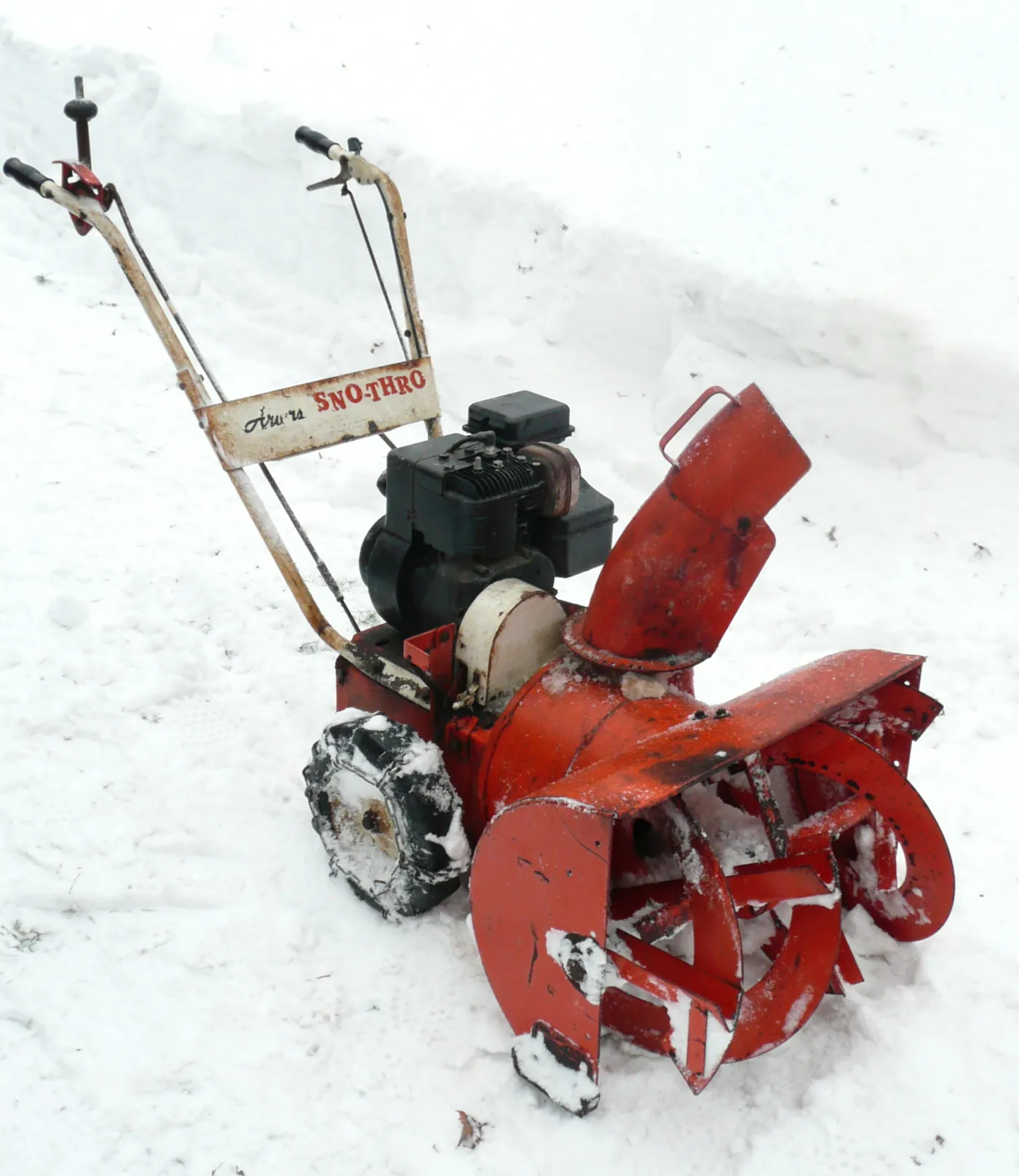
Check the dimensions against your garage or shed, including the door width and the space needed to turn. A machine that does not fit is a machine you leave outside, which shortens its life. Consider a cover, even if there is a roof overhead.
If strength or health is a concern, lean toward easier controls: electric start, power steering assist, a comfortable handlebar height and well-placed levers. Starting effort and control placement matter a lot at the end of a cold day.
A worked example with illustrative numbers
The figures in this example are illustrative, not drawn from any specific model, but the method is real. Imagine a paved driveway that is 40 feet long and 12 feet wide, with a short walkway. A machine with a 24 inch clearing width cuts a path two feet wide, so the drive needs about six passes to cover the width, and each pass is 40 feet. That is roughly 240 feet of walking for one clean sweep, before turns and overlap.
Now compare a 30 inch machine on the same drive. It needs about five passes, a saving of one pass in six, but it is heavier and harder to turn at the garage door. For this drive the width difference matters less than the intake height and drive type, because the passes are short.
Next, imagine the same drive after a heavy storm. If the snow is deeper than the intake, each pass becomes a two-layer job, and the six passes become twelve. That is the moment a taller intake pays for itself. The example shows why width is only one part of the answer.
Finally, imagine a plow ridge across the entry. If the machine cannot break it, you will shovel it by hand every storm, and that ridge becomes the hardest part of the job. Sizing means thinking through the whole job, not only the open area.
Sizing mistakes worth avoiding
The most common mistake is sizing from the dusting. Owners remember the easy days and forget the storm that closed the roads. Buy for the heavy day, and the machine will handle the light ones without complaint.
A second mistake is paying for width and ignoring traction. A wide machine on a sloped, icy drive without good tires or tracks slides sideways, and you spend the storm wrestling it. Traction and drive type matter as much as width on any slope.
A third is ignoring the throw. A machine with a short throw on a wide lawn means snow lands on the area you just cleared and needs a second pass. Check the discharge distance and the chute control, particularly if the machine will need to throw over a bank.
The fourth is forgetting yourself. A machine you cannot comfortably start, steer or store will sit unused. Be honest about your strength, your storage space and the time you are willing to invest, and size accordingly.
A five-minute sizing worksheet
- Measure the length and width of the area to clear, and note the surface type.
- Write down the deepest snow you commonly clear and whether it is usually wet or dry.
- Note slopes, a plow ridge, tight turns and where snow can be thrown.
- Estimate passes by dividing the driveway width by the clearing width of the machines you are considering.
- Pick the intake height that exceeds your typical deep storm, and the drive type that suits your slope.
- Check the machine fits your storage space and that you can handle its weight.
Run through this for two or three candidates and the right class usually becomes obvious. For a broader comparison of what is available in each class, see our snow blower roundup.
Surface and set-up affect real-world size
A machine is only as effective as its adjustment. Skid shoes that are set too low can gouge gravel or scrape pavement, while shoes set too high leave a thicker layer of snow behind. That means two identical machines can appear to clear differently, depending on set-up, so learn the adjustment before you judge a machine too small. Our guide to adjusting skid shoes covers it.
Chute settings matter too. A deflector angled too high throws snow into the wind and back at you, and a chute set too low makes short, heavy piles. Spend a few minutes learning the controls on the first snowfall, when stakes are low.
Frequently Asked Questions
Is a wider snow blower always better?
No. A wider machine clears more per pass, but it is heavier and harder to turn and store, and it needs more power to fill the width. Choose the width that matches your driveway and your ability to handle the machine.
What intake height do I need?
Pick one that exceeds the deepest snow you commonly clear in a single pass. If your storms often exceed the intake, you will need to clear in layers or choose a taller machine.
Do I need a self-propelled machine?
For a short, flat drive with light snow, a lightly driven single-stage machine is fine. For long, sloped or heavy-snow drives, powered wheels or tracks are strongly advisable.
Can I use a battery snow blower on a large driveway?
Possibly, if you have enough battery capacity and the snow is light. Runtime under load is the limit, so compare the battery capacity and the number of batteries with the area you need to clear.
How do I handle the plow ridge at the end of my drive?
A single-stage machine will struggle with a dense ridge, so shovel it first or choose a two-stage machine. Breaking the ridge by hand in layers also works.
Should I size for my average snowfall?
No, size for your biggest typical storm. The machine that handles the worst day will handle every easier one, while an undersized machine fails exactly when you need it.
Bottom line
Choose clearing width for the number of passes you are willing to make, intake height for the deepest snow you face, and drive and power for slope and weight. Short paved drives and light snow suit compact single-stage machines. Long, wide, sloped or snow-heavy properties call for a wider two-stage machine with a taller intake and powered drive.
Size for your worst typical storm, check that the machine fits your storage and your own strength, and treat the plow ridge as a real factor. Do that and the model choice becomes a matter of comparing a few finalists rather than guessing.