
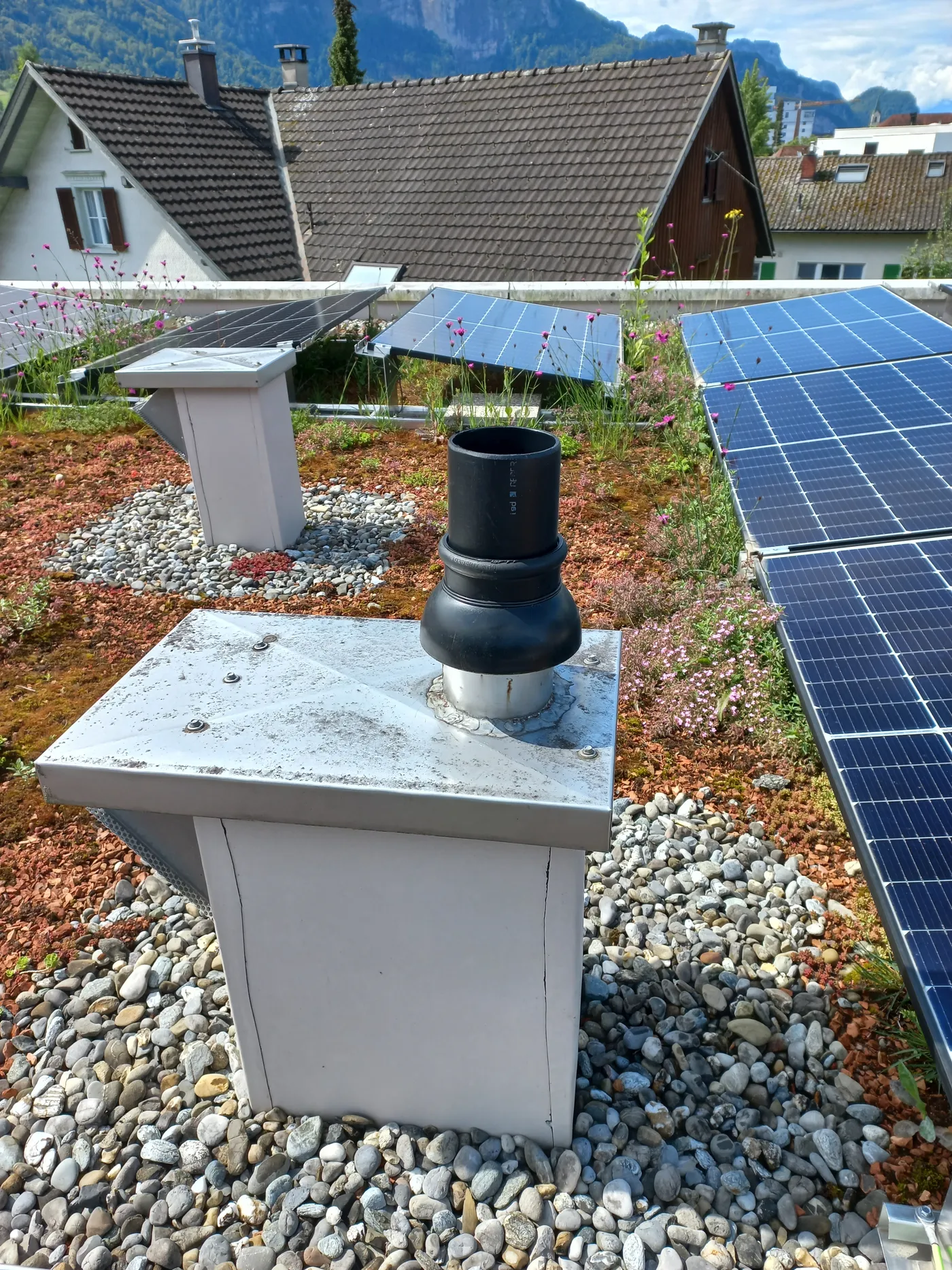
A small shadow can be a large electrical event
A roof vent casts a thin morning shadow over one corner of an RV panel. The rest of the module remains in bright sun, so it is tempting to assume that almost all of its output is still available. That assumption can be wrong. Solar cells are connected into electrical groups, and current through a group can be restricted by its weakest illuminated cells. A narrow shadow may therefore cause a larger loss than the shaded area alone suggests.
Angle creates a quieter version of the same issue. A panel does not stop working when sunlight arrives at an imperfect angle, but it intercepts less direct radiation than it would with the sun more squarely in front of its surface. The result changes throughout the day as the sun crosses the sky and throughout the year as its path rises and falls.
The practical goal is not to maintain one supposedly perfect angle at every moment. It is to place the panel where it receives useful sun during the hours that matter, avoid persistent shade, and use a mounting method that remains safe in wind, rain, travel and maintenance. For a vehicle, security and clearance may justify a flat roof installation. For a portable panel, periodic adjustment may be easy enough to recover more daily energy.
What solar panel angle actually means
Panel angle is usually described with two measurements. Tilt is the angle between the panel surface and the horizontal plane. A panel lying flat has a tilt near zero. A panel standing upright approaches a vertical orientation. Azimuth describes the compass direction the panel faces.
In the Northern Hemisphere, a fixed panel intended to maximize annual energy commonly faces generally south. In the Southern Hemisphere, it commonly faces generally north. That broad rule places the module toward the equator, but the most useful orientation can change when morning or afternoon energy has greater value, when a roof faces another direction, or when local obstructions block part of the sky.
Tilt affects the angle at which direct sunlight reaches the panel. When rays strike the surface closer to perpendicular, the panel captures more direct irradiance per unit area. When rays arrive at a shallow angle, more light is reflected and the same solar beam is spread across a larger effective surface.
Diffuse light from the sky behaves differently from direct beam radiation. A panel can still produce on a cloudy day or when it does not point directly at the sun, but output will be lower and less predictable. Ground reflected light may also contribute, especially to bifacial modules, although that belongs to the separate discussion of rear side collection.
Fixed angle guidelines are starting points
A common starting point for annual production is a tilt roughly similar to local latitude. That is a planning guideline, not a universal installation command. Weather patterns, roof shape, snow, wind, seasonal use and the timing of loads can justify a different angle.
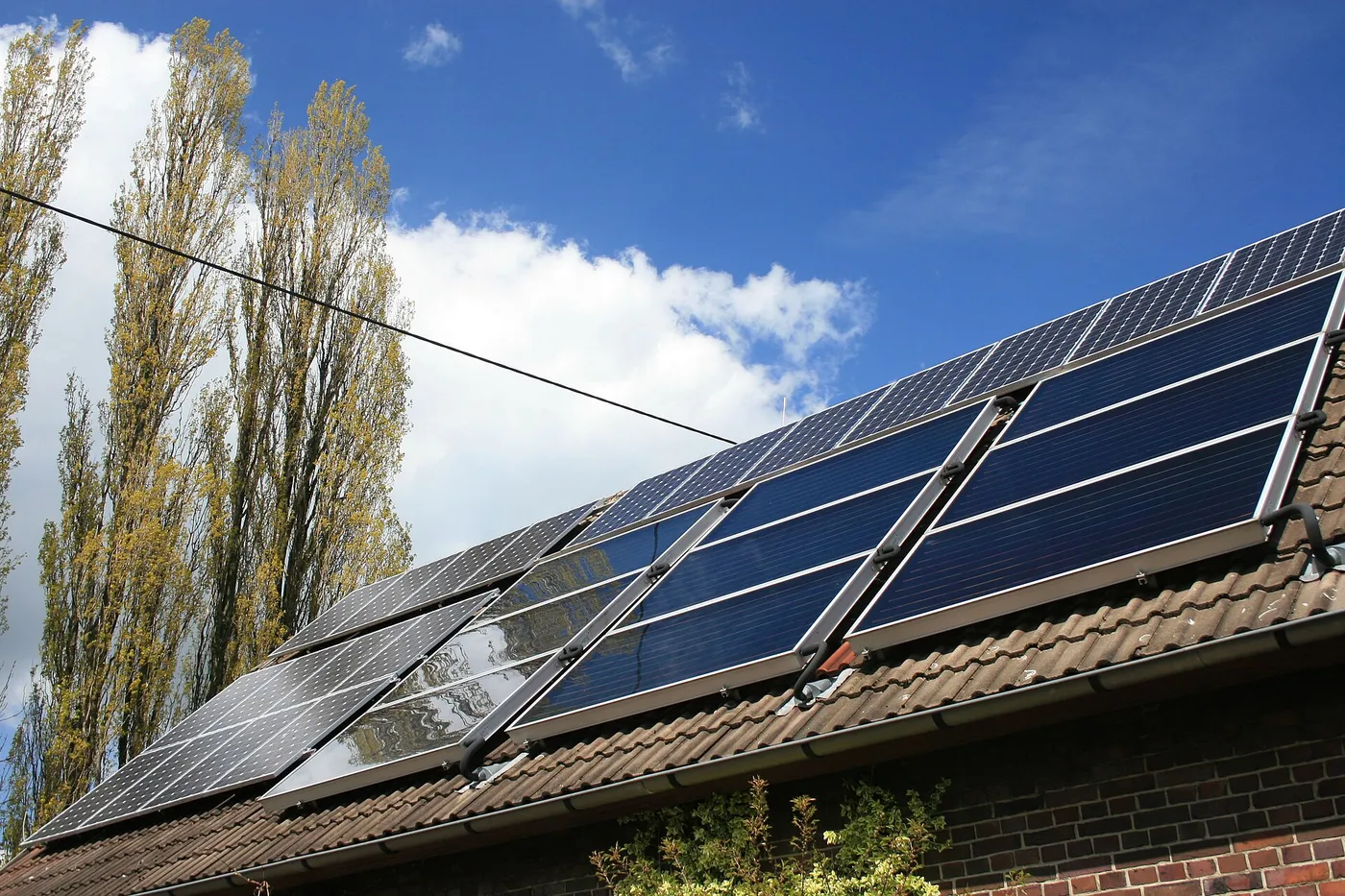
A shallower angle can favor summer production because the sun travels higher in the sky. A steeper angle can favor winter production because the sun remains lower. Steeper panels may also shed snow, rain and some debris more readily, but they present more area to wind. A secure structural design comes before a seasonal energy gain.
An off grid cabin used mainly in winter may benefit from a steeper fixed array. A summer camping trailer may benefit from a shallow portable stand or a flat roof array that receives strong midday sun. A household seeking annual production will use a different objective from a traveler who only needs to restore a battery between afternoon stops.
Before adjusting tilt, define the energy goal. Annual kilowatt hours, winter reliability, morning battery recovery and midday air conditioning support are not the same target. Solar design software and location specific resource data can estimate production across different tilts and directions, but the results are only as good as the shade, weather and system assumptions entered.
Angle options by installation type
| Installation | Typical angle approach | Main advantage | Main limitation |
|---|---|---|---|
| Fixed home or cabin roof | Follows roof pitch and direction | Simple, secure and low attention | Roof geometry may not match the energy goal |
| Fixed ground rack | Selected for site and seasonal objective | Good orientation and rear ventilation | Requires land, structure and protection |
| Flat RV roof | Nearly horizontal for travel clearance | No daily deployment and low profile | Lower winter capture and more surface accumulation |
| Tilting RV mount | Raised only while parked | Can improve collection in low sun | Must be lowered before travel and withstand parked wind |
| Portable folding panel | Stand adjusted toward the sun | Can move away from vehicle shade | Needs setup, security, storage and cable management |
The right approach depends on how often the owner is willing to intervene. A theoretical gain that requires several careful adjustments every day may not be realized if the panel is routinely left flat. A slightly less favorable fixed position can produce more dependable energy when it is always deployed and never forgotten.
Why RV roofs often favor flat mounting
A fixed flat RV panel trades angle optimization for simplicity. It can collect whenever daylight is available, requires no ground setup, and remains connected while the vehicle is parked. A low profile installation also reduces wind exposure and avoids a tilted panel being left raised before travel.
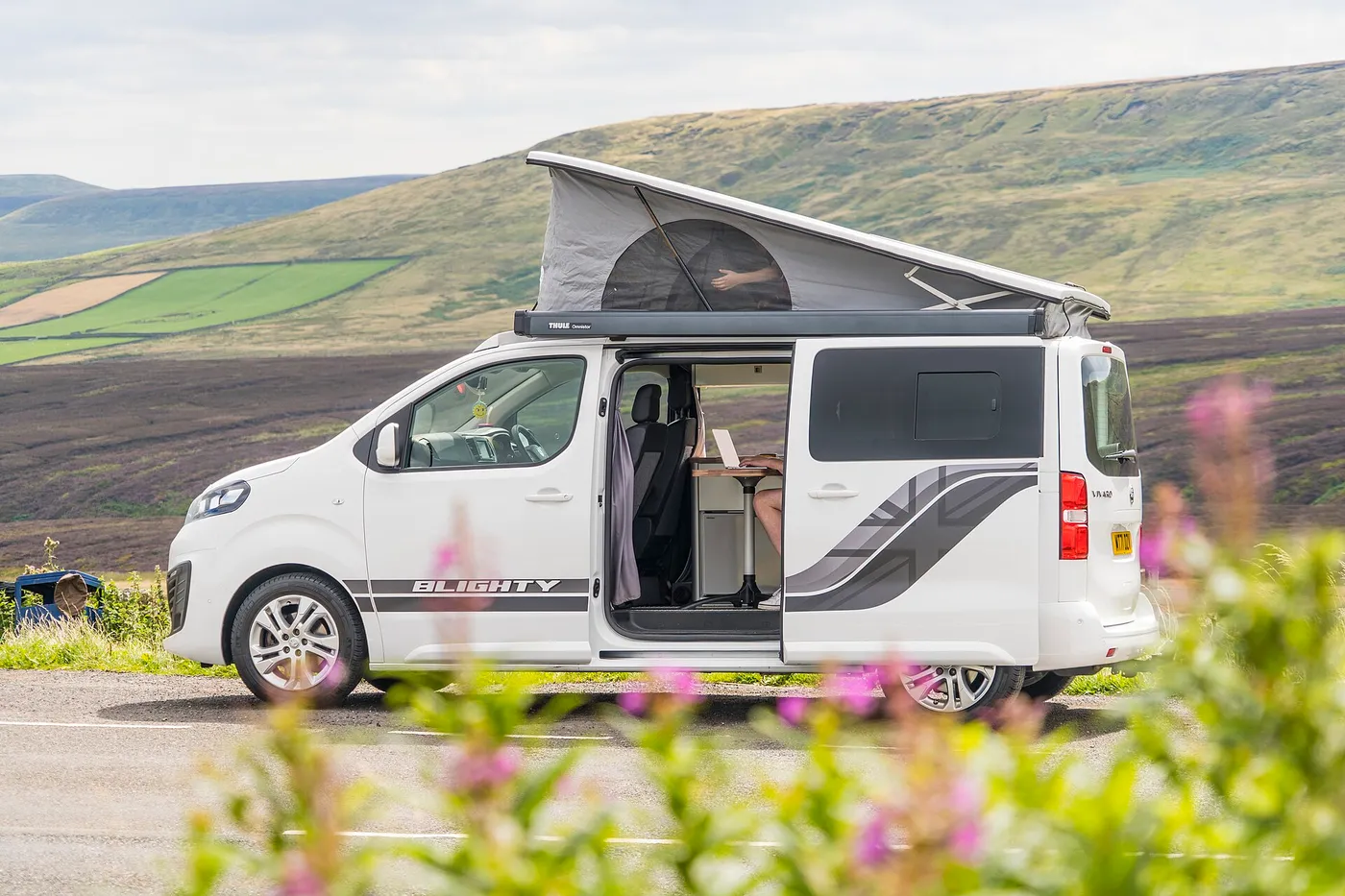
The compromise is weaker collection when the sun is low and a greater tendency to retain dust, pollen, leaves or standing water. Flat panels may also run warmer when mounted with limited airflow. Heat reduces silicon module voltage and can lower power compared with the nameplate condition.
Roof layout may matter more than the nominal tilt. Air conditioners, vents, antennas and roof racks create shade that moves across the array as the sun changes position. A panel placed close to a tall obstacle can lose morning or afternoon production even when its midday exposure looks clear.
Map the roof before choosing panels. Include equipment height, required service clearance, walking paths, cable entry points and the shadow direction at several times of day. The best RV solar panels guide helps compare product dimensions once those usable rectangles are known. A panel with excellent efficiency is still a poor choice if its shape forces it into persistent shade.
A tilting mount can improve low sun collection when the RV stays parked for extended periods. It also adds hinges, support arms, wind loads and an operating procedure. Any tilting system needs a positive travel lock and a reliable reminder to lower it. Never raise a roof panel when the mounting system or weather guidance does not permit it.
Portable panels make angle adjustment easier
A folding or suitcase panel can be placed in open sun while the vehicle remains under trees. That separation is often its biggest advantage. The panel can face morning sun, then be repositioned later without moving the campsite.
Frequent adjustment is optional. One well chosen position that remains unshaded for the main charging window may be more practical than following the sun every hour. Watch the controller or power station input after a change, but remember that passing clouds and battery charging stages can alter the reading. A single higher moment does not prove the position will deliver more daily energy.
Stands must be stable on uneven ground and secured against wind. A panel can act like a sail. Follow the product's permitted angle and anchoring guidance, keep cables out of walking paths, and avoid placing the panel where vehicles can cross the conductors. Portable equipment should not block access roads or extend into a neighboring campsite.
The best foldable solar panels guide covers packed size, stand design and travel convenience. Small budget panels appear in the solar panels under 50 roundup, but placement still controls whether their limited collection area receives useful sunlight.
How partial shade cuts output
A photovoltaic cell produces current according to the light reaching it. Cells connected in series must carry the same string current. If one cell is heavily shaded, it can restrict the current available from the group. It may also be driven into reverse bias, which can create local heating.
Modules use bypass diodes to provide an alternate current path around groups of cells. When a group is badly shaded, its diode can conduct and remove that section from useful production. This protects the module and lets the remaining groups contribute, but it also means a shadow over a small area can bypass a much larger section.
The loss depends on cell layout, bypass diode arrangement, shadow direction and operating conditions. A narrow shadow crossing cells in several groups can be more harmful than a shadow covering the same area within one group. Half cut and shingled designs can behave differently, so blanket percentage claims are unreliable.
Shade on one panel can also affect other panels, depending on whether the array is wired in series or parallel and how the controller tracks the power point. The dedicated series versus parallel solar wiring article explains that array behavior. This article's placement rule remains simple: avoid shade before relying on wiring to manage it.
The shade sources people miss
Trees are obvious, but many losses come from small nearby objects. A vent cap, antenna, roof rail, satellite dish, air conditioner or open hatch can cast a sharp shadow. Flag poles, utility lines and neighboring structures can create thin shadows that move across multiple cell groups.
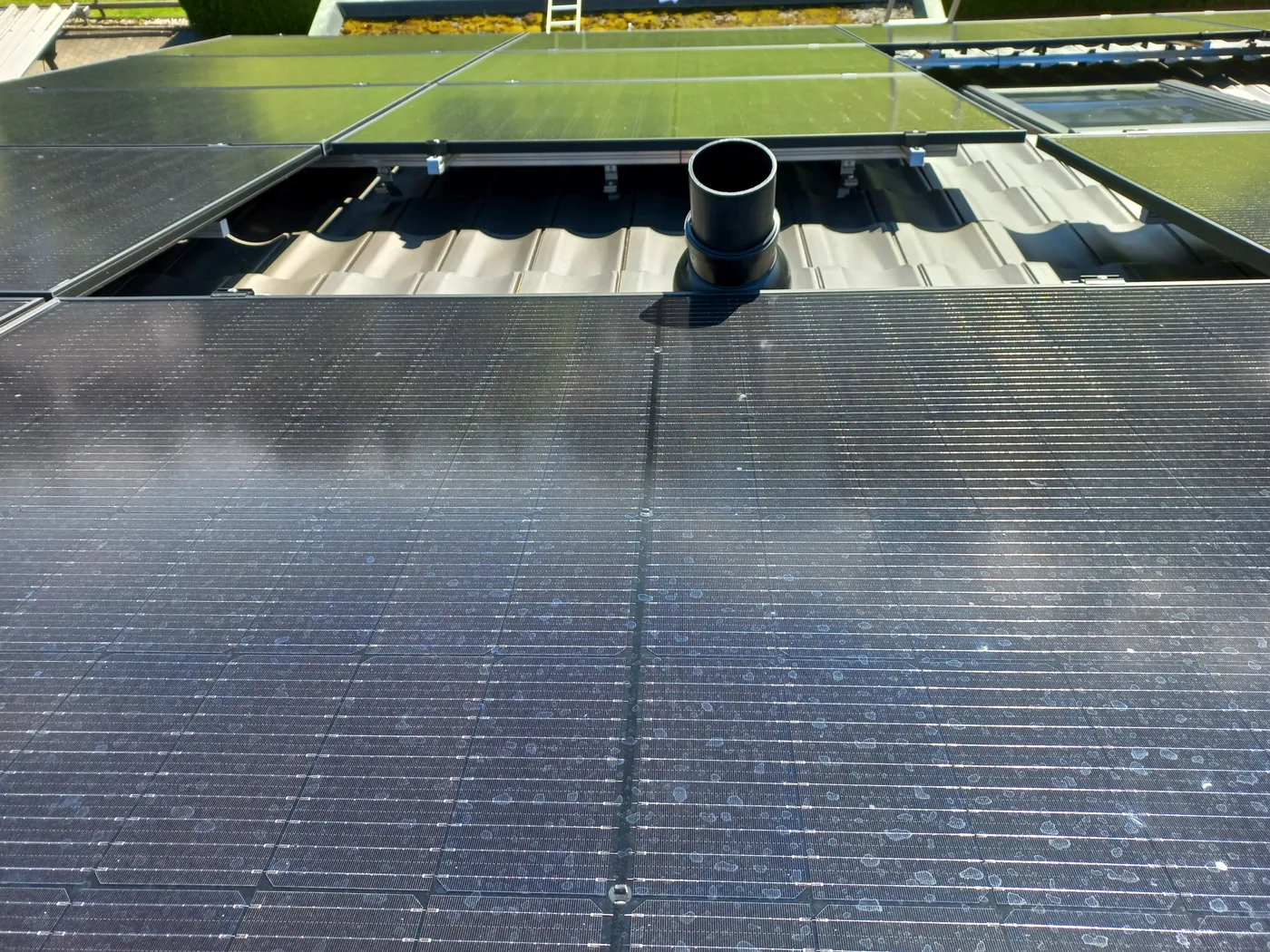
Dirt is a form of shading too. Bird droppings, leaves and concentrated debris can block a small group of cells. Uniform dust usually creates a broad reduction, while an opaque spot can create a stronger mismatch. Inspect modules according to the manufacturer guidance and clean them only with approved methods.
Snow can cover part or all of a panel. A steeper angle may help shedding, but climbing onto a slippery roof to clear it can be more dangerous than the temporary production loss. Never use metal tools or methods that can scratch glass or damage wiring.
Self shading matters on adjustable arrays. One row can shade another when the sun is low if spacing is insufficient. On a portable setup, a stand, handle or cable should not cross the active surface. Even a translucent object can reduce irradiance and create mismatch.
A practical shade survey
Begin with observation, not a panel purchase. Visit the proposed location in the morning, near solar noon and in the afternoon. Note where shadows fall and which hours are important for charging. Repeat the assessment in another season if the installation is permanent, because sun paths and tree foliage change.
For an RV, test more than one parking orientation. A campsite that appears sunny may put the roof array behind an air conditioner shadow when the vehicle points in a particular direction. Portable panels provide more flexibility, but their cable length and voltage drop limit how far they can be moved.
Photographs taken from a fixed position can document shadow movement. Dedicated solar path tools can estimate seasonal obstructions, but they do not replace checking the actual roof equipment. Keep the survey focused on the usable collection window, not only the brightest moment of the day.
If two locations are available, compare daily energy rather than the highest watt reading. The article on solar panel output explains why temperature, battery state and charging stage can distort instantaneous comparisons. A logging controller or power station may provide a more useful daily total.
Seasonal adjustment without chasing perfection
A ground or portable array can use a steeper tilt in winter and a shallower tilt in summer. That adjustment follows the seasonal solar path. The exact best angle depends on latitude, local weather and the desired production period, so a universal pair of numbers should not be treated as a rule.
Adjustment frequency should match the installation. A permanent rack may have a few engineered positions. A folding panel may allow continuous stand adjustment. An RV roof mount may remain flat because accessing it is unsafe or inconvenient. Daily output can still be adequate if the array was sized with that flat mounting loss in mind.
Measure repeatable changes, not impressions. Record battery state, weather, panel temperature and daily energy before concluding that an angle change produced a certain gain. Clouds can overwhelm the effect of a modest tilt adjustment.
Do not loosen structural fasteners merely to experiment. Use only adjustment points intended by the mounting system. Retorque hardware to the specified value and inspect supports for movement, corrosion or cracking.
Orientation can follow the load
Facing a fixed panel toward the equator often supports maximum annual collection, but the timing of energy can be important. An east leaning orientation favors earlier production. A west leaning orientation favors later production. A battery system can store energy across the day, yet an off grid setup may still benefit from production that overlaps its strongest loads.
An RV traveler who drives in the afternoon may prefer strong morning charging. A cabin with an evening load may value afternoon recovery. These objectives can justify an orientation that produces slightly less annual energy but better supports the actual schedule.
Portable arrays make this choice flexible. Roof arrays are constrained by the vehicle orientation and available surfaces. Installing modules on opposing slopes can spread production across the day, but mismatch and controller architecture need careful design. This placement article does not replace array electrical calculations.
Angle and shade belong in the energy estimate
A nameplate watt total assumes standardized conditions. It does not include a flat RV roof, tree shade, winter sun or cable loss. When estimating daily energy, use the actual orientation and a realistic shade assumption. Do not size a system as if every rated watt will appear for a fixed number of perfect hours.
General array sizing belongs in how many solar panels do I need. RV specific sizing belongs in the separate RV system article. The placement contribution is to describe the collection conditions those calculations must reflect.
When shade is intermittent, design around the recurring pattern rather than the best day. If the only roof area is shaded for half the charging window, a portable panel may be more useful than adding another roof module in the same shadow. If portable deployment is rarely practical, a larger fixed array may still deliver more dependable energy despite imperfect angle.
Electrical and roof safety
A solar panel produces voltage whenever light reaches it. Switching off an inverter or battery does not make an illuminated array inactive. Follow the module, controller and disconnect procedures before working on conductors. Do not separate connectors under load unless the equipment is specifically designed and instructed for that operation.
Use correctly rated conductors, connectors, overcurrent protection and disconnects. Protect cables from sharp roof edges, movement, ultraviolet exposure, heat and water entry. A longer cable used to reach open sun must still meet voltage drop and current requirements.
Roof work creates fall hazards. Do not climb onto an RV or building roof merely to make a minor angle adjustment unless safe access and fall protection are available. Panels and stands can become airborne in wind. Follow structural and mounting instructions, and lower adjustable RV panels before travel.
Never concentrate reflected light onto a standard panel or improvise mirrors to compensate for shade. Unexpected irradiance and heat can damage modules or create a fire hazard. Move the panel or change the placement plan instead.
Frequently asked questions
What is the best angle for a solar panel?
There is no single best angle for every location and goal. A tilt near local latitude is a common annual production starting point for a fixed array. Summer use may favor a shallower tilt, while winter use may favor a steeper one. Roof geometry, wind, snow and shading can justify another choice.
Do RV solar panels need to be tilted?
No. Flat mounted RV panels can provide useful charging with less setup and a low travel profile. Tilting may improve collection when the sun is low, but it adds hardware, wind exposure and an operating procedure. The system should be sized for the mounting method that will actually be used.
How much output is lost in shade?
The loss cannot be predicted from shaded area alone. Cell connections, bypass diode groups, shadow direction, array wiring and controller behavior all matter. A narrow shadow crossing several cell groups can cause a disproportionate reduction.
Is morning or afternoon sun better?
Equal irradiance at equal panel temperature can produce similar power, but real conditions differ. Morning panels may be cooler, while afternoon orientation may better overlap certain loads. Choose the period that supports the energy plan and avoids local shade.
Should portable panels be moved during the day?
Moving them can improve collection, but it is not always necessary. A stable, unshaded position through the main charging window may be more practical. Reposition only when it can be done safely without creating cable or wind hazards.
Does rain clean a flat solar panel?
Rain can remove loose material, but a flat panel may retain water, pollen, leaves or concentrated deposits. Inspect it according to the manufacturer guidance and use only approved cleaning methods. Persistent opaque debris can create localized shading.
Bottom line
Solar panel angle affects how directly sunlight reaches the module, but shade can create the larger and less intuitive loss. Start by finding the clearest usable sky, then choose a tilt and direction that fit the season, mounting structure and timing of the loads. Flat RV panels trade some low sun performance for reliable deployment, while portable panels make shade avoidance and adjustment easier. Treat nameplate power as a reference, include real placement losses in the energy estimate, and never compromise structural or electrical safety to chase a small angle gain.