
The rear side is not free power
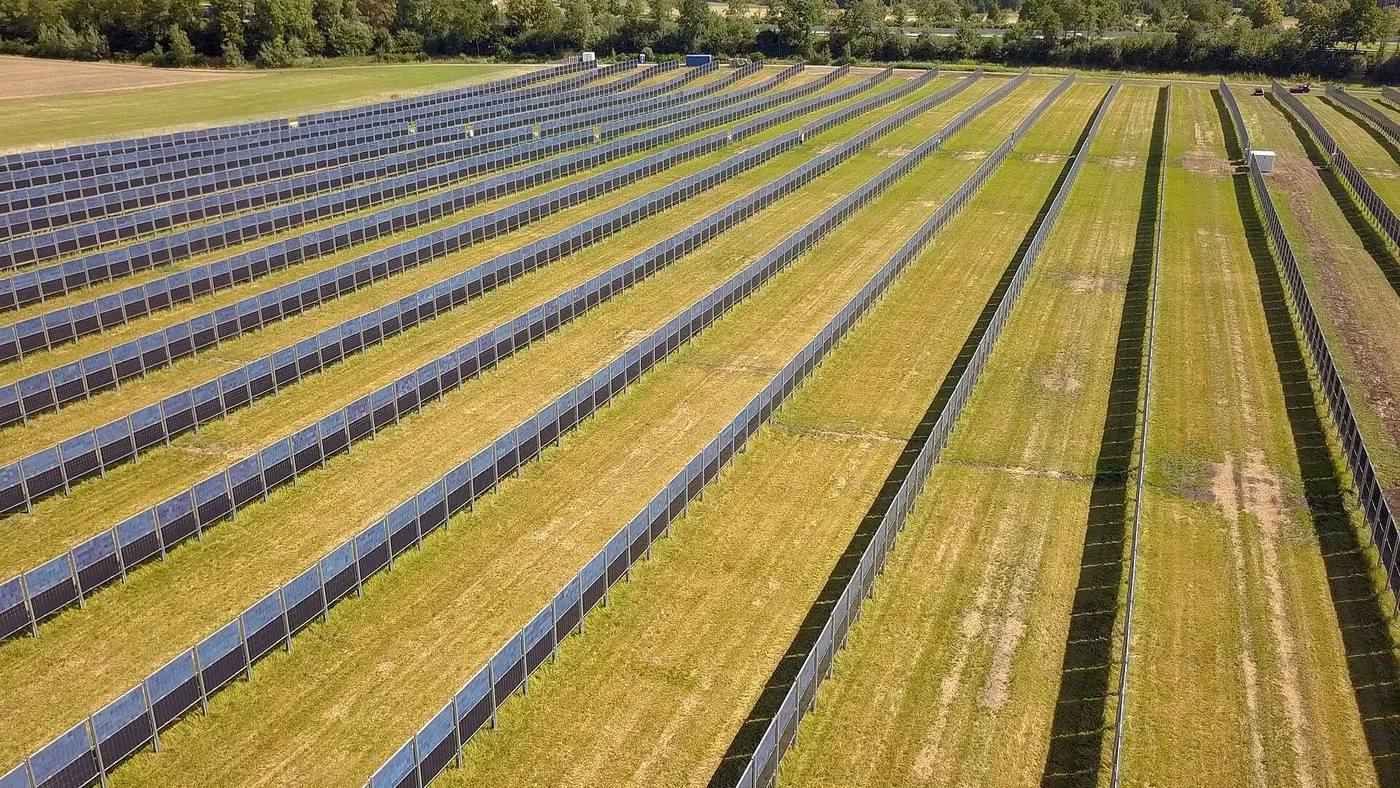
A bifacial module can convert light on both faces into electricity. That sounds like a simple promise of more power, but the rear surface only contributes when light actually reaches it. A module installed almost flush over a dark roof may receive little useful rear irradiance. The same module elevated above a bright, open surface can have a much better opportunity to collect reflected and diffuse light.
This distinction is the key to understanding bifacial solar panels. The technology creates a second collection surface, not a guaranteed energy bonus. Rear-side performance depends on the physical scene around the module: clearance, ground color, mounting rails, nearby objects, row spacing, sun position, and diffuse sky light. A sales claim that omits those conditions is incomplete.
For an RV owner, the question is not merely whether bifacial cells are advanced. It is whether the planned mounting location leaves the rear face exposed to useful light without compromising structural security, roof access, or wind resistance. For a portable panel, the question is whether the stand and deployment surface allow light behind the panel. This article stays with the module and its immediate mounting environment. It does not repeat array sizing or charge controller calculations.
How a bifacial module is built
A conventional monofacial module is designed primarily to accept light through its front. Its rear surface may use an opaque backsheet. A bifacial module uses cells that can respond to light from both sides and a rear construction that lets light reach those cells. Many products use glass on both faces, although transparent backsheets also exist.
The cells and electrical connections remain sealed inside the laminate. The front face receives direct, diffuse, and reflected sunlight in the familiar way. The rear face receives light from the ground, roof, nearby surfaces, and portions of the sky visible behind the module. Both contributions feed the same module circuit.
Bifacial construction should not be confused with a separate panel mounted back to back. It is one module with two optically active faces. It should also not be confused with a solar tracker. A fixed bifacial module does not move automatically, although bifacial technology can be used on tracking structures.
Cell type and rear access are separate ideas. Many current bifacial products use monocrystalline cells, but the important feature is that the cell and module construction permit rear collection. The module datasheet should identify whether the main nameplate rating represents front-side power only and how the manufacturer reports bifacial characteristics.
Bifacial vs monofacial at a glance
| Feature | Bifacial module | Monofacial module |
|---|---|---|
| Active light collection | Front and rear surfaces | Primarily the front surface |
| Rear construction | Transparent rear glass or suitable transparent backsheet | Often an opaque backsheet |
| Main installation dependency | Needs rear light access to create added yield | Rear illumination does not add meaningful cell output |
| Mounting sensitivity | Rails, roof clearance, shade, and surface reflectivity affect rear gain | Mounting still affects heat and front shade, but not rear collection |
| Rating interpretation | Front rating and bifacial data must be read carefully | Nameplate power is normally interpreted from front illumination |
| Best fit | Open mounting with useful reflected light behind the panel | Close roof mounting or locations with little rear exposure |
The table does not mean a bifacial panel is automatically superior. A high quality monofacial module can produce more useful energy than a poorly placed bifacial one. Compare complete modules, their front efficiency, dimensions, thermal behavior, weight, electrical limits, and installation requirements.
Albedo controls the reflected light supply
Albedo describes the fraction of incoming light that a surface reflects. A bright surface sends more light back toward the rear of a module than a dark, absorptive surface. Fresh snow can be highly reflective. Light gravel, pale concrete, and some roof coatings can provide useful reflection. Dark asphalt, soil, vegetation, and many RV roof materials may return less light.
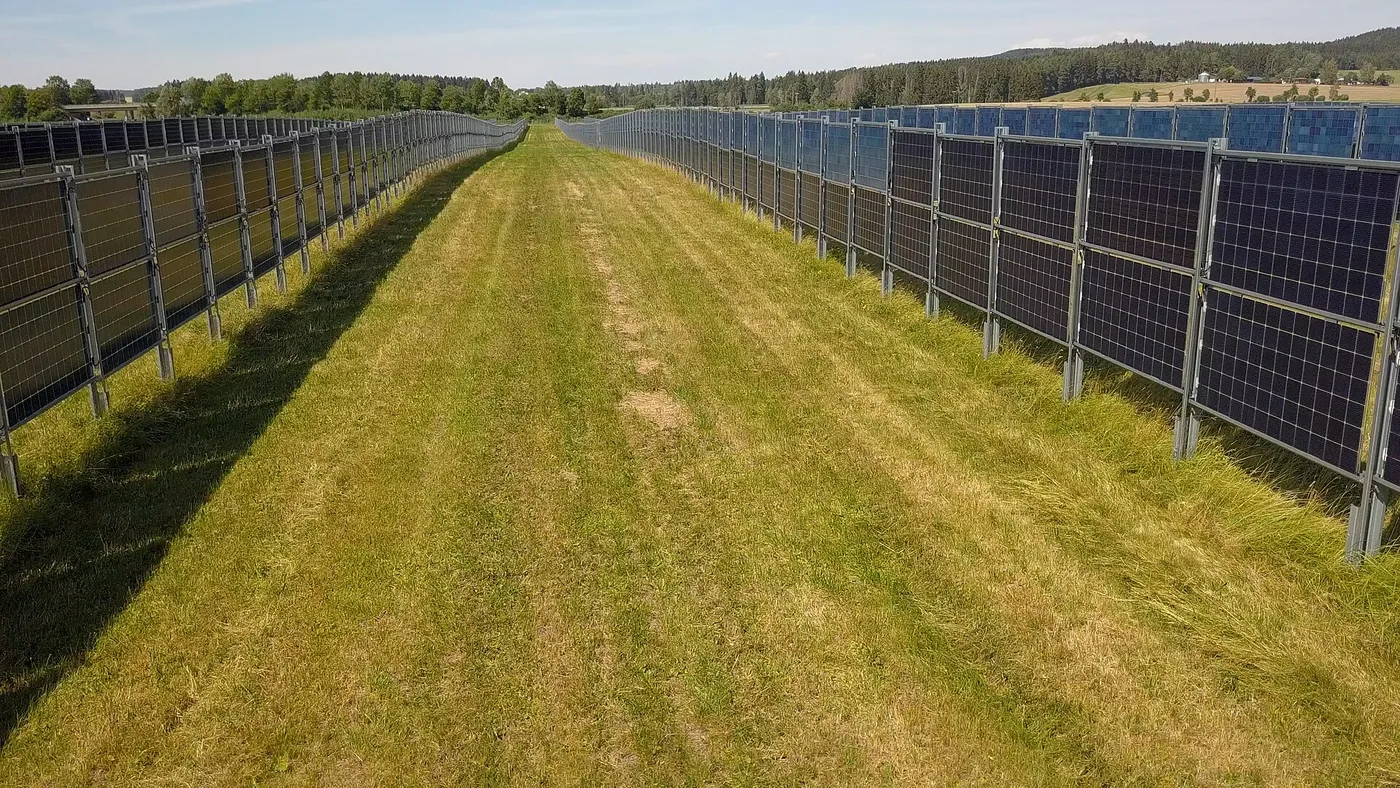
Albedo is not a fixed promise for an entire location. A surface can become wet, dirty, covered by leaves, shaded, or seasonally changed. Snow can create strong reflection when present, then disappear. Grass changes with moisture and growth. A campsite may place the same portable panel over pale sand one day and dark forest soil the next.
The module sees only reflected light that reaches its rear face. A bright surface hidden by a solid mounting tray provides little benefit. Likewise, the reflected light must arrive at useful angles across the rear area. A narrow bright strip under one edge does not illuminate the whole module evenly.
Clearance and height change rear uniformity
Space behind a bifacial module allows reflected and diffuse light to spread across the rear. When the panel sits very close to a surface, the viewing angle is restricted and mounting hardware can cast concentrated shadows. More clearance can improve the uniformity of rear illumination, although the ideal height depends on the module, tilt, surface, and surrounding geometry.
On an RV roof, increasing clearance creates tradeoffs. A taller installation may expose the panel and brackets to greater wind forces, raise the vehicle profile, interfere with roof equipment, and make branch contact more likely. The roof and mounting system must support travel vibration and aerodynamic loads. Rear gain cannot justify an improvised elevated rack.
Portable panels offer more freedom. A stand can raise and tilt the panel over a reflective area, and the owner can move it away from vehicle shade. However, a larger gap also lets wind act on both faces. Stakes, ballast, or another approved stabilizing method may be necessary, and the panel should be folded or stored when conditions exceed its instructions.
Clearance can also support airflow and lower cell temperature. That thermal benefit applies to both bifacial and monofacial rigid modules. It should not be counted as rear-side gain, even though both effects may improve output compared with a hot flush-mounted panel.
Mounting hardware can shadow the back
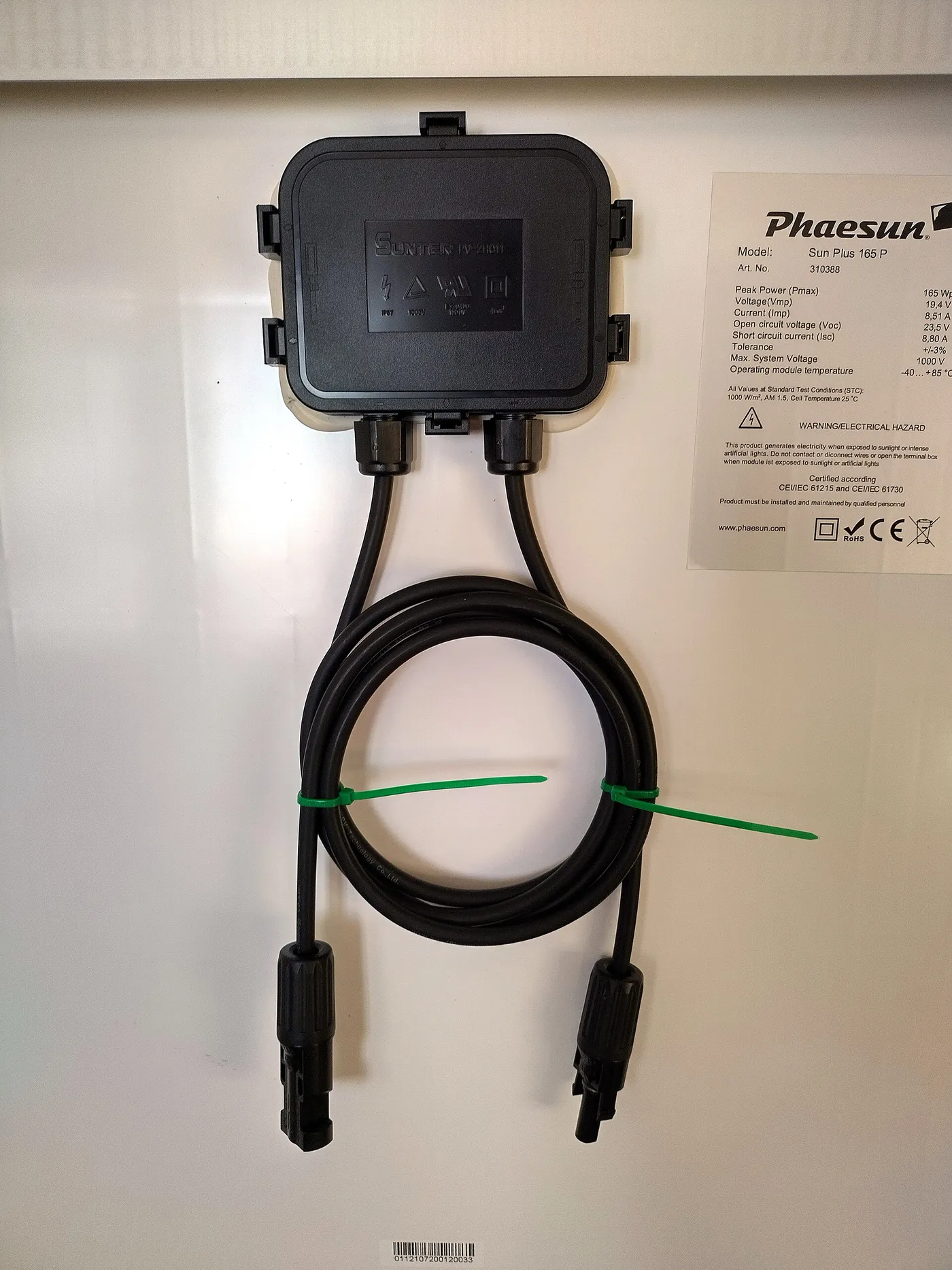
Rails, crossbars, junction boxes, cable loops, roof racks, and support plates can block rear light. The obstruction may be small in total area but important if it shades a sensitive part of the cell circuit. Hardware layout should follow the module mounting zones while preserving as much open rear area as practical.
A solid roof directly beneath the module is itself a large part of the rear view. If that roof is dark and the gap is shallow, the panel may operate mostly as a front-facing module. Painting or covering a roof solely to chase bifacial gain can create compatibility, heat, adhesion, and warranty issues. Any roof treatment must be approved for the vehicle and roofing membrane.
Do not drill new frame holes to reposition brackets. The panel manufacturer defines acceptable clamp zones and fastener locations. Altering the frame can weaken it, damage the laminate, and affect warranty coverage. The correct response to an obstructive mounting design is a compatible rack, not modification of the module.
Cable management deserves equal attention. Loose cable under a panel can rub, cast a moving shadow, trap debris, or contact a hot roof. Secure conductors with UV-resistant hardware intended for the environment while maintaining bend radius and service access.
Tilt and orientation affect both faces
Tilt changes the front angle of incidence and the portion of the ground visible to the rear. A vertical bifacial panel can receive light from opposite sides at different times of day, while a tilted module may combine strong front production with ground reflection. The best geometry depends on the energy goal and site, not on a universal bifacial angle.
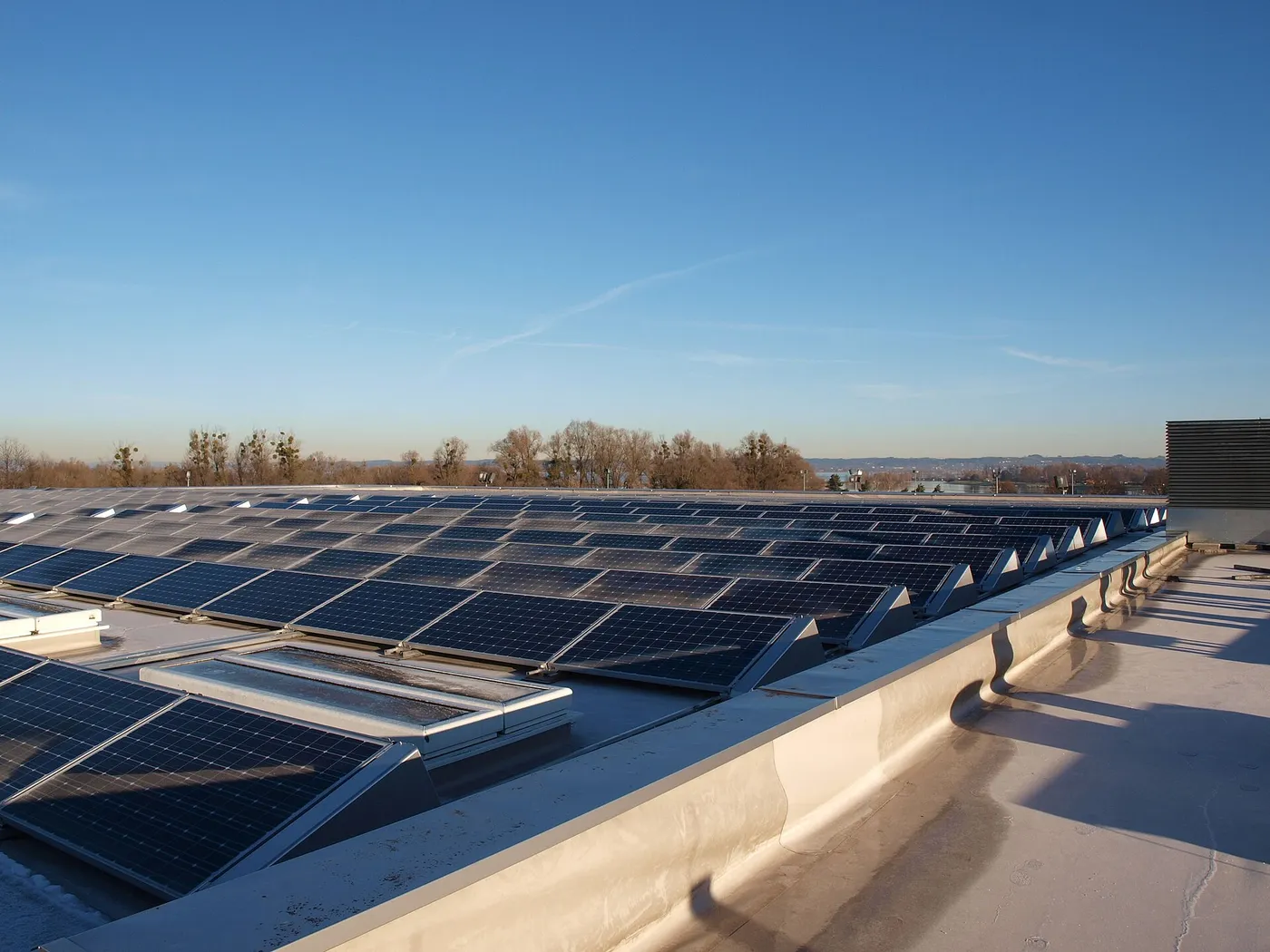
RV roof panels are commonly fixed close to horizontal because travel clearance, wind loading, and deployment simplicity matter. That arrangement can limit rear illumination. A portable bifacial panel can be tilted toward the sun and positioned over a useful surface, giving the owner more control.
Shade must be evaluated on both faces. A roof air conditioner may shade the front in the morning, while rails and cables shade the rear throughout the day. The article on solar panel angle and shading losses covers placement in detail. Bifacial construction does not make front shade harmless.
Understanding bifacial ratings
The module's main watt rating is normally established under standardized front-side conditions. Bifacial documentation may add a bifaciality factor or show expected output under specified rear irradiance. These are not interchangeable values.
Bifaciality describes how the rear responds relative to the front under a defined test. It does not state how much rear light will exist in a real installation. A module can have a capable rear surface and still produce little additional energy if mounted over a dark, shaded roof.
Some datasheets show expanded electrical values for assumed rear contributions. Read the headings and test conditions carefully. Controller and wiring design must follow the manufacturer's required maximum values, including any current increase that rear illumination can create. Do not size protection from the front watt number alone when the manufacturer provides bifacial electrical guidance.
The front rating also remains subject to real-world conditions. Cell temperature, irradiance, shade, contamination, wiring loss, and controller operation affect actual production. The explanation of solar panel output applies to both panel types.
Where bifacial panels work well
Bifacial modules are well suited to elevated open structures where the rear sees a broad reflective surface. Ground racks over pale gravel, canopies, pergolas, and some flat-roof racks can provide that environment. Snowy settings can produce strong seasonal rear illumination, although snow coverage and structural loads still require planning.
They can also work in portable deployments. A traveler can place a panel over bright ground, leave the rear open, and adjust the stand. Shoppers considering this format can compare deployment hardware through the best foldable solar panels guide. Not every folding panel is bifacial, and not every bifacial panel is designed for repeated folding or transport.
For an RV, a raised rack or tilting mount may allow some rear contribution. The benefit must be balanced against wind, vehicle height, roof capacity, and the shadows of roof equipment. The best RV solar panels guide helps compare complete panel specifications after those constraints are known.
Where a monofacial panel may be better
A monofacial panel may be the clearer choice when it will sit close to a dark roof with little rear access. In that setting, paying attention to front efficiency, area, weight, and temperature coefficient is more productive than expecting meaningful rear gain.
It may also be preferable when a proven mounting kit, lower weight, or exact dimensions fit the vehicle better. Bifacial glass-glass construction can be heavier than some backsheet modules, although actual product weights must be compared rather than assumed.
Portable users who always deploy against an opaque backing, hang the module directly on a vehicle side, or place it flat on the ground cannot use the rear effectively. A conventional product with a sturdy stand and better cable layout can outperform a bifacial product deployed poorly.
The decision is not a judgment that one technology is modern and the other obsolete. It is an optical and mechanical fit question. A rear-active surface has value only when the installation supplies light to it.
RV and portable buying checklist
Start with the available area and mounting method. Note the surface color beneath the module, expected clearance, permanent obstructions, and whether tilt is possible. Estimate whether the rear will see open ground or mostly roof and hardware.
Compare module dimensions, weight, front efficiency, front rated power, bifaciality information, maximum current, open circuit voltage, temperature coefficients, connector type, mechanical ratings, and warranty. If the rear can increase current, verify that the controller, wiring, and protection accommodate the manufacturer's specified limits.
For packaged systems, the best RV solar panel kits guide can narrow products with compatible mounting and charging components. For very small auxiliary uses, the solar panels under 50 guide covers another product class. A bifacial feature should not replace basic compatibility checks.
How to evaluate rear gain after installation
A single controller reading cannot isolate the rear contribution because front irradiance, temperature, and battery charging behavior change at the same time. Comparing output before and after placing a bright sheet under the panel can be misleading if clouds move, the battery changes charging stage, or the module temperature shifts during the test.
Useful evaluation requires consistent conditions and appropriate measurement. Record front irradiance, rear irradiance, cell temperature, voltage, current, and operating point if those measurements are available. Compare energy over representative periods rather than selecting one favorable peak. A controller may limit output when the battery is nearly full, hiding energy the module could otherwise provide.
For an RV owner without specialized instruments, the practical approach is simpler. Observe daily harvested energy across several clear days with the same loads and battery starting condition, then treat the result as system behavior rather than a certified bifacial gain. Seasonal sun angle, campsite surface, vehicle orientation, and shade mean the result will not transfer perfectly to another trip.
Do not modify a safe mount merely to create a better demonstration number. Adding reflective material can introduce glare, heat, wind, adhesion, and roof compatibility problems. Any permanent surface treatment should be approved for the roofing material and should not interfere with drainage or inspection. A modest rear contribution from a secure installation is more valuable than a larger theoretical gain from a fragile arrangement.
Keep a baseline record after installation and repeat the same inspection after major travel, storms, roof service, or changes to nearby equipment. Save the module model, controller settings, mounting dimensions, photographs of cable routing, and typical daily production. If output later falls, that record helps separate a changing campsite or season from loose wiring, new shade, contamination, or module damage. Rear-side collection makes the optical scene more important, so changes beneath and behind the panel belong in the maintenance notes.
Electrical and installation safety
A bifacial panel produces DC power whenever light reaches either active face. Turning the front away from the sun may not remove voltage if the rear remains illuminated. Follow the module's covering, isolation, connection, and disconnection instructions.
Never separate ordinary connectors under load. Use rated disconnects, overcurrent protection, cable, and connectors. Bifacial current can exceed a front-only operating value when rear irradiance is present, so use the manufacturer's maximum electrical specifications.
Vehicle mounting introduces fall, wind, water sealing, and structural risks. Do not drill a module frame or vehicle roof without an approved plan. Maintain roof equipment clearances, protect cables from abrasion, and inspect mounts after travel and severe weather.
Cracked glass, delamination, burned connectors, exposed conductors, or water entry require shutdown and qualified inspection. Glass-glass construction does not make a damaged module safe to continue using.
Frequently asked questions
Do bifacial solar panels make twice the power?
No. The rear receives less and less uniform light than the front in most installations. Added yield depends on albedo, clearance, shade, tilt, and module design. A fixed gain should not be assumed.
Do bifacial panels work on an RV roof?
They can, but a close dark roof and mounting hardware may limit rear light. Evaluate clearance, reflectivity, weight, wind loading, and obstructions before expecting an advantage.
Can a bifacial panel work when laid flat?
The front can work, but placing the rear directly against a surface removes most rear exposure and may restrict cooling. Follow the product's deployment instructions.
Are all glass-glass panels bifacial?
No. Glass on both sides describes construction. The cells and module must be designed and specified for rear-side collection to be bifacial.
Does white ground improve rear output?
A bright surface can reflect more light, but the amount reaching the rear still depends on height, tilt, shade, and geometry. Surface brightness alone does not guarantee uniform gain.
Do bifacial panels need a special controller?
Not solely because they are bifacial, but the controller must accept the module or array's maximum voltage, current, and power. Use the manufacturer's bifacial electrical limits where provided.
Bottom line
Bifacial solar panels add an active rear surface, not automatic free power. They work best when mounted with open space behind them over a surface that supplies useful reflected light. On an RV roof, limited clearance, dark roofing, rails, and roof equipment may reduce the advantage. Compare the complete module, read its bifacial test data, account for possible current increase, and choose the technology that fits the real mounting scene rather than the largest advertised gain.